Located on the right bank of the Chu River, Xuan Pha village (now Xuan Truong commune, Tho Xuan district) is the "homeland" of the famous Xuan Pha folk performance. Visiting this ancient land in the early days of February (lunar calendar), tourists can immerse themselves in the unique and meaningful atmosphere of the Xuan Pha festival.
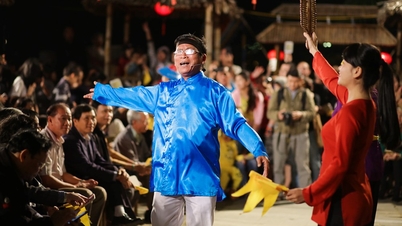
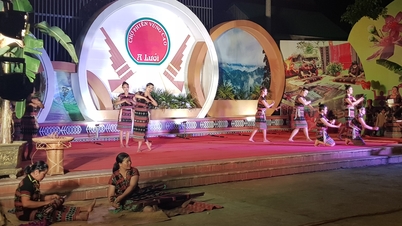
 People eagerly watch the performances at the traditional festival.
According to historical records, among the 12 ancient villages belonging to the former Loi Duong district (present-day Tho Xuan), in the early days of village construction, Xuan Pha was known as Trang village. Around the 15th century, Trang village changed its name to Xuan Pho (some documents write Xuan Pho) in Loi Duong district, and later Xuan Pho was renamed Xuan Pha.
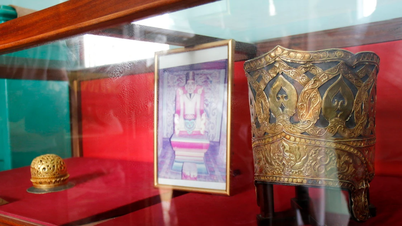
The village of Xuan Pha has been inhabited for over a thousand years. Along with the struggle and development of their lives, the people of Xuan Pha have continuously nurtured and created distinctive cultural values. These include the First Shrine dedicated to the Great Sea Dragon King; the Second Shrine dedicated to the deity Cao Minh Linh Quang; and the Tau Pagoda...
In particular, few people from Xuan Pha don't know by heart and are proud of the saying: "Eating cakes with pork sausage is not as good as watching the Lang Village performance." In that context, the Lang Village performance is the Xuan Pha performance – one of the unique intangible cultural heritages of the people of Xuan Pha in particular, and Thanh Hoa province in general.
According to historian Nguyen Ngoc Khieu in his book "Festivals of Thanh Hoa Province" (Volume 1): "The question of when Xuan Pha performance originated remains unanswered. There are no written documents that fully record its origins. For a long time, cultural and artistic researchers have had two theories about the origin of Xuan Pha performance: One is that it originated during the Dinh Dynasty (10th century), and the second is that it emerged after Le Loi defeated the Ming invaders and the Le Dynasty was established (15th century). Therefore, the Xuan Pha performance system is believed to have originated from the two dances "The Vassals Come to Court" and "Defeating the Wu." The people of Xuan Pha village are very proud of their performance system; they consider it an artistic heritage of the village, formed during the reign of King Dinh, and passed down from generation to generation orally."
Along with the belief that the Xuan Pha folk dance originated during the Dinh Dynasty, generations of Xuan Pha people have continued to recount the legend. It is said that during the reign of King Dinh, when the country was invaded, the king sent messengers throughout the land to find talented people to offer advice and help him fight the enemy. When the messenger arrived at the banks of the Chu River in what is now Xuan Pha village, a sudden storm arose, and as darkness fell, he had to take shelter in a small temple by the river. That night, the messenger dreamt of a deity who identified himself as the village's guardian spirit, offering advice on how to defeat the enemy. The next day, upon waking, believing it to be a divine manifestation, the messenger hurried back to the capital to inform the king. Believing the plan to be excellent, the king followed it, and indeed, the country was defeated. Peace returned, and on the day of celebration, neighboring countries, vassal states, and tribes came to congratulate Dai Co Viet, bringing with them the unique dances and songs of their respective ethnic groups, such as "Champa Tribute" and "Laos Tribute"...



“In gratitude for the great contributions of the tutelary deity of Xuan Pha village to the country, the king bestowed a royal decree conferring upon the tutelary deity of Xuan Pha village the title of “Dai Hai Long Vuong Hoang Lang General” and ordered the villagers of Xuan Pha to build a temple in his honor. At the same time, he rewarded the villagers with the best and most beautiful dances and songs, namely the five ancient dances of Champa, Ai Lao, Ngo Quoc, Hoa Lang, and Luc Hon Nhung (also known as Tu Huan)” (Tho Xuan Historical Sites and Scenic Spots book).
According to legend, along with bestowing the finest dances and songs upon Xuan Pha village, King Dinh also decreed that every year on the 10th day of the 2nd lunar month – believed to be the day the village's tutelary deity appeared in a dream – the village should hold a festival with performances. From then on, the Xuan Pha festival was born and has been continued by generations of villagers.
 The Xuân Phả village festival, with its unique performances, creates lasting vitality in the lives of the local people.
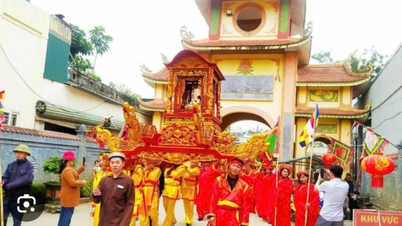
The Xuan Pha Festival takes place over two days, the 9th and 10th of February (lunar calendar), and includes both ceremonial and festive activities. The ceremonial part is solemn and sacred, featuring processions of sacred texts, royal decrees, offerings, and performers to the village shrine, as well as the worship of the village's tutelary deity. The festive part is lively and boisterous with various performances.
According to the elders in the village, in the old days, during the Xuan Pha village festival, the performances would be "divided equally" among the hamlets, such as the Upper, Middle, and Long hamlets performing the Hoa Lang play; the Middle hamlet performing the Luc Hon Nhung play; the West hamlet performing the Chiem Thanh play; the East hamlet performing the Ai Lao play; the Yen hamlet performing the Ngo Quoc play... And currently, the performances still follow the old custom, undertaken by the people of the villages (hamlets). Specifically, the Upper hamlet performs the Hoa Lang play; the Middle hamlet performs the Tu Huan play; the West and Lien Thanh hamlets perform the Chiem Thanh play; the East hamlet performs the Ngo Quoc play; and the Yen hamlet performs the Ai Lao play.
Although these performances have become deeply ingrained in the cultural life of Xuan Pha people, becoming a regular cultural activity, every year, when visiting Xuan Pha at the beginning of spring and exploring the villages, tourists are always surprised by the lively rehearsal atmosphere of the local people before the village festival. Mr. Do Van Khuong, an 85-year-old resident of Yen village, proudly shared: “The Xuan Pha festival contains sacred elements, a beautiful cultural and religious tradition deeply embedded in the spiritual life of the local people. For the festival to take place, each village and each person is aware of their responsibility. And in the Xuan Pha festival, the performances are like a competition between teams; the team that performs better and more attractively will receive praise and applause from the villagers. Therefore, as the festival day approaches, all villages strive to practice.”
Although all performances in the Xuan Pha village festival carry the meaning of "celebration," each act is performed according to cheerful and lively "scenes" with different colors, creating the appeal of the performances and the Xuan Pha village festival.

According to the book "Tho Xuan Historical Sites and Scenic Spots," the performances in the Xuan Pha village festival are explained as follows: The Hoa Lang performance mimics the Hoa Lang people (a tribe in Goryeo) coming to pay tribute to the King of Dai Viet; the Ai Lao performance mimics the Ai Lao people ( Laos ) coming to pay tribute; the Chiem Thanh (also called Siamese) performance mimics the Chiem Thanh people coming to pay tribute, with the characters being the king, queen, statues, soldiers, and wearing red costumes; the Tu Huan performance mimics the Tu Huan people from the northern mountainous region coming to pay tribute, and compared to the other performances, the Tu Huan performance is the most widely circulated... The dances in the Xuan Pha performances are joyful, energetic, yet graceful and rhythmic, creating tight, captivating layers for the audience.
Over a long period of upheaval, the Xuan Pha folk performances and festival were interrupted and faded away. However, in the early 2000s, with the attention of various levels of government and the dedicated efforts of the local people, the Xuan Pha folk performances and festival were successfully restored. Mr. Bui Van Hung, Vice Chairman of the Xuan Truong Commune People's Committee and also an artisan who contributed significantly to the restoration of the Xuan Pha folk performances and festival, said: “The Xuan Pha village festival and its unique performances are like a silent stream flowing through the cultural and spiritual life of the local people. Even during periods of quiet interruption, it has not disappeared. This cultural heritage has contributed to the vibrant colors of the cultural landscape of Thanh Hoa province and Vietnam... We invite tourists to come to Xuan Pha, to experience the traditional village festival, to better understand the beauty of our ancestors' cultural heritage.”
Khanh Loc
Source