

 |
| In attracting foreign direct investment (FDI) projects, Thai Nguyen province has clearly defined its direction for 2026, shifting from a "attract at all costs" mindset to a "selective selection" approach, prioritizing high-tech, clean technology projects with modern management and the potential to link with domestic businesses. (Photo: Provided) |
Selective FDI projects, increased localization.
In accordance with Plan No. 116/KH-UBND of the Provincial People's Committee on the implementation of Resolution No. 59-NQ/TW of the Politburo on international integration in the new situation, in 2026, Thai Nguyen clearly defines its orientation for attracting foreign direct investment (FDI) projects as shifting from a "attract at all costs" mindset to a "selective selection," prioritizing high-tech, clean technology, modern management projects with the ability to link with domestic enterprises.
Currently, Samsung Electronics is the largest foreign investor in the province, with a global-scale production complex that contributes significantly to export revenue and provides employment for tens of thousands of workers. However, the province's goal in the new phase is not just to attract large corporations, but to focus on increasing the localization rate, enhancing the domestic added value, and creating a ripple effect on domestic businesses.
Mr. Kim Iee Soo, General Director of Samsung Electronics Vietnam Thai Nguyen, said: The company will continue to cooperate with the province and develop a long-term investment expansion plan. Along with that, we are committed to promoting technology transfer and creating conditions for Vietnamese businesses to participate more deeply in the global supply chain.
 |
| Camera module production at Sunny Opotech Vietnam Co., Ltd. (Yen Binh Industrial Park) contributes to enhancing the capacity of supporting industries and participating more deeply in the global supply chain. Photo: Provided |
According to the Department of Finance, in 2026, Thai Nguyen aims to increase the percentage of domestic enterprises participating in the supply chains of FDI corporations by 10-15% compared to 2025; support at least 50 small and medium-sized enterprises to complete their quality management systems according to international standards such as ISO and IATF; and build a database of supporting industrial enterprises to connect directly with international buyers.
In parallel with the orientation to improve the quality of FDI flows, the province continues to improve the infrastructure of industrial parks and clusters; accelerate administrative procedure reforms, shorten the processing time for investment applications; and apply digital platforms in project licensing, monitoring, and providing online public services. By 2026, the goal is to have over 90% of procedures related to businesses implemented at level 4, thereby reducing compliance costs and increasing transparency in the investment environment.
Diversify export markets
Against the backdrop of new-generation free trade agreements (FTAs) continuing to take effect, especially CPTPP, EVFTA, and RCEP, Thai Nguyen aims to increase export turnover by 8-10% in 2026, while diversifying markets to minimize the risk of dependence on a few traditional partners.
The province plans to organize 15-20 trade promotion activities both domestically and internationally; and coordinate with Vietnamese trade representative offices abroad to update market information, provide early warnings of technical barriers and the risk of being subjected to trade defense measures.
In addition, training courses on rules of origin, technical standards, anti-dumping, and prevention of trade fraud are organized regularly, with priority given to small and medium-sized enterprises.
 |
| Tea cooperatives in the province are striving to build raw material areas that meet VietGAP and GlobalGAP standards; applying QR codes for traceability; and gradually developing organic tea. Photo: Provided |
In the agricultural sector, tea continues to be the main product. The province currently has over 22,000 hectares of tea plantations, producing approximately 260,000 tons of fresh tea leaves annually; the production value reaches trillions of VND. By 2026, the province aims to increase the proportion of deeply processed tea meeting high-end export standards to over 30%; and expand markets to Europe, the Middle East, and some Northeast Asian countries.
Ms. Vu Thi Thu Huong, Vice President of the Provincial Cooperative Union, emphasized: Integration requires agricultural products to be transparent and have a brand story. We are supporting cooperatives in building raw material areas that meet VietGAP and GlobalGAP standards; applying QR codes for traceability; and gradually developing organic tea. The goal is to increase the added value per unit of product, instead of just increasing production volume.
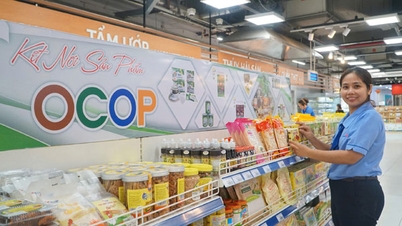
Besides tea, OCOP products, supporting industries, new materials, and technical services are prioritized for promotion through international trade fairs, e-commerce platforms, and direct connections with overseas distribution systems. The province encourages businesses to participate in cross-border e-commerce, taking advantage of the rapidly growing digital consumption trend in major markets.
Improving institutions and enhancing integration capacity.
Sustainable integration is closely linked to institutional reform and improving the quality of human resources. By 2026, the province aims for 100% of officials directly involved in advising on integration matters to receive in-depth training on FTAs, trade defense, negotiation skills, and handling international trade disputes. Simultaneously, it will strengthen foreign language training, digital skills, and work discipline for the workforce in key export industries.
 |
| Production activities at garment factories in the province have remained stable, ensuring the timely fulfillment of export orders. |
The province continues to mobilize and secure support from foreign organizations and individuals for education and training programs; expand cooperation between educational institutions in the province and international universities and research institutes; and promote student and faculty exchanges and scientific research cooperation aligned with the needs of businesses.
In the economic sector, the province is strengthening management and guidance for businesses to effectively access FDI flows; supporting deeper participation in international supply chains; developing industrial products and services that meet international standards, focusing on the fields of electronics, precision mechanics, new materials, and logistics.
Mr. Nguyen Huy Hoang, Deputy Director of the Department of Industry and Trade, stated: "The focus in 2026 is on enhancing the internal capacity of businesses. Integration is not just about taking advantage of tariff preferences from FTAs, but the core is meeting the increasingly high technical standards, environmental requirements, and transparency levels of import markets. The Department of Industry and Trade will strengthen support for businesses regarding rules of origin, trade defense, digital transformation in management, and product traceability."
Another key task is to build a centralized database on FTAs, rules of origin, technical standards, import and export markets, and trade defense measures. An online reporting system connected to the province's operational platform will enable leaders to monitor and evaluate the effectiveness of integration in real time, facilitating flexible and timely management.
 |
| Smartphone production for export at Samsung Electronics Vietnam Co., Ltd. in Thai Nguyen. Photo: Provided. |
The province also requested that central ministries and agencies enhance data sharing and early warning of trade risks; support in-depth training for localities; and allocate additional resources for programs to improve the competitiveness of small and medium-sized enterprises.
2026 is identified as a pivotal year for achieving the development goals of the 2025-2030 period. In the context of increasing global competition, proactiveness, flexibility, and creativity in integration will be key conditions for Thai Nguyen to maintain its role as an industrial center of the northern midland and mountainous region, while gradually enhancing its position in the global value chain, aiming for a green, inclusive, and sustainable growth model.
Some economic indicators for Thai Nguyen province in 2026: - Economic growth: Striving to achieve a growth rate of 11%. - Gross Regional Domestic Product (GRDP): Expected to reach 220,452 trillion VND - Average income reached 127.5 million VND/person/year - The economic structure continues to shift significantly, with industry and construction accounting for 54.13% and services accounting for 31.73%. - Industrial production: The target for the Industrial Production Index (IIP) is to increase by 14.5% or more. - The value of goods exported from the area increased by 12% or more. (According to Resolution No. 03/NQ-HĐND dated February 4, 2026 of the Provincial People's Council on adjusting socio-economic targets for 2026) |
Source: https://baothainguyen.vn/kinh-te/202603/hoi-nhap-thuc-chat-tang-truong-ben-vung-cf15333/

![[Photo] General Secretary and President To Lam meets with National Assembly delegates from ethnic minorities.](https://vphoto.vietnam.vn/thumb/1200x675/vietnam/resource/IMAGE/2026/04/20/1776696701056_a1-bnd-8331-3342-jpg.webp)
![[Image] National Assembly discusses the implementation of the socio-economic development plan.](https://vphoto.vietnam.vn/thumb/1200x675/vietnam/resource/IMAGE/2026/04/20/1776696707422_ndo_br_img-20260420-185419-jpg.webp)



































































Comment (0)