

Hollywood, a famous area located in Los Angeles, California, is not only a geographical landmark but also a global symbol of the film and entertainment industry.
With its crucial role in the production of films, television, and cultural products, Hollywood has been inextricably linked to the creativity, cultural influence, and development of the entertainment industry.
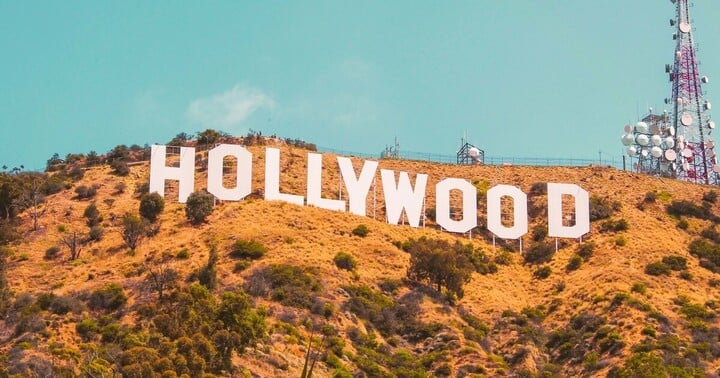
Hollywood is synonymous with the American film and entertainment industry.
So what is Hollywood? And why has it become such a globally renowned name?
What is Hollywood?
In the 1880s, an American named Henderson Wilcox and his wife, Daeida, moved to Los Angeles. The couple purchased a piece of rural land west of the city and named it Hollywood. Harvey H. Wilcox officially registered the name Hollywood in 1887 on his land deed.
According to some accounts, Dadia Wilcox heard the name Hollywood from a friend and suggested it to her husband. However, another story claims that Dadia met a stranger on a train who lived in a state called "Hollywood" in Illinois and was very impressed by the name.
Another story suggests that the name "Hollywood" came from a combination of "Holly," the state tree of California, and "wood," reflecting the forests that once covered the area.
Although there are many versions of the story associated with the origin of the name Hollywood, there is little to no evidence to prove it.
Where is Hollywood located?
Hollywood is an area in downtown Los Angeles, California. It lies northwest of Los Angeles and is bordered by Hyperion Avenue and Riverside Drive (to the east), Beverly Avenue (to the south), the foothills of the Santa Monica Mountains (to the north), and Hillsly Hills (to the west).
Before becoming the world's film capital, Hollywood in 1900 was just a small village with a few rice paddies and about 500 inhabitants. For many years, the area was known for its sun-drenched orange groves.
Thanks to its favorable climate, warm year-round, and diverse landscapes, Hollywood gradually became an ideal place for film production. Abundant sunshine allowed filmmakers to shoot year-round, and the nearby picturesque scenery provided numerous filming locations. This combination was ideal for the silent film era, which relied heavily on natural light and realistic settings.
Furthermore, proximity to resources such as skilled labor, studios, and post-production services made Hollywood a practical choice for filmmakers. As more and more studios were established, the region's reputation grew, attracting actors, directors, and producers from across the country.
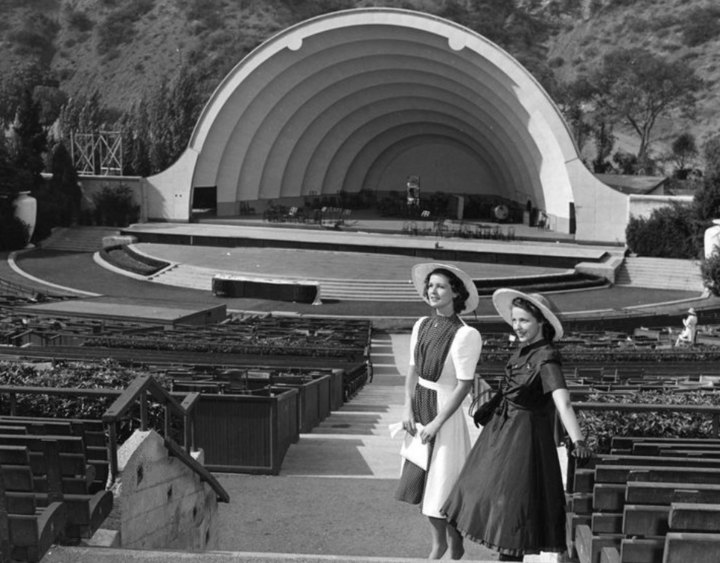
Hollywood is an ideal location for film production thanks to its favorable climate, warm weather year-round, and diverse landscapes.
Today, Hollywood is not just a specific geographical area, but a global symbol representing the thriving development of film, music , television, and other entertainment industries.
Since its establishment in the early 20th century, Hollywood has rapidly become a hub for film production, home to leading studios such as Universal Pictures, Warner Bros., Paramount Pictures, and Walt Disney Studios. Hollywood boasts not only film studios but also soundstages, music production companies, artist training organizations, and numerous restaurants and hotels catering to major film events.
The history of Hollywood's development
Hollywood officially became the center of the film industry in the 1910s, when major film production companies began moving there. The first film made in Hollywood in 1914 was The Squaw Man . This film marked the beginning of the modern Hollywood film industry.
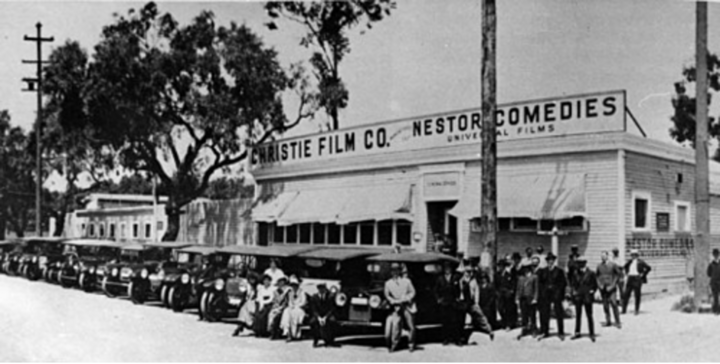
The first film studio established in Hollywood was called Nestor Studio, located at 6121 Sunset Blvd.
During the 1920s, Hollywood experienced rapid growth with the emergence of prominent film companies, including Paramount Pictures and Metro-Goldwyn-Mayer (MGM). The first silent films were produced there, and subsequently, Hollywood became the birthplace of modern cinema with the introduction of sound films in the late 1920s.
The 1930s and 1940s were the golden age of Hollywood, when many classic films were produced and movie stars like Clark Gable, Humphrey Bogart, and Greta Garbo achieved global fame. Hollywood continued to thrive throughout the 20th century and today still plays a vital role in the entertainment industry.
Hollywood and the American entertainment industry
Hollywood is not just a film production hub, but also the center of the global entertainment industry. It brings together a multitude of film studios, media companies, television stations, movie stars, and leading music producers. With thousands of films, television shows, and entertainment products created annually, Hollywood has a profound influence on global culture.
Hollywood is home to major entertainment events such as the Academy Awards – one of the world's most prestigious awards ceremonies, recognizing outstanding achievements in the film industry. Hollywood films consistently achieve global attention and exert a powerful influence on other cultures, creating trends and spreading profound messages.
Hollywood and movie stars
As the film industry boomed, Hollywood became synonymous with fame and fortune, attracting ambitious artists to build their careers there.
This is where legendary film stars shone, great names like Marilyn Monroe, James Dean, Elizabeth Taylor, Audrey Hepburn...
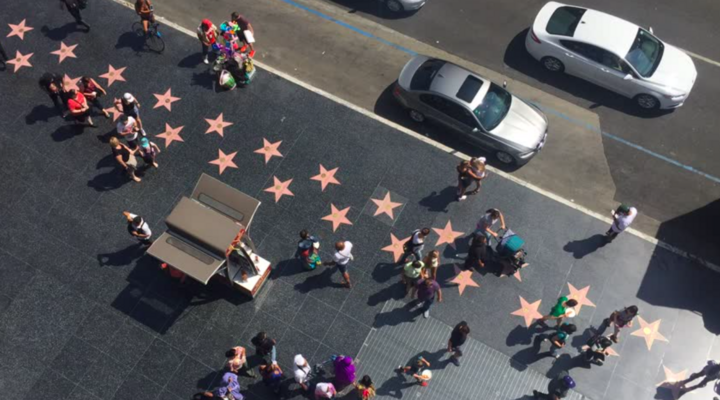
The Hollywood Walk of Fame.
Today, Hollywood remains home to major stars like Leonardo DiCaprio, Angelina Jolie, Brad Pitt, and many other prominent names. The fame of these stars is linked not only to films but also to brands, advertising campaigns, and social events.
The outstanding characteristics of Hollywood
Hollywood is home to many famous studios where blockbuster films are produced. These studios typically possess state-of-the-art equipment, large sound stages, and a professional staff.
Hollywood is where the first films originated and developed into a large-scale film industry. It attracts investors and talent from all over the world.
Hollywood is home to many prestigious awards, most notably the Academy Awards, the Golden Globe Awards, and the Emmy Awards for television. Hollywood films, from action blockbusters to profound works of art, have a significant influence on cultural trends, fashion, and even politics globally.
Hollywood today
Today, Hollywood is not just a film production center but has expanded into other entertainment industries such as music, sports, fashion, and technology. Digital technology and streaming platforms like Netflix, Amazon Prime, and Disney+ have also brought about major changes to how films are produced and distributed.
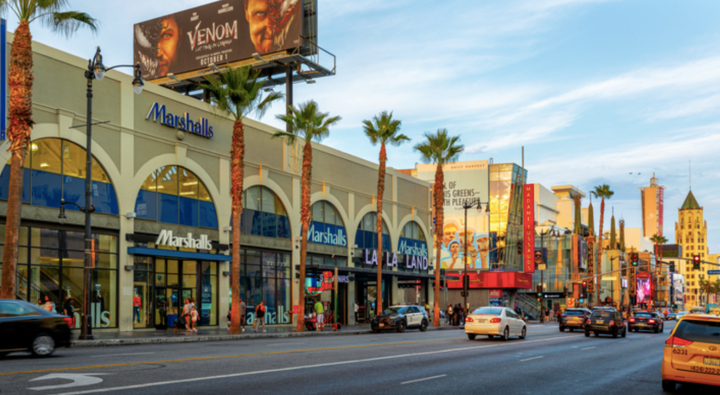
Hollywood is an icon of the global entertainment industry.
Despite facing competition from other film industries around the world, Hollywood has maintained its role as a pioneer in the creation and development of large-scale entertainment, as well as a destination for creative talent in the film industry.
Hollywood is not simply a geographical area, but a symbol of the global entertainment industry. With its long history, legendary movie stars, and profound influence on world culture, Hollywood continues to be a center of creativity, a hub for cutting-edge ideas and entertainment products.
Source: https://vtcnews.vn/hollywood-la-gi-ar913163.html































![[Photo] A vibrant celebration of generations of Nhan Dan Newspaper staff](https://vphoto.vietnam.vn/thumb/1200x675/vietnam/resource/IMAGE/2026/03/11/1773228432744_cb-75-nam-7-7034-jpg.webp)






































































Comment (0)