

The number of international visitors to Vietnam in the first quarter of this year exceeded that of the same period in 2019 for the first time, a year considered the golden age of the tourism industry before the Covid-19 pandemic struck.
Both European and Asian tourists have seen a huge increase.
According to the General Statistics Office, the number of international visitors to Vietnam in March reached nearly 1.6 million, an increase of 4.4% compared to the previous month and a 78.6% increase compared to the same period last year. Overall, in the first quarter, the number of international visitors to Vietnam is estimated at over 4.6 million, an increase of 72% compared to the same period last year and a 3.2% increase compared to the same period in 2019 – a year considered the golden age of Vietnamese tourism. Since the "darkness" of Covid-19, this is the first quarter that Vietnam has welcomed a number of international visitors exceeding the 2019 figure.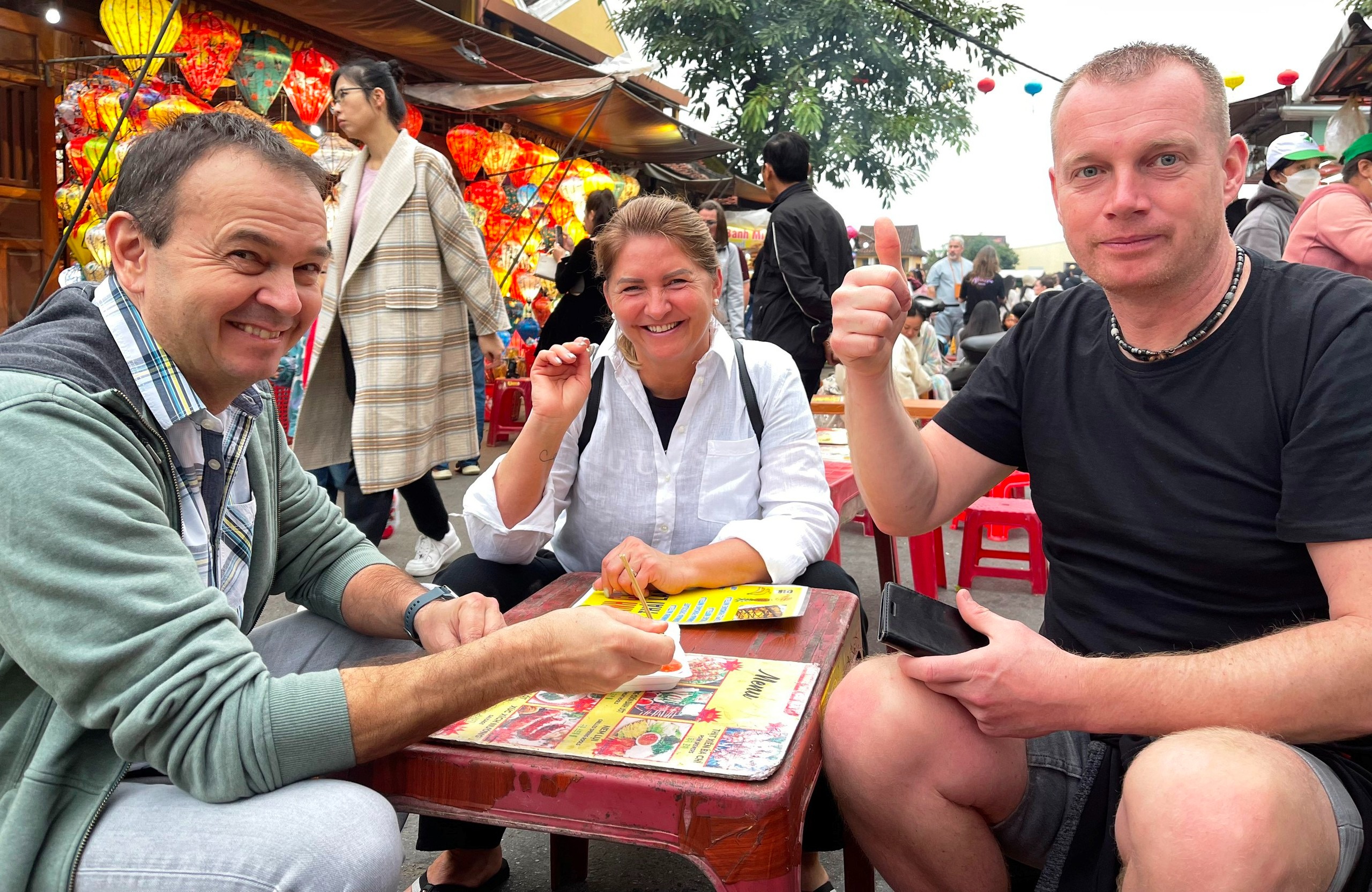
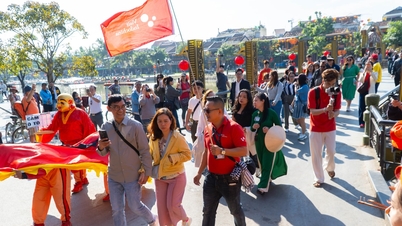
Foreign tourists happily enjoy the cuisine in Hoi An ancient town, February 2024.
BAO DUY
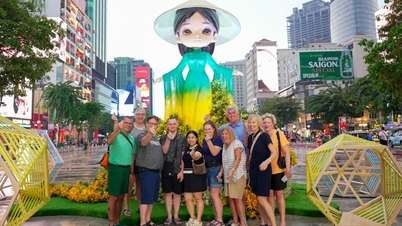
 The surge in international tourists to Vietnam has instantly breathed new life into tourist destinations. At over 11 PM on Saturday (March 30th), Bui Vien Street (District 1, Ho Chi Minh City) was packed with people, stretching from De Tham Street to the pedestrian zone. Most restaurants and bars were full, mostly with foreign visitors. Raising a glass with her five friends, Jennis Oprasert danced to the music. This was the 23-year-old Thai woman's first time in Ho Chi Minh City. "Before the pandemic, I went on a tour to Vietnam with my parents, visiting Sa Pa. After that, my family moved to France to live with my grandparents. This time, I brought my friends from France back to our hometown in Thailand, and everyone decided to come to Vietnam and then Laos. Ho Chi Minh City is so much fun and bustling. This street is just as vibrant as the streets in Pattaya. I took a bus tour around the city. It's beautiful and less congested than Bangkok," Jennis happily shared. The small, branching streets leading to Pham Ngu Lao and Tran Hung Dao share a bustling and lively atmosphere. Towards Binh Thanh District, the Pham Viet Chanh area, often referred to as the "second Bui Vien," is also crowded with Western tourists visiting charming little beer gardens and pubs, even on weekdays.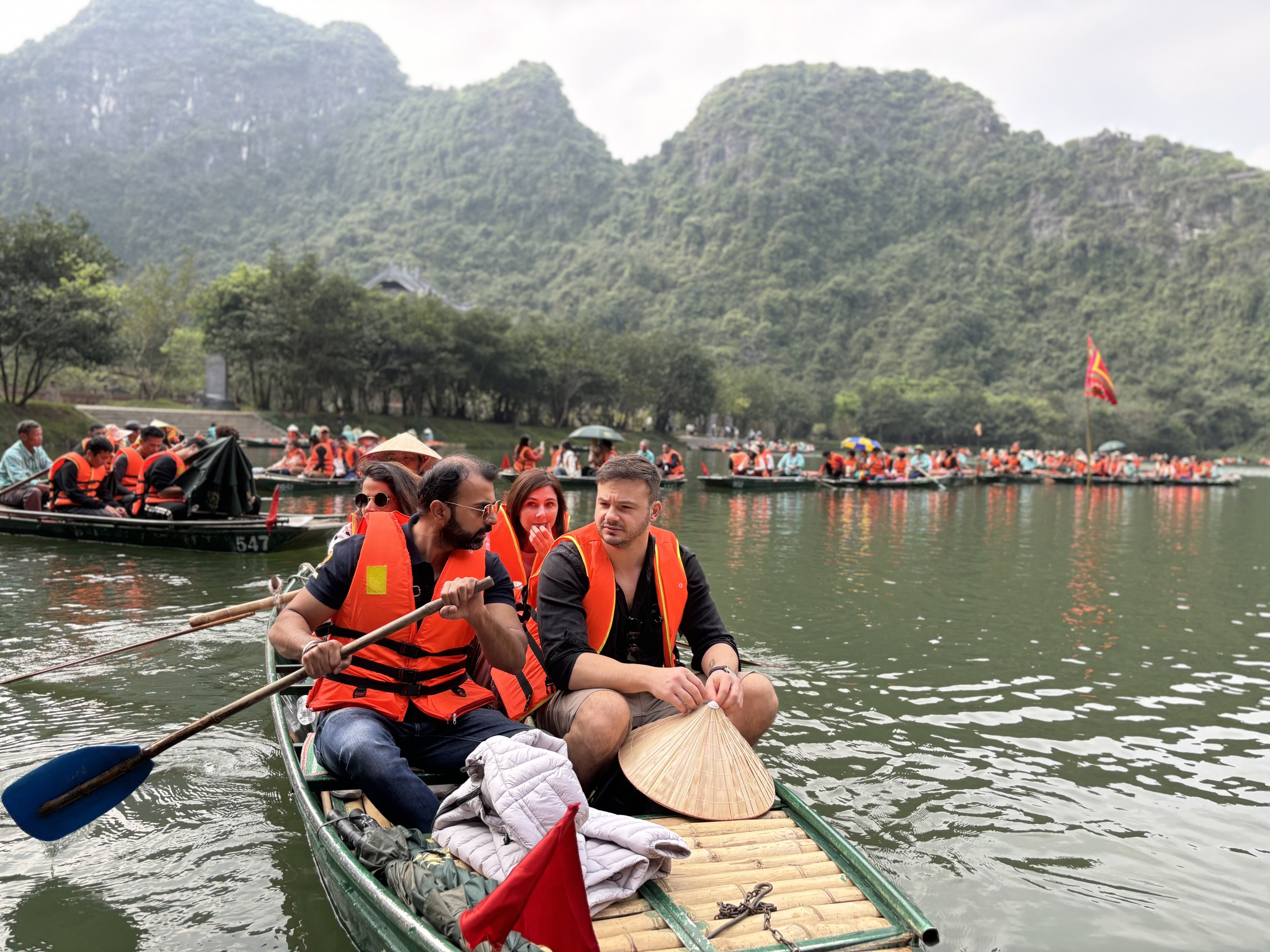
Foreign tourists visiting Trang An, Ninh Binh , February 2024
VU PHUONG
Is the business still "not stable"?
Continuously organizing promotional events and connecting hundreds of tourism businesses with domestic and international partners, Mr. Nguyen Vu Khac Huy, General Director of Vina Phu Quoc Tourism Co., Ltd., said that the tourism situation in Phu Quoc (Kien Giang) has started to warm up. Companies are focusing on preparing plans for the upcoming April 30th - May 1st holiday and the peak summer season, noting that tourist demand is gradually increasing, especially from the Chinese market. This season, the number of tourists from Europe or South Korea to Phu Quoc may decrease slightly, but the number of tourists from Russia, China, and Taiwan is predicted to grow well. However, the health of businesses in the tourism ecosystem has not yet kept pace with the increase in tourists. Mr. Huy explained that although the number of international tourists is generally growing well, the number of domestic tourists is quite sluggish. Before the pandemic, the number of domestic and international tourists to Phu Quoc was roughly equal. Although international tourist arrivals are currently growing well, this is compared to last year, not to pre-pandemic levels, not to mention the added shortfall from the domestic market. Therefore, the restaurant and hotel system is still facing difficulties. Travel companies are even more challenged because the trend of independent travel is increasing, coupled with the high cost of airfare, which significantly impacts their business strategies and plans. Currently, Vina Phu Quoc Company has to adapt flexibly, promoting land and sea tours, bringing tourists from the Central Highlands, Southeast and Southwest regions, and international tourists from Cambodia, Laos, and Thailand via the Ha Tien to Phu Quoc route. "The number of international tourists arriving is entirely plausible and could meet or exceed targets, but it's impossible to say when businesses will recover to pre-pandemic levels. There are still many influencing factors and challenges," Mr. Huy said.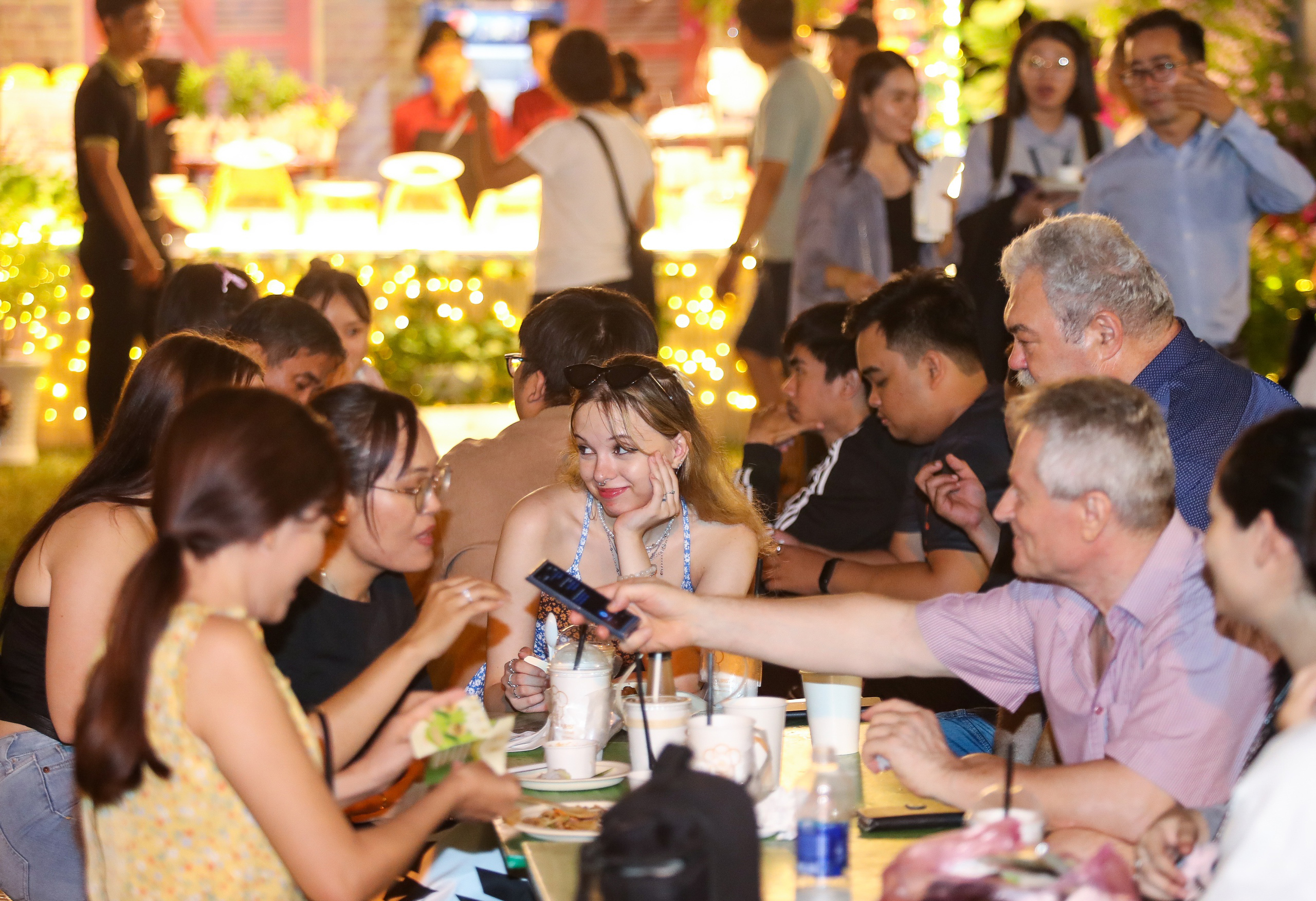
Tourists participating in the Saigontourist Group's 2024 Food and Culture Festival at Van Thanh Tourist Area (Ho Chi Minh City) at the end of March 2024.
NHAT THINH
Keep tourists staying longer and spending more.
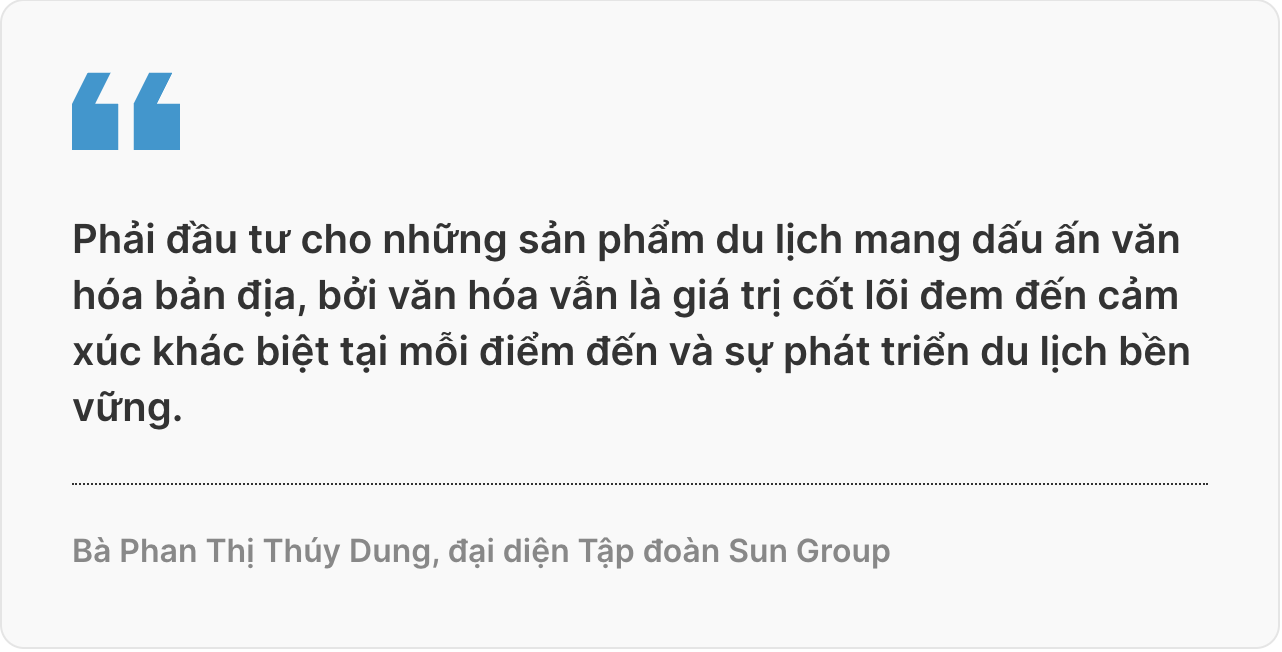
Ms. Phan Thi Thuy Dung, representative of Sun Group, assessed that the biggest positive sign is the increase in international tourists, but it has not yet reached expectations. In Da Nang, Sun Group's Ba Na Hills resort receives about 84% international tourists; the New World resort in Phu Quoc receives about 85% Korean tourists and some new markets such as Russia and Kazakhstan, but they have to fly with a layover before arriving in Phu Quoc. In reality, many international tourists coming to Vietnam at this time still face visa and air travel barriers. Therefore, in order to increase the attraction of new international tourist markets and compensate for the decline in large traditional markets such as China and Russia, Sun Group still earnestly hopes that visa policies will continue to improve and become more relaxed. "Initially, we could consider proposing short-term visa exemptions (from 6 months to 1 year) for tourists from some large-scale potential markets such as China, India, Taiwan… At the same time, we need to study pilot programs for granting long-term visas (3 years, 5 years) to attract high-end tourist segments and retirees from target markets such as the US, Australia, South Korea… Once we attract tourists to visit, the next important thing is to find ways to retain them or make them want to return. Many factors are needed to achieve this, but it is crucial to invest in tourism products that reflect local culture, because culture remains the core value that brings unique emotions to each destination and contributes to sustainable tourism development," Ms. Thuy Dung suggested. Tourist spending is also one of the issues that businesses and localities pay special attention to. Looking at the figures from the General Statistics Office, the number of international visitors to Vietnam in the first quarter increased by 78.6% compared to the same period in 2023, but tourism revenue only increased by 28.3%, indicating a declining trend in tourists' spending habits. Mr. Nguyen Quoc Ky, Chairman of the Board of Directors of Vietravel, frankly stated: Vietnam has relaxed its visa policy to allow more tourists to enter and stay longer, but it hasn't focused on where they go, what they do, and how to encourage them to spend more and want to return. The planning itself is quite vague. Thailand clearly defines how many tourists they want from each market and what they need to do to achieve that goal. They open up visas to attract Chinese tourists and extend nighttime activity hours to encourage higher spending. Vietnam hasn't done that, and without clear planning for each market and region, investment will be scattered and costly. Without a plan, it's impossible to create a plan. We lack a "spoke-like" regional plan, which would create connections and re-plan tourism products in localities to support each other rather than compete. The current tourism product range is still fragmented, with tourists traveling along a single route from North to South or vice versa. The limitations in connecting tourism to create products lie in the lack of deep and loose linkages. This is not to mention the significant shortcomings in Vietnam's attractiveness to tourists. Furthermore, promotion and communication efforts have not been prioritized. Currently, almost only airlines and travel companies invest their own money in promotion, market outreach, and market development. "Tourism policies have moved very slowly in recent times, leading to many missed opportunities. Having identified tourism as a key sector, we need comprehensive policies, incentives, and strong investment in tourism policies," Mr. Nguyen Quoc Ky stated.Ho Chi Minh City prioritizes the quality of tourists over the quantity.
Following the Covid-19 pandemic, Ho Chi Minh City's tourism industry is focusing on revenue contributions rather than the sheer number of visitors, especially given the unstable international tourist numbers in various markets. In 2024, Ho Chi Minh City aims to welcome approximately 6 million international visitors, 38 million domestic visitors, and achieve total revenue of around 190,000 billion VND, exceeding even the 2019 figures. To achieve this goal, the city's tourism industry plans to continue investing more in the night-time economy, developing more attractive night-time tours. Simultaneously, it will develop collaborative programs with other tourist destinations nationwide, creating opportunities for businesses to create new tours that are both high-quality and cost-effective. Furthermore, it will continue organizing tourism events combined with cultural and sports festivals, and offering attractive promotional programs to ensure high and stable tourism growth... Mr. Le Truong Hien Hoa, Deputy Director of the Ho Chi Minh City Department of Tourism. In 2024, Vietnam's tourism industry aims to welcome 17-18 million international tourists, recovering to pre-Covid-19 levels, serving 110 million domestic tourists, and generating approximately US$34 billion in tourism revenue. To achieve this goal, the industry will prioritize collaboration with domestic and international partners, developing attractive and highly competitive products, including shopping tourism; attracting high-quality, high-spending tourists; and developing tourism products based on potential advantages to attract domestic and international visitors and increase repeat visits. Crucially, the products must be suitable to retain tourists. (Nguyen Trung Khanh, Director of the Vietnam National Administration of Tourism)
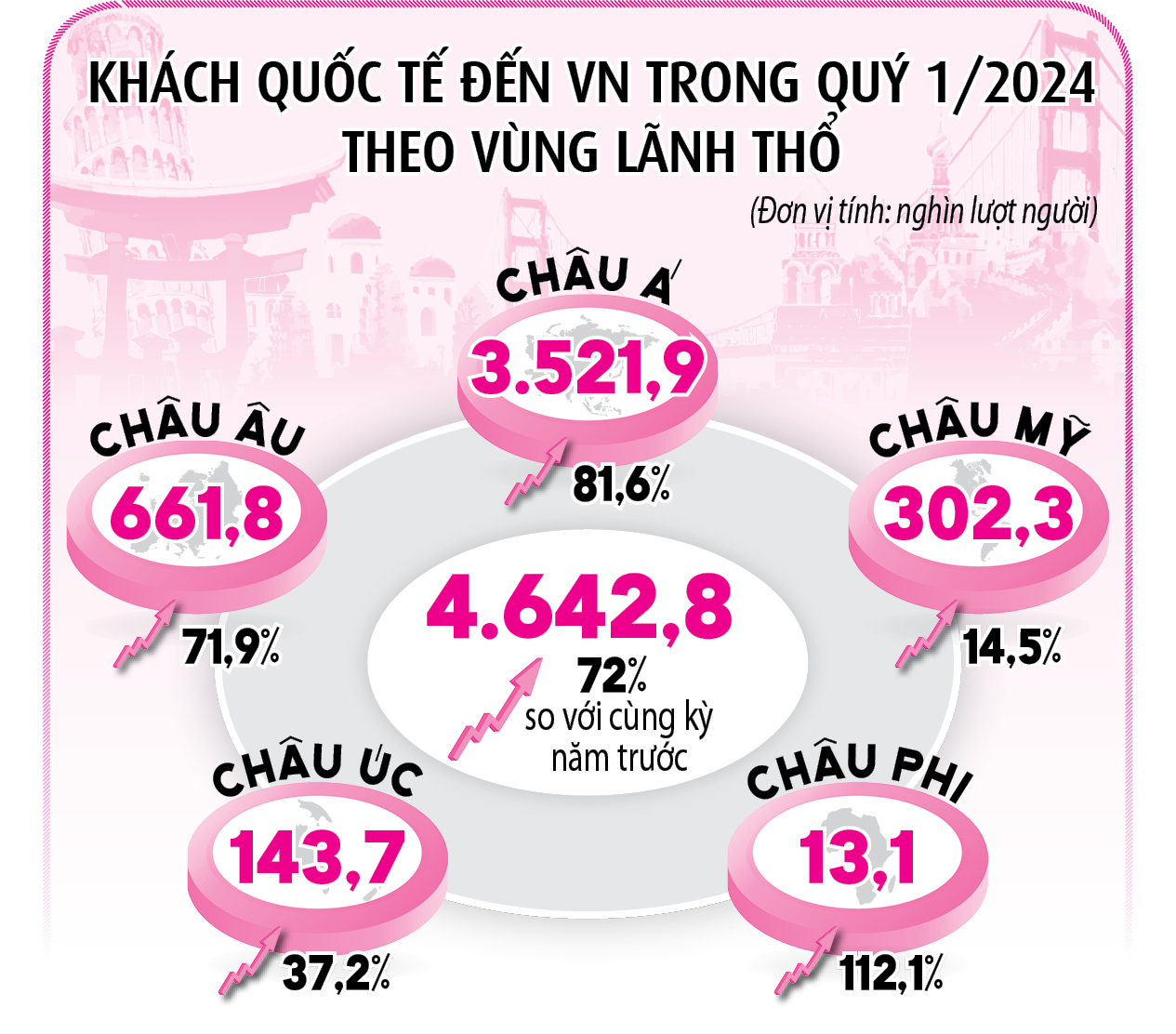
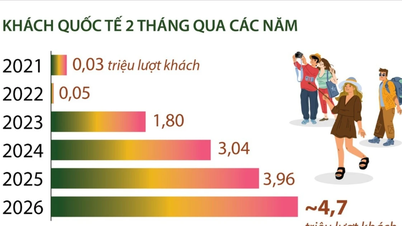
SOURCE: GENERAL STATISTICS OFFICE - GRAPHICS: BAO NGUYEN
Thanhnien.vn
Source
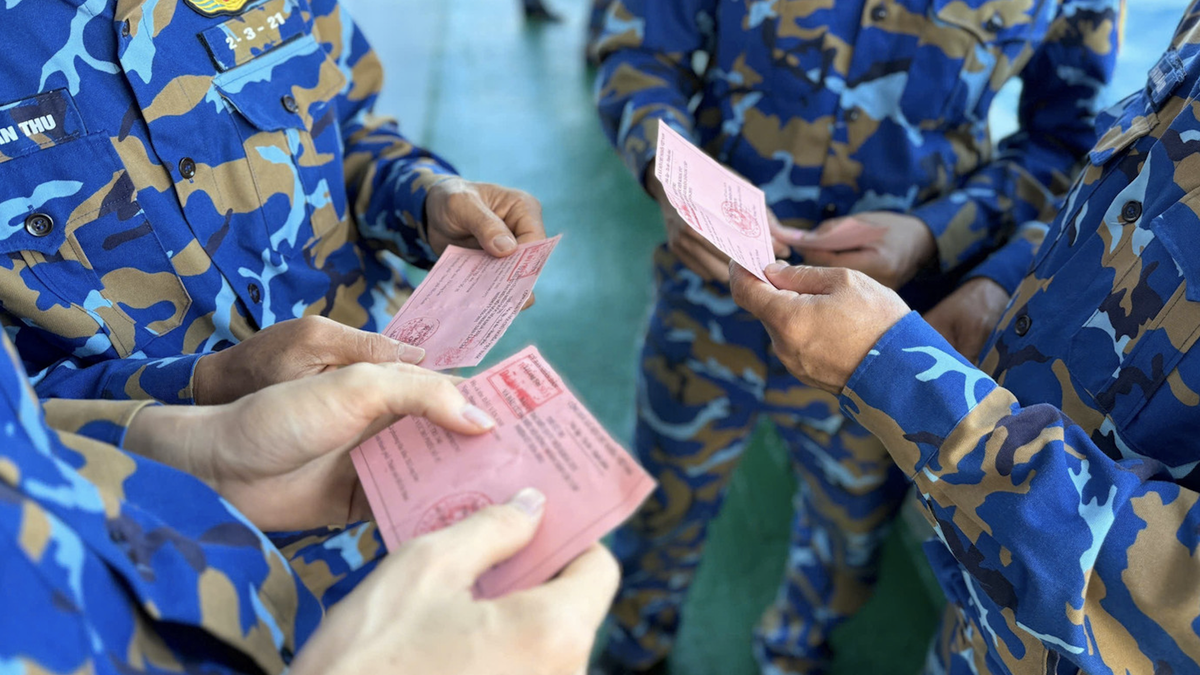
![[Photo] New recruits happily exercise their right to vote at their unit.](https://vphoto.vietnam.vn/thumb/1200x675/vietnam/resource/IMAGE/2026/03/14/1773473286544_stug0337-6388-jpg.webp)
















































Comment (0)