|
Chinese tourists wearing kimonos visit Sensoji Temple in Asakusa Ward, Tokyo, Japan, in November 2025. Photo: The Japan Times . |
According to data from the booking platform Tripla, the cancellation rate for hotel bookings in Japan from Chinese tourists during this year's nine-day Lunar New Year holiday reached 53.6%, higher than the same period in 2025. Meanwhile, the average cancellation rate for all international tourists was 25.1%, according to Nikkei Asia.
At a hotel in central Osaka, Chinese guests accounted for only 8% of total guests in January, a sharp decrease from nearly 30% in the same period last year. A hotel representative stated that room rates in Osaka are falling across the board, putting pressure on profits.
A guesthouse near the Dotonbori commercial district reported that its occupancy rate during the Lunar New Year holiday was only 76% as of mid-week, much lower than expected.
This development comes as China has repeatedly advised its citizens to limit travel to Japan following a statement by Japanese Prime Minister Sanae Takaichi in November 2025. The number of flights between the two countries has also decreased significantly.
According to aviation analytics firm Cirium (UK), the number of flights between Japan and mainland China during the Lunar New Year holiday will decrease by 31% compared to 2025, while the number of seats offered will decrease by 26%.
At Kansai Airport (Osaka), the number of passenger flights connecting to China in January decreased by approximately 60% compared to the same period last year. At Narita Airport (Tokyo), the number of flights from China decreased by 18% in December and by 27% during the period of January 1-24.
 |
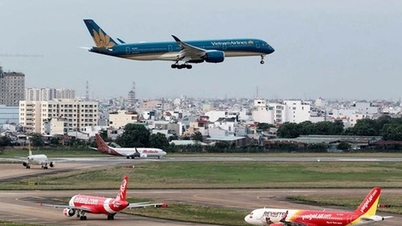
Tourists from China arrive at Kansai International Airport in Osaka during last year's Lunar New Year holiday. Photo: Arisa Moriyama. You may also like  Vietnam's tourism sector is gaining momentum towards its target of 12.2 million international visitors after six months.VTV.vn - A sharp increase in international visitors and a stable domestic market have helped Vietnam's tourism sector achieve nearly half of its annual target in just the first six months of 2026.  Over 350 businesses have planned to come to Gia Lai because of the "vast forests touching the blue sea".Over 350 domestic and international tourism businesses will participate in Vietnam Tourism Day 2026 in Gia Lai from August 13-17, opening up opportunities to promote destinations and connect with markets.  What does G-Dragon do when he becomes a World Heritage Ambassador?Following his appointment as an ambassador to promote the UNESCO World Heritage Committee meeting in Busan, G-Dragon will participate in various campaigns aimed at spreading the message of heritage preservation. |
Chinese tourists are expected to account for 21% of all international visitors to Japan in 2025 and contribute approximately 20% of total tourism spending – the highest among all source markets.
Masato Koike, a senior economist at Sompo Institute Plus, predicts that the number of Chinese tourists visiting Japan during this year's Lunar New Year holiday could be halved. If average spending remains the same as last year, total tourism spending could decrease by 48.5 billion yen (approximately $317 million ), causing Japan's nominal GDP to fall by about 0.01%.
A January survey by IntaSect Communications (Tokyo) showed that Japan has fallen to third place on the list of preferred overseas destinations for the Lunar New Year holiday, with only 15% of respondents choosing it. Southeast Asia and South Korea led with 39% and 17% respectively.
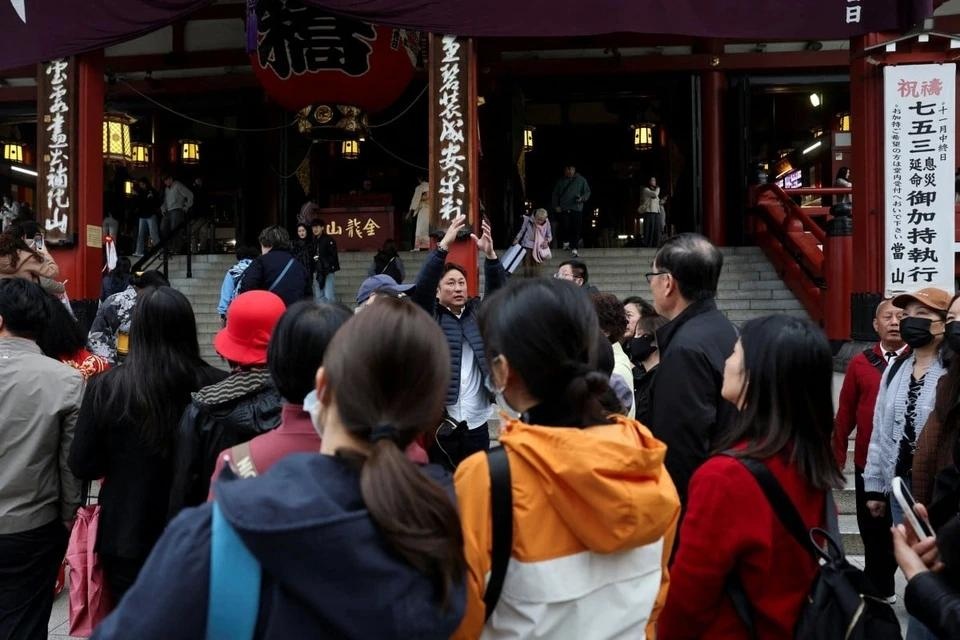 |
A group of Chinese tourists are guided by a tour guide at a famous tourist attraction in Tokyo, Japan, in November 2025. Photo: Reuters . |
According to the Japan National Tourism Organization, approximately 330,000 Chinese tourists visited Japan in December 2025, a 45% decrease compared to the same period last year. Meanwhile, the number of visitors from six Southeast Asian countries (Thailand, Singapore, Malaysia, Indonesia, Philippines, and Vietnam) reached over 650,000, a 14% increase.
Takayuki Miyajima, a senior economist at Sony Financial Group, believes the downward trend in Chinese tourists could last at least until mid-2026.
However, this also promotes diversification of international visitor sources and could create structural changes to Japan's inbound tourism market.


Source: https://znews.vn/khach-san-nhat-ban-vao-the-kho-post1628204.html