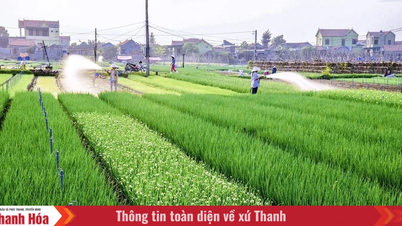
Always listen and understand.
 The man who 'gave wings' to Tuyen Hoa's agricultural products.
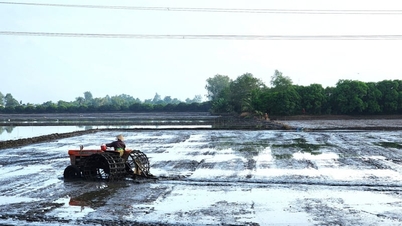
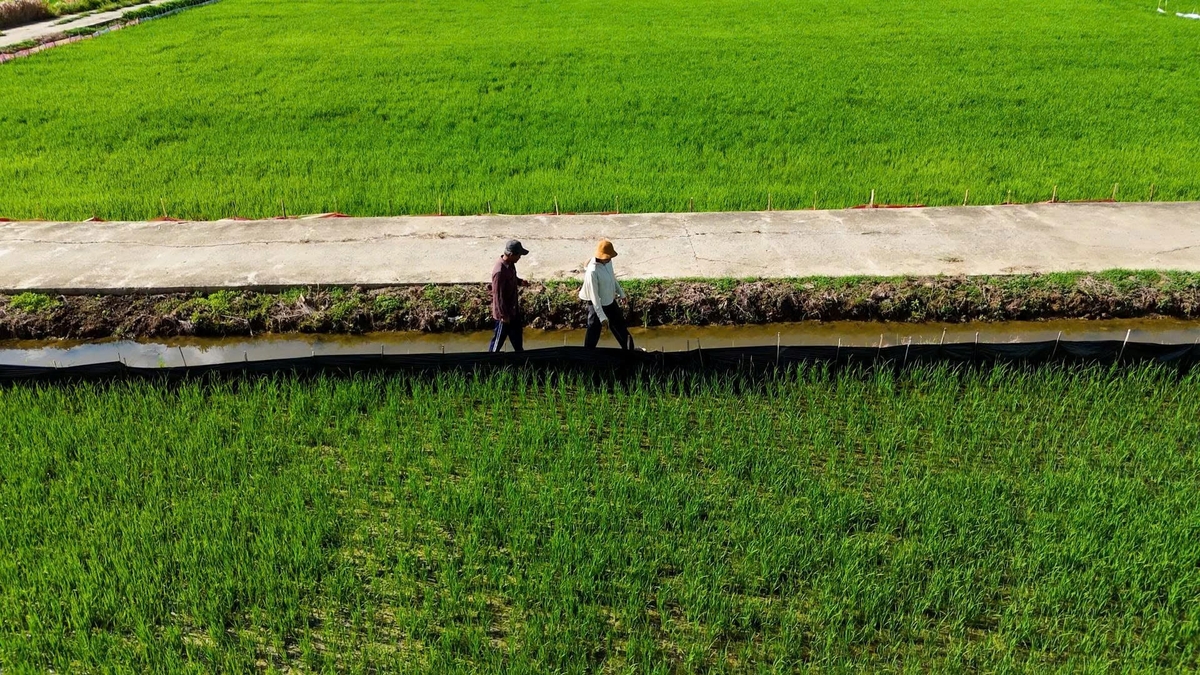
In the summer in Central Vietnam, temperatures in the fields sometimes reach 40 degrees Celsius. The hot, dry winds from Laos blow, and the sun is scorching. Recognizing the prolonged hot weather and the risk of drought and pest infestations affecting the rice crop, Ms. Le Thi Hong Phuoc, having just finished a meeting to encourage people to participate in a model of growing mandarin oranges on barren land, rushed to the fields of Dong Duc village, Dien Ban Tay commune (Da Nang) to guide farmers in caring for over 10 hectares of rice grown using safe, organic microbial fertilizers.
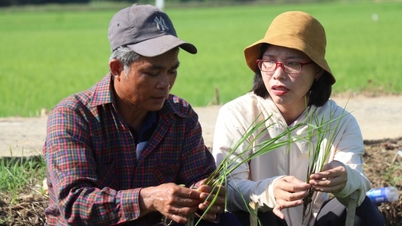
Seeing the rice leaves turning slightly yellowish-green, some farmers worried about nutrient deficiency and considered adding more nitrogen fertilizer. Ms. Phuoc plucked a rice stalk, observed it, and gently explained: "It's normal for rice to have a yellowish-green color like young banana leaves; the plants already have enough nutrients. Farmers shouldn't add more nitrogen fertilizer. If you do, the plants will have an imbalance in nutrients and will be more susceptible to pests and diseases."

Ms. Le Thi Hong Phuoc instructs farmers on rice cultivation in the Dien Ban Tay field. Photo: LA
 Sowing the seeds of knowledge in the Muong Thanh plain.
Those simple instructions were listened to attentively by the villagers. Many nodded and put away their unfinished bags of fertilizer. For them, Ms. Phuoc's advice was not only professional knowledge but also experience accumulated over many years of working in the fields.
In 2009, after graduating from Hue University of Agriculture and Forestry with a degree in agricultural extension engineering, I...
"To do agricultural extension work well, one must first love farming. Agricultural extension officers not only need professional knowledge but also communication and persuasion skills. To get farmers to change their production practices, one must be truly persistent, stay close to the grassroots, and understand what people think and need," Ms. Phuoc shared.
After achieving excellent results in rural development, Ms. Phuoc returned to Dien Ban and has been involved in agricultural extension work ever since. Since the two-tiered local government model came into operation, in her capacity as Deputy Director of the Dien Ban Tay Commune Public Service Supply Center, she has taken on more responsibilities, from advising and connecting production models to directly working alongside farmers.
 'Ms. Trang, the agricultural extension worker' and her journey of sowing trust.
However, what remains unchanged is that she always dedicates most of her time to going down to the grassroots level to meet with farmers. For her, agricultural extension is not just about transferring technology, but also about listening, understanding, and working with people to find ways to overcome difficulties arising from practical production.
According to Ms. Phuoc, the most difficult thing is not transferring technology but changing the mindset of production. Farmers are accustomed to traditional methods and are reluctant to change, so whenever they encounter new plant varieties or processes, they are always concerned about yield, costs, and market demand. Therefore, each new model usually begins with lengthy conversations on the edge of the fields, in the yard, or under the shade of trees at the edge of the village.
"When I go down to the farmers, I can't just give orders; I have to gently explain, sometimes even coax and persuade them. I have to make them understand that I'm working with them to find ways to do better, not forcing them to change," Ms. Phuoc said.

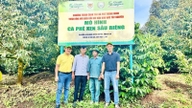


For nearly 20 years working in agricultural extension, Ms. Le Thi Hong Phuoc has always stayed close to the fields and the people to support production, earning their trust and affection. Photo: LA
That perseverance has made her a trusted partner for many households. Mr. Nguyen Van Kiet in Dong Duc village (Dien Ban Tay commune) is one of the people who directly participated in the models implemented by Ms. Phuoc. He recalled that when the locality began implementing the organic rice production model, many households were hesitant because they worried about reduced yields, increased costs, and risks in the first few seasons.
"Ms. Phuoc comes down to the fields almost every week. She explains everything in detail, analyzes the benefits of the model, and monitors the rice fields with the farmers. If the people have any questions, she goes down to the field to discuss them. Thanks to her, the people gradually feel confident in following the model," Mr. Kiet recounted.
According to Mr. Kiet, what is admirable about Ms. Phuoc is her proactive approach in seeking out new models suitable for local conditions, from new crop varieties to organic farming methods. She not only proposes and connects with businesses and research institutes, but also directly accompanies farmers throughout the implementation process.
Instill confidence in farmers.
For Ms. Phuoc, agricultural extension is not about bringing an entire model from elsewhere and applying it, but about choosing what the people need and what is suitable for their own land. That is also the reason why she, together with the Southern Central Coastal Science and Technology Institute, implemented a demonstration model of the LDH.99 peanut variety in Dien Ban Tay commune.
In the early days, persuading 16 households to participate in the model was not easy. Many were accustomed to cultivating traditional peanut varieties and were reluctant to join the model because of the mentality of "only daring to change when they see others doing it successfully." Ms. Phuoc and the Institute's staff visited each household many times to analyze the characteristics of the new variety, guide the technical process, and closely monitor the production throughout the season. When the peanut fields developed well, showing many outstanding advantages, yielding high productivity, and being able to be cultivated in both the winter-spring and summer-autumn seasons, many households proactively registered to buy the seeds to expand their acreage.
Demonstration models for new rice varieties were also implemented in a similar manner. From selecting participating households and organizing training to monitoring the growth of the rice plants, she was directly involved. For her, the most gratifying thing was not that the model was completed on schedule, but that afterwards, people voluntarily replicated it because they saw the immediate effectiveness on their own fields.
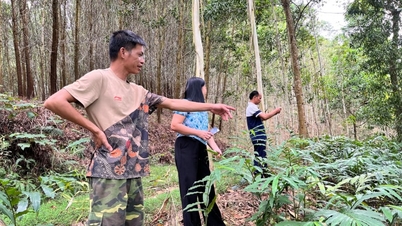
Many safe production models have been implemented by the Da Nang Agricultural Extension Center, helping farmers change their way of thinking and doing things. Photo: LA
"What makes me happiest isn't completing a model, but seeing people start to trust and readily adopt something new. The joy and praise from the people after the model is finished is what motivates me to continue working in this field," she said.


Along with transferring scientific and technological advancements, Ms. Phuoc considers information dissemination an indispensable part of agricultural extension activities. Besides conducting direct training sessions for farmers, she and her colleagues compile newsletters, articles, and technical instruction videos, utilizing local radio broadcasts, electronic information portals, social media platforms, and Zalo groups to promptly convey information to the people.
In the livestock sector, she developed a vaccination plan early on, coordinating with villages to disseminate information and organize vaccinations according to schedule. As a result, the vaccination rate for livestock has consistently exceeded 80%, and the locality has not experienced any major outbreaks since the end of 2025.
"Doing a good job of prevention is protecting people's livelihoods. When there are no outbreaks, people can produce with peace of mind, and the government also saves a lot of costs on epidemic control," Ms. Phuoc shared.
Ms. Ngo Thi Thu Van, Deputy Director of the Da Nang City Agricultural Extension Center, assessed that Ms. Le Thi Hong Phuoc is a highly responsible officer who is always proactive and dedicated to her work. During the implementation of agricultural extension models, she always carefully surveys the actual needs of the locality, selects the right participants, and closely monitors the people to promptly resolve any arising difficulties.
"Grassroots agricultural extension officers are the extended arm of the agricultural extension system, because they are the closest to the people, understand the fields best, and directly introduce technological advancements into production. Ms. Phuoc is one of the officers who has clearly demonstrated this role," commented Ms. Ngo Thi Thu Van.
Source: https://nongnghiepmoitruong.vn/gan-20-nam-bam-dan-gan-ruong-d819302.html