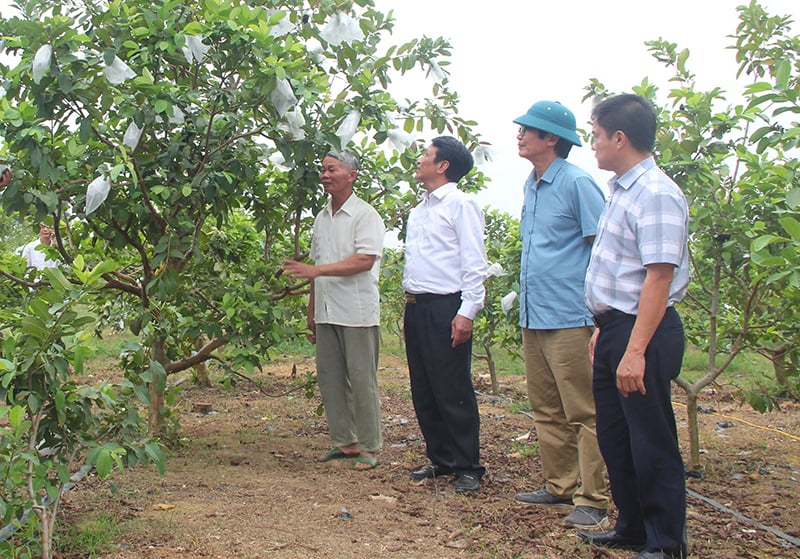
The Taiwanese pear guava orchard of Mr. Hoang Van Dau's family uses drip irrigation and organic fertilizer.
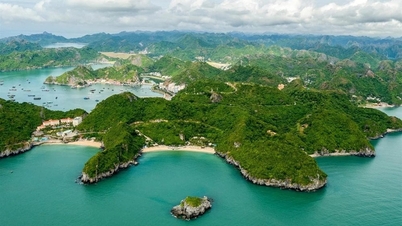
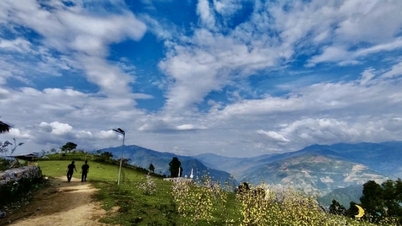
The majestic Duong Lang mountain range stretches along the eastern side of Ha Long town, remaining lush green year-round. However, the valley behind the hills bordering the foot of Duong Lang mountain is overgrown with bushes and thorns. Previously, local residents considered this area unsuitable for farming or agricultural development. But with the determination of a soldier of Uncle Ho's army, in 2015, war invalid Hoang Van Dau, classified as 4/4, took on the contract to rehabilitate the land.
Then, he invested all the capital he had accumulated over the years from his grocery store in the center of Ha Long town to rent machinery and spend his days digging, leveling, and improving the land. First, a kilometer-long road was opened, winding through the foothills. Countless thorny bushes and rocks were removed and moved so that traders' trucks could later enter and exit to transport fruits and livestock products for sale.
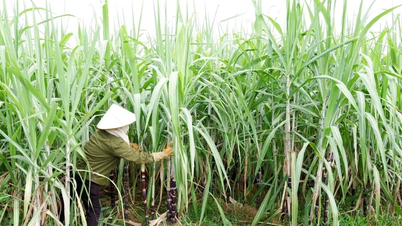
According to Mr. Dau, "This remote area belongs to the Dong Toan region, which locals call 'the rocky and barren land' because it's all rocks and infertile soil. Initially, my family planted annual crops like pineapples and sugarcane for immediate income, then gradually developed livestock farming. Because the total area of this sloping land is over 5 hectares, pouring concrete pillars and strung barbed wire throughout the production area exhausted our capital. Difficulties piled up when the first batch of 3,000 chickens gradually died from disease due to a lack of experience in caring for them."
With the resilience of a soldier who participated in the Ho Chi Minh Campaign in 1975 and the Northern Border War in 1979, he diligently improved and gradually developed his production. On the red, rocky soil, he had to dig a deep hole to plant each fruit tree, then buy well-rotted manure and add his own organic fertilizer to improve the soil. Along with family labor, in just 3-4 years, he had a hill with 500 jackfruit trees and an area with 400 sapodilla trees. Throughout the process of developing his fruit tree cultivation, he constantly sought out information, traveling to southern provinces to learn about and purchasing seedlings from reputable nurseries.
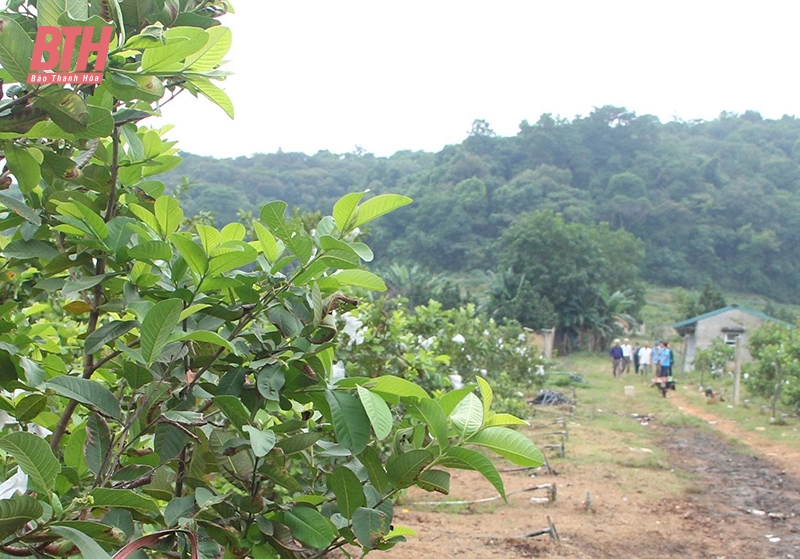
A corner of the production area, reclaimed from the barren land near Duong Lang mountain by veteran Hoang Van Dau.
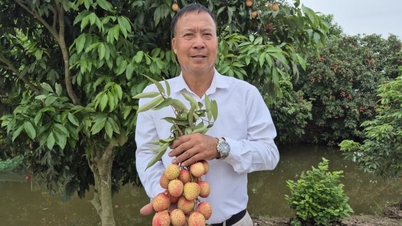
To date, the production area still has 600 green pomelo trees, 800 Vinh orange trees, and 800 Dien pomelo trees that have been yielding harvests for many years. On the distant hillside, he planted an additional 450 avocado trees that are also bearing abundant fruit, as well as many areas for growing longan and other fruit trees. The largest and flattest area is dedicated to developing a Taiwanese pear guava orchard with up to 5,000 trees, providing a year-round source of income.
The most challenging problem, irrigation water, was also solved by him hiring someone to drill large pumping wells at the foot of the hill. Recently, the family has also invested hundreds of millions of dong to develop a drip irrigation system to each guava tree in order to increase productivity.
It's noteworthy that his family practices organic farming. All fertilizers are made from well-rotted manure. He considers all the weeds under the fruit trees as a food source for his herd of 50 to 100 goats. According to him, if herbicides are sprayed, the goats will die immediately if they eat them, so farming practices are carried out with strict adherence to food safety and hygiene standards. Flat areas of land are also used to grow corn and soybeans, which are then milled and fermented to make organic fertilizer for the fruit trees.
To generate additional income, his family built more livestock pens and hired more laborers to expand their pig herd to dozens of pigs and free-range chickens to thousands per batch. All livestock waste is collected, treated with enzymes to eliminate odors, and composted into fertilizer for fruit trees. Many of the crops grown in the production area also become feed for the livestock.
Every day, Mr. Dau wakes up at 4-5 a.m. and works diligently until evening. Thanks to many years of disciplined work, at seventy years old, this disabled veteran (category 4/4) remains as healthy as he was in his middle age. To date, the production area has entered a stable phase, generating a profit of approximately 1 billion VND per year. During the production process, he has also hired and provided stable employment for 5 local workers and many seasonal workers.
Text and photos: Linh Truong
Source: https://baothanhhoa.vn/khai-mo-dat-hoang-ven-nui-duong-lang-252274.htm
































































Comment (0)