

Nam Dinh province has more than 1,300 historical sites, including two special national historical sites: the Tran Temple complex and Pho Minh Pagoda, and Keo Hanh Thien Pagoda.
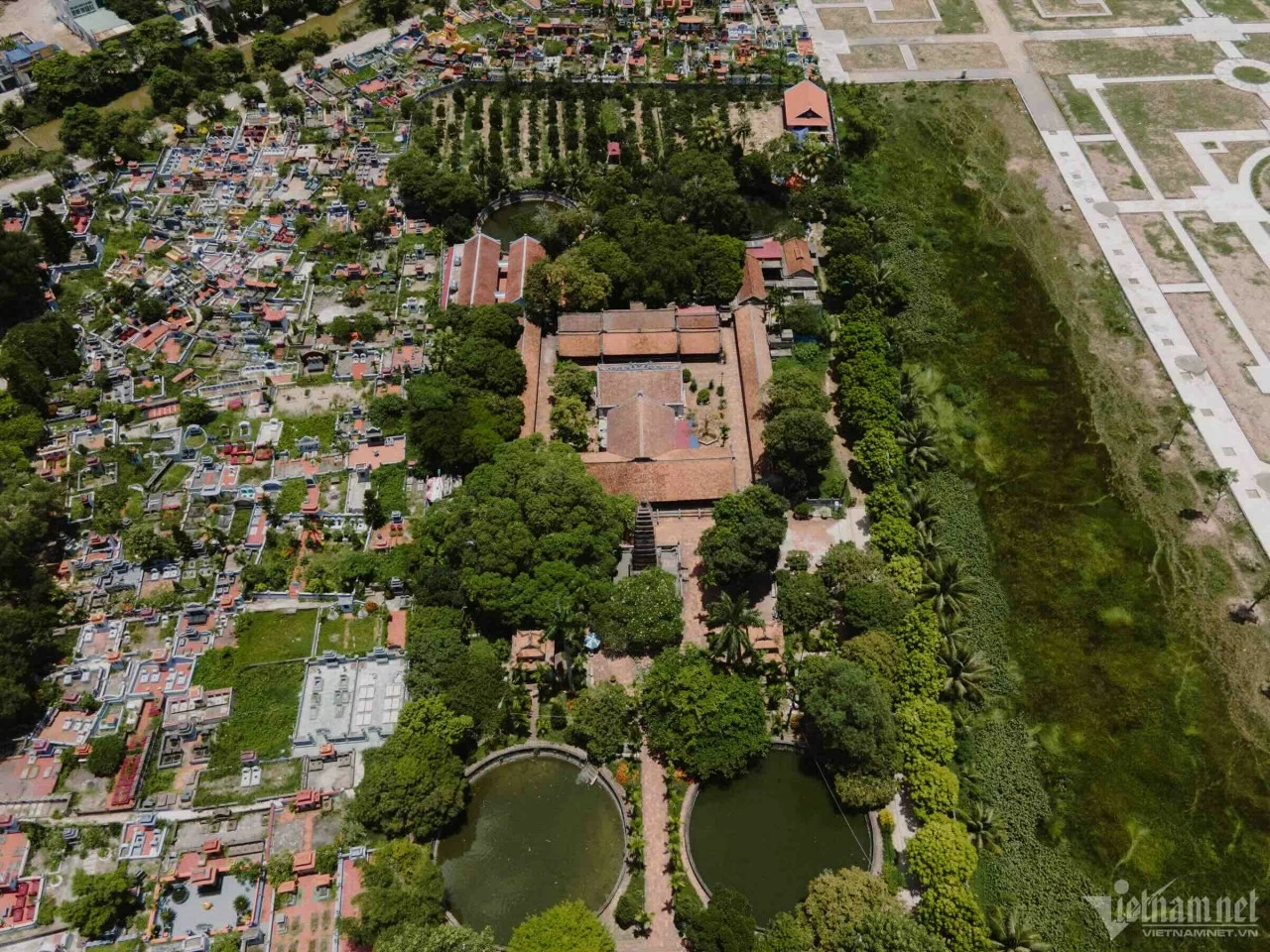 |
| Pho Minh Pagoda, an 800-year-old pagoda in Nam Dinh. (Source: Vietnamnet) |
"The land" of historical sites
Located in the heart of the southern Red River Delta, Nam Dinh is the birthplace of the Tran Dynasty – the most prosperous dynasty in Vietnamese feudal history – and is a land rich in historical relics and heritage.
Nam Dinh province has more than 1,300 historical sites, including two special national historical sites (comprising the Tran Temple and Pho Minh Pagoda historical and architectural site and the Keo Pagoda in Hanh Thien architectural site).
While Tran Temple symbolizes the worship of the Father, Phu Day is associated with the worship of the Mother. Tran Temple has a seal-opening ceremony on the night of the 14th of January, and Phu Day is linked to the Vieng Market, which is held once a year.
Nam Dinh has one intangible cultural heritage of humanity, the practice of worshipping the Mother Goddess of the Three Realms, and dozens of national-level intangible cultural heritages such as Ca Tru singing, Chau Van rituals, Phu Day Festival, Tran Temple Festival, Keo Pagoda Festival, Cat Dang lacquerware, Nam Dinh pho...
Nam Dinh province has three main religions: Buddhism, Catholicism, and Protestantism. Over 800 temples are scattered throughout the province, the oldest being Pho Minh Pagoda, located within the Tran Temple - Pagoda complex, a special historical and cultural relic site. This temple worships both Buddha and Emperor Tran Nhan Tong, the third king of the Tran dynasty.
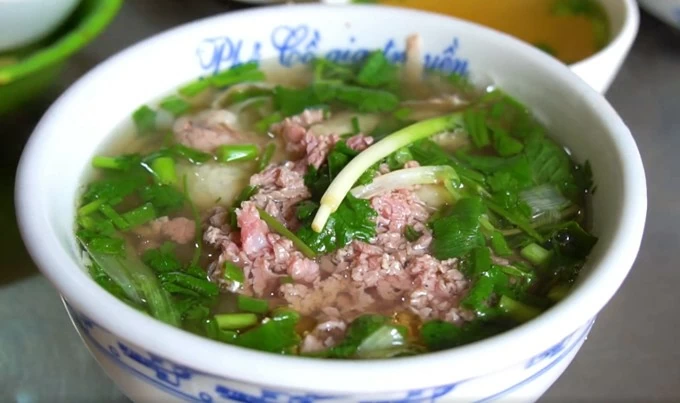 |
| Pho Co, a famous traditional dish from Nam Dinh province. (Source: Communist Party) |
Nam Dinh province has over 660 churches. The Bui Chu Diocese is located entirely within the six districts south of the Dao River in Nam Dinh province, encompassing the majority of parishes and parishioners in the province.
The craft villages in Nam Dinh are also diverse. Nearly 100 traditional craft villages are located here, including many famous ones such as Tong Xa bronze casting, La Xuyen wood carving, Co Chat silk weaving, Cu Tru weaving, and Vi Khe ornamental plant cultivation…
Unique festivals
The Tran Temple Festival is one of the largest festivals ever held, attracting a large number of visitors from all over the country. The Tran Temple complex comprises three prominent architectural structures: Thien Truong Temple (Upper Temple), Co Trach Temple (Lower Temple), and Trung Hoa Temple.
The seal-opening ceremony at Tran Temple began around the 13th century during the Tran Dynasty, in 1239. This is an ancestral ritual of the Tran family. Also at Thien Truong Palace, the Tran kings held banquets and bestowed titles upon officials who had rendered meritorious service to the country. The festival was interrupted after the Mongol invasion, and was only reopened in 1269 by King Tran Thanh Tong.
Since then, the Tran Temple seal-opening ceremony has taken place on the full moon of the first lunar month, usually at night from 11 PM on the 14th day of the first lunar month to the early morning of the full moon. Mr. Nguyen Duc Binh - Head of the Management Board of Tran Temple and Thap Pagoda relics - said that the Tran Temple festival in 2024 welcomed about one million visitors, and nearly 300,000 seals were distributed. This year, the seal-opening ceremony took place under heavy rain, but visitors from all over still stayed up all night, braving the rain to wait for the seals to be distributed.
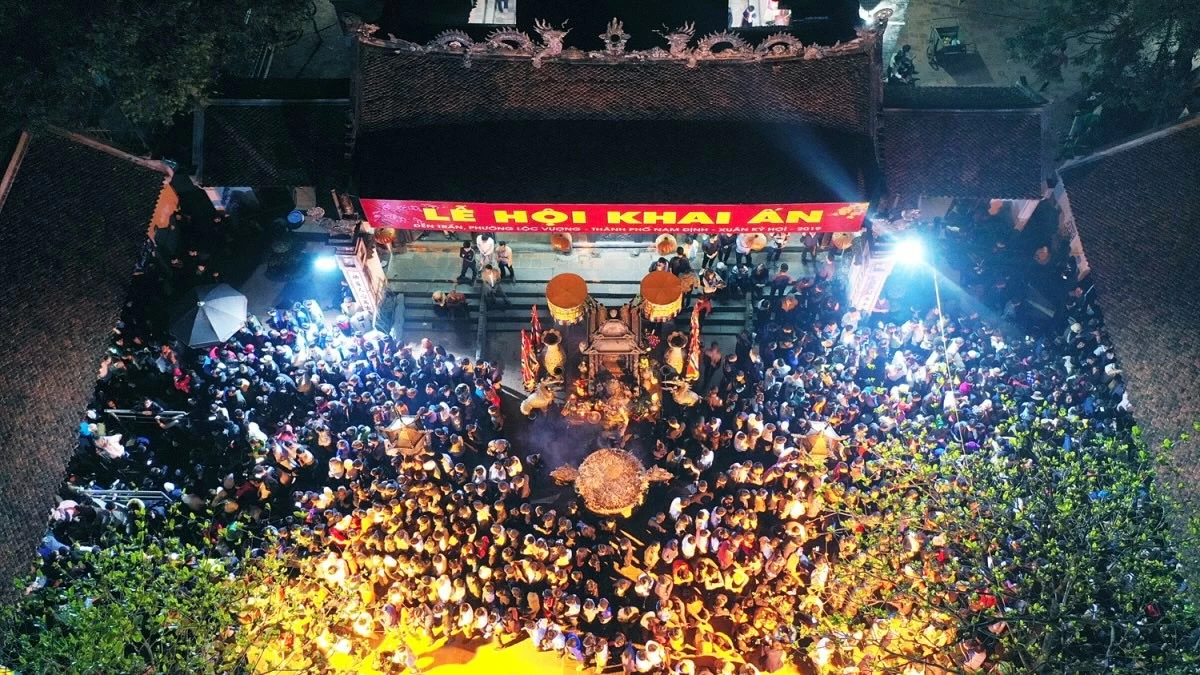 |
| The Tran Temple Seal Opening Ceremony always attracts a large number of visitors. (Source: VnE) |
As is customary on the 7th and 8th of January, tourists flock to Nam Dinh to attend the Vieng Market festival. According to ancient beliefs, this market has the meaning of "buying good luck and selling bad luck".
The Vieng Market is also an opportunity for people to exchange experiences in animal husbandry and farming, and to display and sell products from traditional craft villages. The word "Vieng" in Vieng Market means "to return," "to gather," "to reunite," and "to come together for joy."
Visitors to Vieng Market don't need to haggle. Locals believe that if sellers don't overcharge and buyers don't bargain, it will bring good luck and success to both parties.
At the beginning of the year, Nam Dinh is also famous for the Phu Day Festival, which honors Saint Mother Lieu Hanh - a principal deity among the four immortals of Vietnamese people and of the traditional Mother Goddess worship.
The festival features many unique activities, the most prominent of which are the art of folk singing and spirit mediumship. According to cultural researchers, the Phu Day festival is an important component in the grand epic performance of Lieu Hanh.
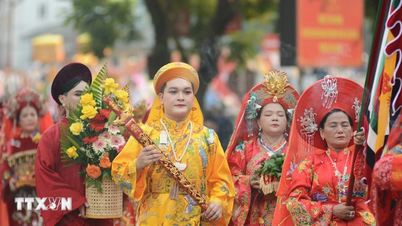
This festival has three main rituals: the torch procession, the ritual of carrying the Mother Goddess's scriptures, and the flower staff procession (also known as the calligraphy procession). The Phu Day Festival and the Chau Van ritual of the Vietnamese people have been included in the list of National Intangible Cultural Heritage. The practice of worshipping the Mother Goddess of the Three Realms by the Vietnamese people has been inscribed by UNESCO as a Representative Intangible Cultural Heritage of Humanity.
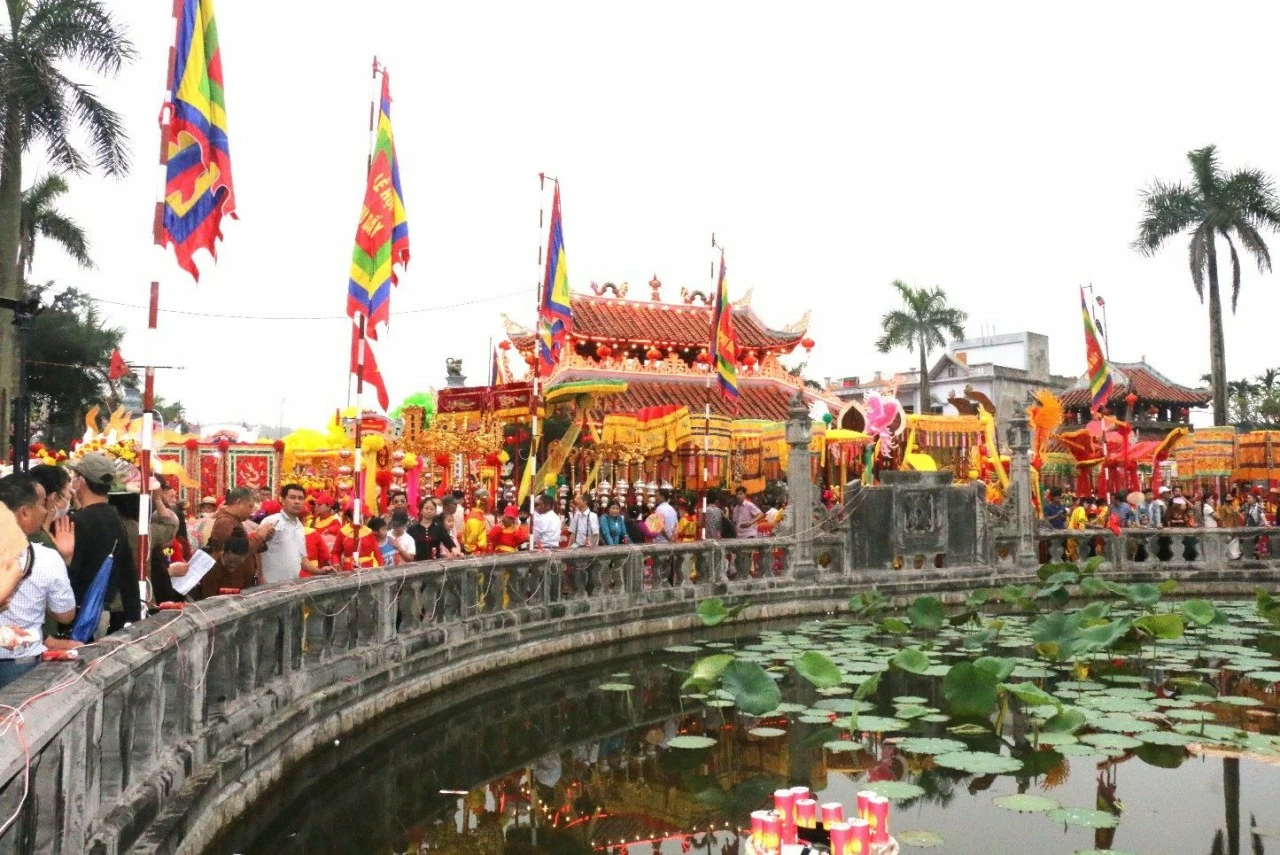 |
| The Phu Day Festival is one of the typical festivals of Nam Dinh province. (Source: Cong Ly) |
The Keo Pagoda Festival in Hành Thiện (Hành Thiện village, Xuân Trường district, Nam Định province) is an occasion for villagers to express gratitude to the saint who contributed to the country, to pray for favorable weather, prosperity, and happiness, and to reflect the rich cultural identity of the local community.
This festival is a cultural activity associated with the worship of the Venerable Zen Master Khong Lo - a national master during the Ly Dynasty who made many contributions to saving the country and helping the people, teaching them fishing, agriculture , bronze casting, and medicine.
The pagoda holds two festivals a year: the Spring Festival during the Lunar New Year and the September festival, held on the 13th, 14th, and 15th of the lunar month to commemorate the birthday of the patron saint Khong Lo.
The Keo Pagoda Festival in Hành Thiện still preserves ancient rituals such as presenting offerings to Buddha and saints, welcoming deities, offering ceremonial robes, and erecting banners.
Source: https://baoquocte.vn/kham-pha-viet-nam-ghe-tham-nam-dinh-dia-phuong-tham-dam-van-hoa-lich-su-284192.html
![[Photo] “Red Journey” 2026: Vietnamese Youth Continue Building the Bridge of Friendship Between Vietnam and China](https://vphoto.vietnam.vn/thumb/1200x675/vietnam/resource/IMAGE/2026/04/20/1776629730866_4055880775670638308-9618-4200-jpg.webp)








































Comment (0)