

The struggle for parking
Dai Kim Building (Dai Kim Ward, Hoang Mai District), which opened in 2017, is a 22-story building with 630 apartments, but only has one basement parking level. Due to residents' need for parking spaces, the building's management had to organize a lottery for parking in the basement. In 2024, only 58 parking spaces were available, while 125 applications met the eligibility criteria.
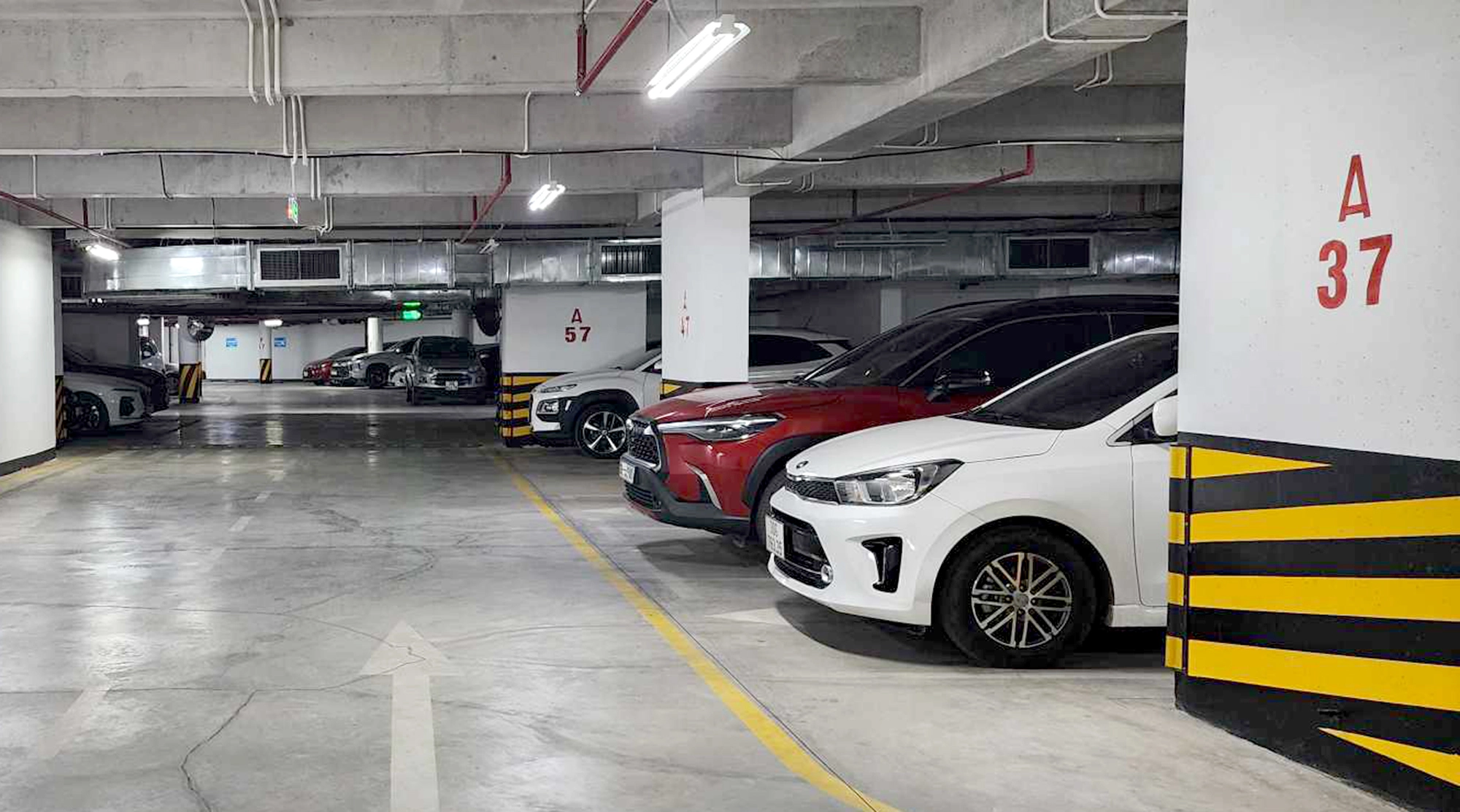
Many urban areas have underground parking, but it doesn't meet the needs of all residents.
According to Mr. Nguyen Xuan Quan, a resident here, his family has lived here for decades but has always had to park their car outside, which is very inconvenient.
This situation also occurs in the Trung Hoa - Nhan Chinh urban area (covering Cau Giay and Thanh Xuan districts). After 14 years of operation, the entire area has approximately 30 high-rise buildings ranging from 17 to 34 stories, with a population of 30,000 to 40,000 people. Most apartment buildings here only have one basement parking level, forcing the majority of residents to find parking outside.
"The population density is very high, but the developer only built one basement level. There isn't enough space for even motorbikes, let alone cars. We hope the authorities will soon find a long-term solution," said Ms. Bui Thu Huong, a resident living here.
According to our survey, the shortage of parking spaces is also occurring in many other apartment buildings and urban areas in the city, such as: Dich Vong (Cau Giay district); Nam Trung Yen (covering both Cau Giay and Nam Tu Liem districts); Hateco apartment complex (Nam Tu Liem); Kim Van - Kim Lu, HH Linh Dam (Hoang Mai district); Nam Cuong; Duong Noi 2 (Ha Dong, Hanoi )...
The lack of parking spaces also leads to widespread indiscriminate parking in apartment complexes, most notably in Kim Van - Kim Lu and HH Linh Dam areas, which poses both traffic safety risks and disrupts urban order.
Newly constructed apartment buildings must increase parking space by 50%.
According to Dr. Architect Dao Ngoc Nghiem, former Director of the Hanoi Department of Planning and Architecture and Vice President of the Vietnam Urban Planning and Development Association, the rapid pace of urbanization and the excessive increase in vehicles in recent years are the main reasons putting significant pressure on urban technical infrastructure.
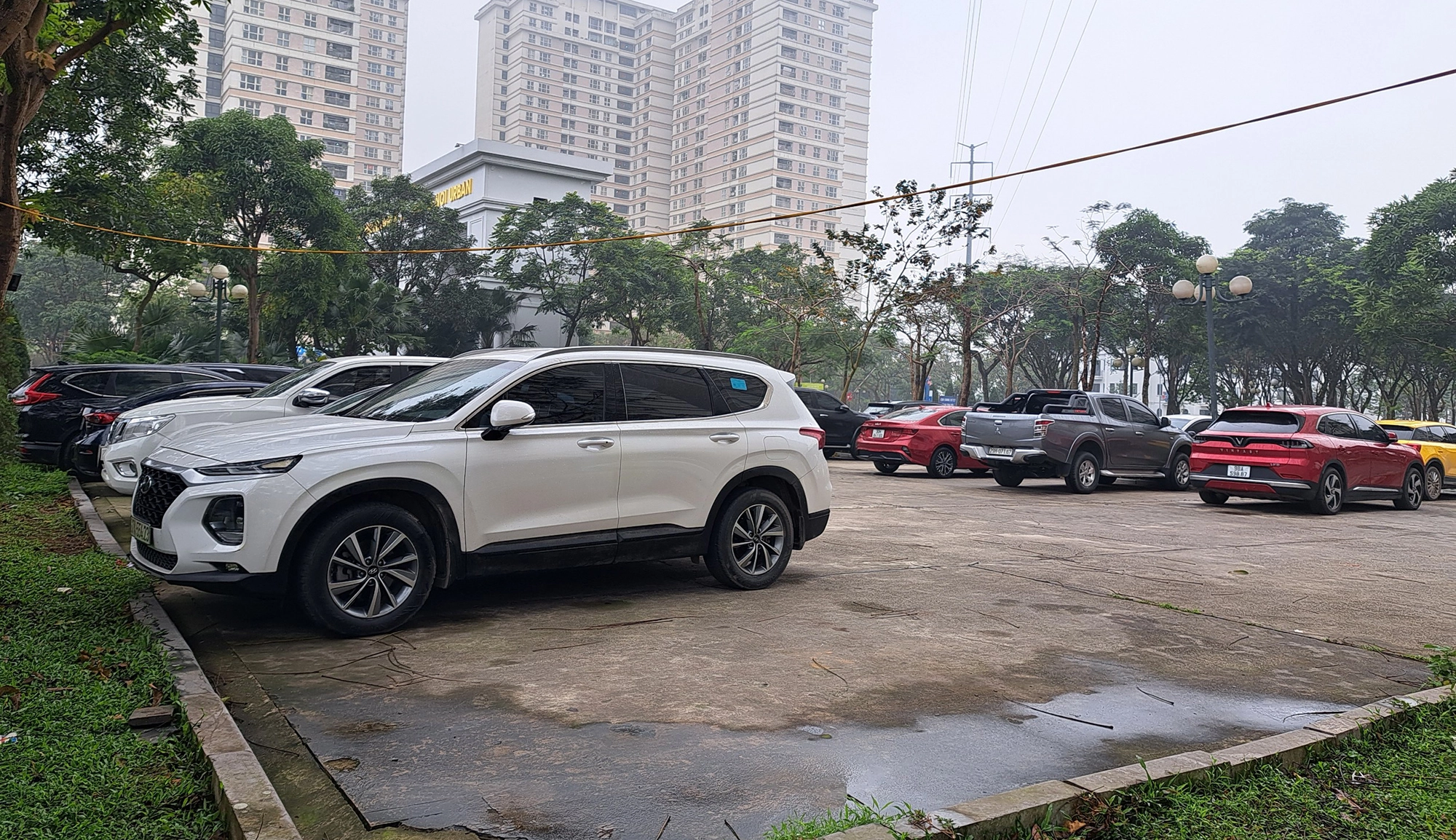
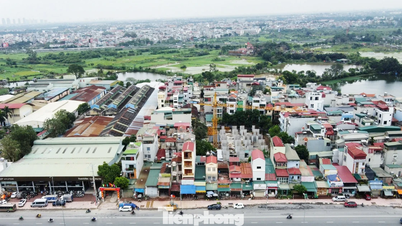
Even apartment buildings with underground parking still need to arrange additional parking spaces around the building (photo taken at Duong Noi 2 Urban Area, Ha Dong).
"Parking plans exist, but they haven't been implemented properly for many years. The parking plan for Hanoi has been adjusted 3-4 times since 1998. Some parking lot projects have failed due to the demand for land in the inner city," Mr. Nghiem emphasized.
Architect Nguyen Huy Khanh argues that investors haven't prioritized providing parking for residents, as the cost of building one underground parking level is almost equal to that of two above-ground levels. If the cost is recovered by including it in the apartment selling price, it's like the investor cutting off their own competitive advantage compared to similar projects. And if the investment is recovered through parking fees, it's unclear when the investment costs will be fully recouped.
Proposing solutions, Mr. Khanh suggested that, in addition to addressing the parking problem in currently overloaded urban areas, it is necessary to review static traffic and parking spaces within urban areas to make appropriate adjustments.
Mr. Nguyen Duc Nghia, Deputy Director of the Hanoi Department of Planning and Architecture, said: "Currently, there is a policy to develop a plan for renovating and rebuilding old apartment buildings, constructing new buildings according to the plan, with synchronized social and technical infrastructure, and ensuring sufficient parking space according to current regulations."
With existing apartment buildings and parking spaces allocated within each construction plot, the City People's Committee has approved the Planning for bus stations, parking lots, logistics centers, and rest stops in the city until 2030, with a vision to 2050. This plan identifies public parking lots with a total area of 1,805.7 hectares in the central urban area.
According to Mr. Nghia, for newly constructed apartment buildings, the city has clearly stipulated the parking area quota, increasing it by 50% compared to the Vietnamese Construction Standards. Along with planning solutions, Mr. Nghia believes that it is necessary to study solutions to limit private vehicles and encourage the use of public transportation to reduce pressure on parking spaces.
According to the Hanoi Department of Planning and Architecture, high-rise apartment buildings in Hanoi have developed over several periods. Regulations and standards governing parking space in apartment buildings have varied and gradually increased over time. Specifically, in 2004, the design standard for high-rise housing stipulated one parking space for every 4-6 apartments; by 2008, this stipulated 0.75-1.5 parking spaces per apartment. Currently, the regulation requires 24-31 square meters of parking space for every 100 square meters of usable apartment floor area.
Source
![[Photo] Tran Cam Tu, Standing Member of the Secretariat of the Central Committee, presides over the first meeting of the Central Steering Committee on the Development of Vietnamese Culture.](https://vphoto.vietnam.vn/thumb/1200x675/vietnam/resource/IMAGE/2026/03/19/1773895004549_ndo-br-bnd-1195-2-jpg.webp)
































![[Photo] The General Secretary and the Prime Minister attend the groundbreaking ceremony for multiple-level boarding schools in border areas.](https://vphoto.vietnam.vn/thumb/1200x675/vietnam/resource/IMAGE/2026/03/19/1773888999705_vna-potal-tong-bi-thu-va-thu-tuong-du-le-khoi-cong-dong-tho-dong-loat-cac-truong-noi-tru-lien-cap-bien-gioi-8649904-3885-jpg.webp)




























































Comment (0)