

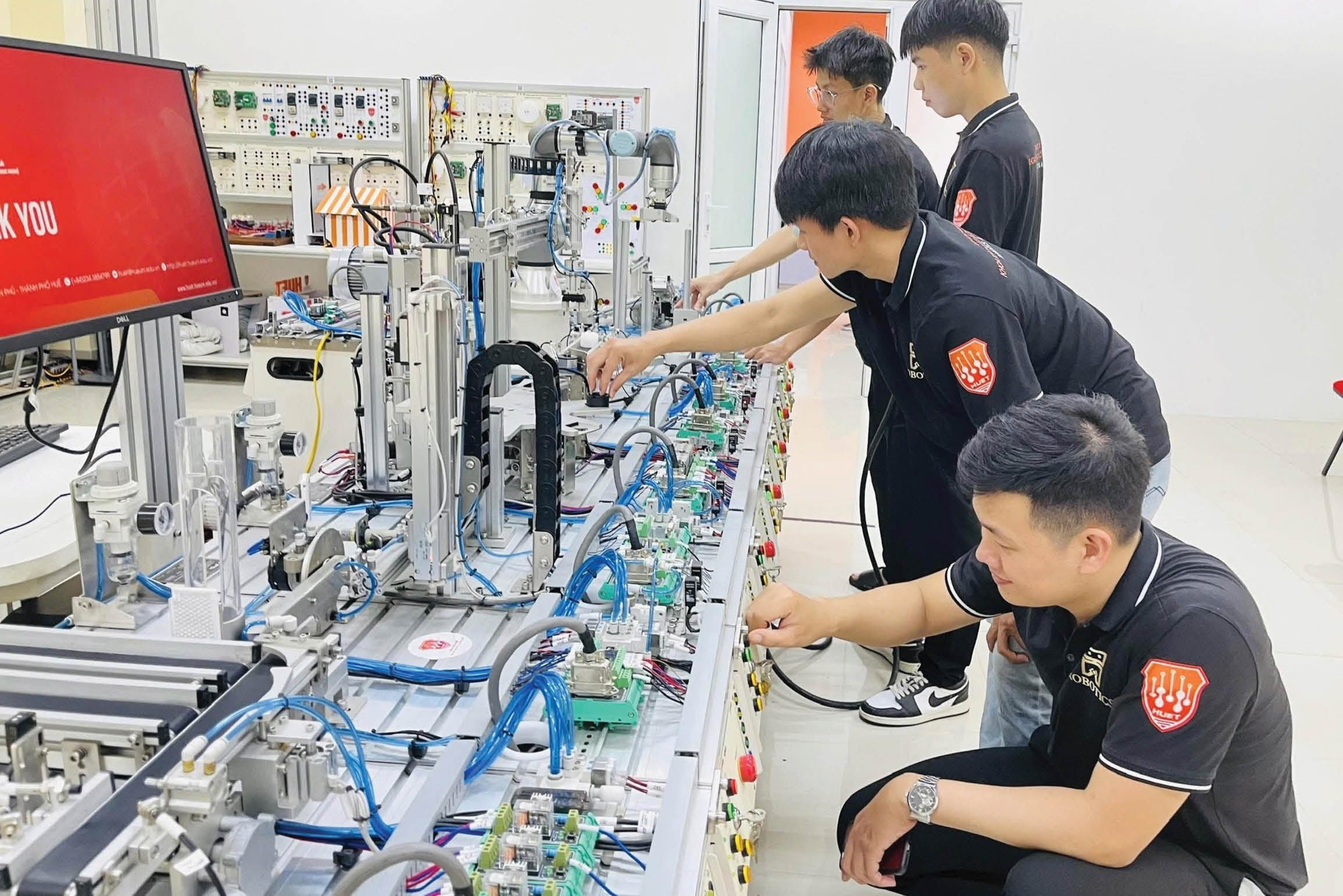
 |
| Students from the Faculty of Engineering and Technology - Hue University apply technology in their research. Photo: H. Trieu |
Achievements and gaps to be filled
A "Cultural City" is where heritage, art, traditions, and creativity become the driving force of socio -economic development. Meanwhile, a "Knowledge City" operates based on education, technology, and innovation. Hue has a unique advantage in combining both models: a leading heritage treasure and a strong network of education and research.
This intersection creates a unique urban model: a Cultural-Knowledge City – where preservation and development go hand in hand, and tradition and technology blend together. In this model, digital governance is key to digitizing heritage, building open databases, and unlocking new value for the cultural industry and creative economy.
Hue has affirmed its position with 8 UNESCO-recognized World Heritage sites; the Hue Festival has international stature, and Hue University is a major training center in Central Vietnam. Some initial technological applications have been implemented, such as electronic tickets for historical sites, virtual museums, and GIS maps.
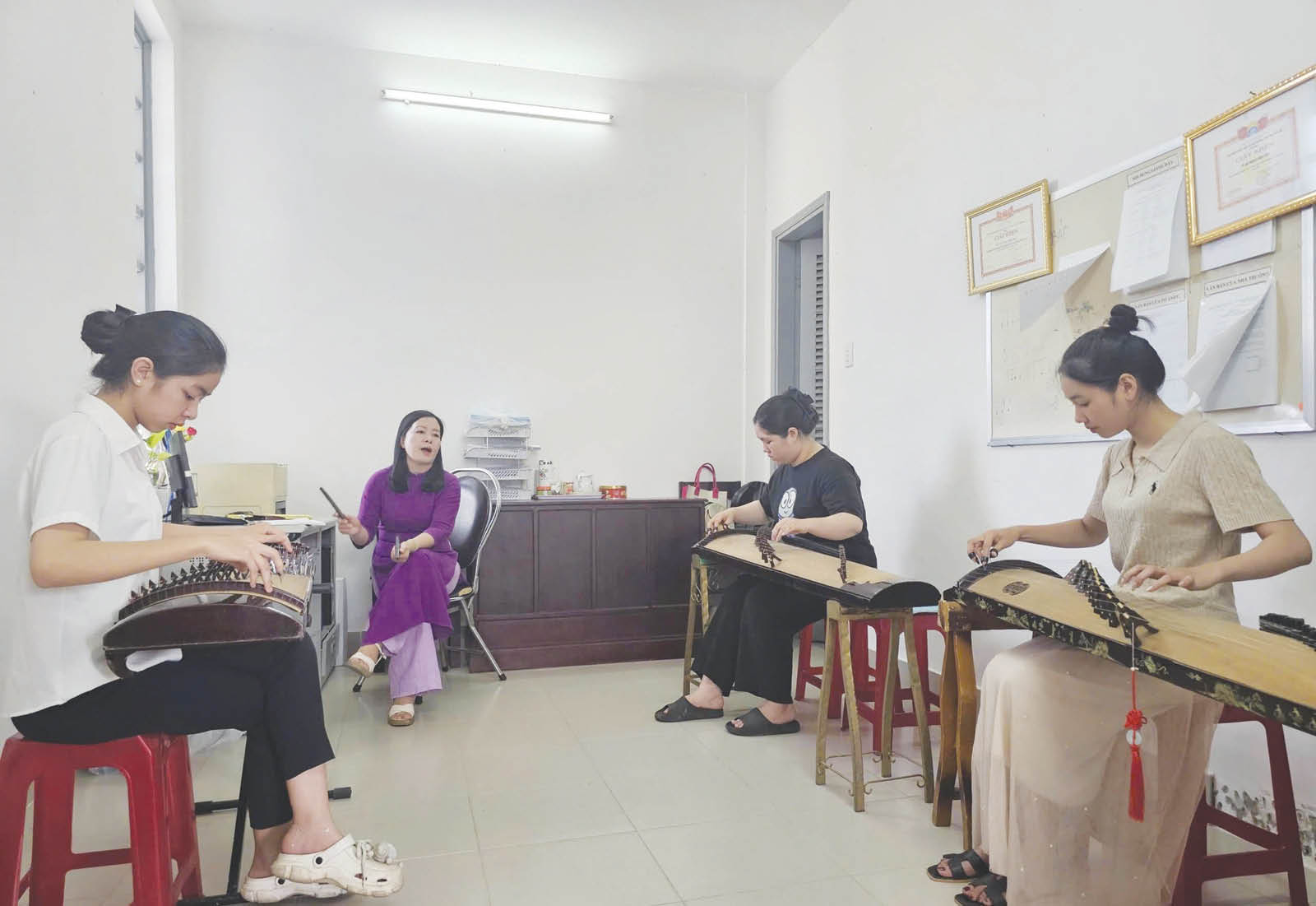 |
| Students during a practical lesson at Hue College of Culture and Arts. Photo: Phan Thanh |
However, practical realities still present many limitations: digitized heritage data is fragmented, lacking a city-level data center; the cultural and creative industries are small-scale, lacking leading enterprises; human resources lack in-depth expertise in technology and heritage; management mechanisms remain traditional, lacking a comprehensive plan; and the innovation ecosystem has not yet been clearly formed. Without a breakthrough, Hue will find it difficult to fully realize its inherent potential.
Five key solution groups
To realize its aspirations, Hue needs to focus on five groups of solutions: Firstly, perfecting the institutional framework and digital governance, such as issuing the "Hue Digital Knowledge and Culture City" project for the period 2026-2031; building a Heritage and Urban Data Center, standardizing and linking data; and establishing an inter-sectoral steering committee to coordinate and promote public-private cooperation.
Next, we will proceed with the digitization of heritage and digital cultural experiences through 3D/VR/AR digitization of the entire complex of key heritage sites; building a virtual Hue Museum, a digital knowledge repository about festivals and traditional crafts; and developing mobile applications, smart maps, and educational games.
In addition, it is necessary to focus on developing the creative cultural industry, moving towards establishing a Cultural Innovation and Entrepreneurship Center; applying e-commerce and blockchain to traditional craft villages; and organizing Digital Festivals and heritage hackathons to attract young people.
During its development, Hue University needs to focus on training high-quality human resources. It could open majors/interdisciplinary programs in digital heritage management and creative economy; attract international technology and heritage experts; and develop lifelong learning programs for the community.
Finally, it involves mobilizing society and the community at the center. This includes promoting public-private partnerships in the digitization of heritage; encouraging communities and traditional craft villages to participate in building digital heritage databases; and developing community-based cultural tourism linked to digital technology.
Aspiration and Action
Hue has the full potential to become a model heritage-knowledge city in the digital age. But to make this aspiration a reality, three key elements need to be implemented starting in 2026: a strong shift in governance thinking from traditional to digital; investment in open digital data infrastructure as a foundation for development; and activation of a knowledge-based innovation ecosystem that connects universities, businesses, and the community.
Above all, the community must be the central subject. It is the people, in their roles of both preserving and creating, who will determine whether Hue can both maintain its identity and reach out to the world through the strength of its culture and knowledge.
Hue, with its rich history and intellectual dynamism, has the potential to become a "Cultural and Knowledge City," where heritage thrives, knowledge converges, technology leads the way, and the community works together on the path to sustainable development.
(TUV, Deputy Head of the Hue City National Assembly Delegation)
Source: https://huengaynay.vn/chinh-polit-xa-hoi/khat-vong-thanh-pho-van-hoa-tri-thuc-158994.html


![OCOP during Tet season: [Part 3] Ultra-thin rice paper takes off.](/_next/image?url=https%3A%2F%2Fvphoto.vietnam.vn%2Fthumb%2F402x226%2Fvietnam%2Fresource%2FIMAGE%2F2026%2F01%2F28%2F1769562783429_004-194121_651-081010.jpeg&w=3840&q=75)


Comment (0)