

Song of the Fields
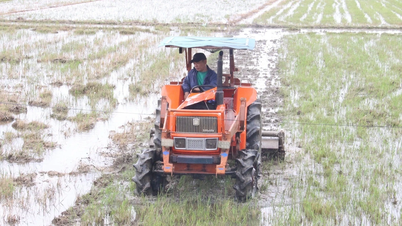
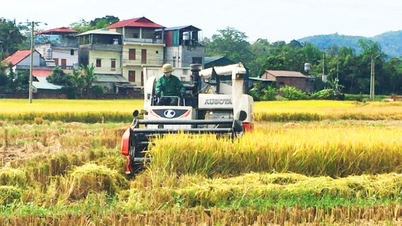
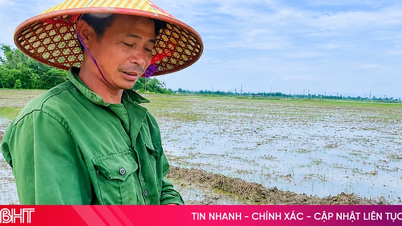
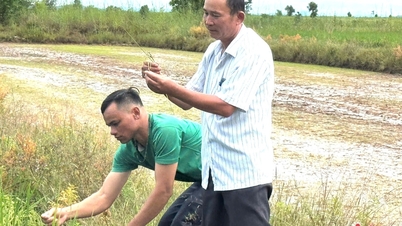
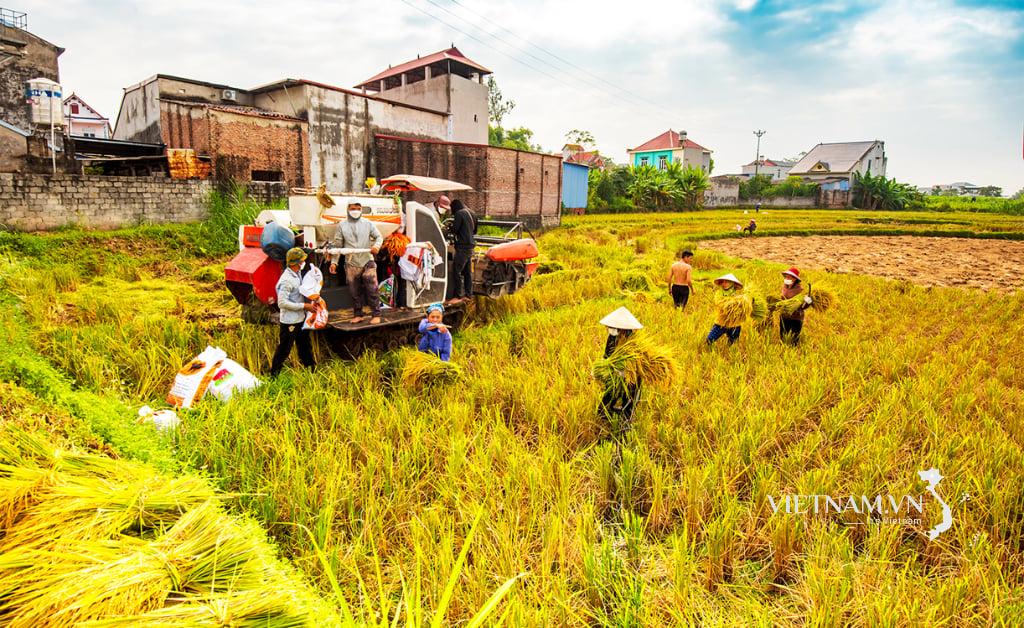
Mr. Nguyen Duc Thich is known as the "man with the most rice paddies" in Ich Hau commune (Thach Ha district). For the past month, his entire family has practically "moved" to the fields. From bamboo beds, tents, drinking water, electrical outlets to pumps and plows... everything has followed him during his days of "eating and sleeping" in the rice paddies. Watching him meticulously tend to each plot of land, his hands working tirelessly, one can see that his love for the fields and rice grains has been ingrained in him since childhood.
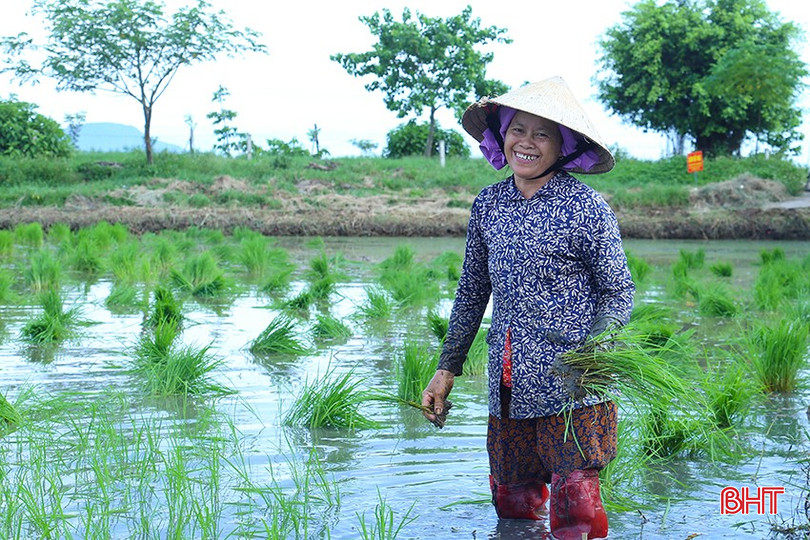
Pointing towards the rice fields that had begun to turn green, Mr. Thich said, “This year, the spring harvest was delayed, so the pressure on the planting season was even greater. When we started sowing the summer-autumn crop, it rained heavily, forcing us to replant some areas, creating countless difficulties. But, having been involved with farming for so many years, I always believe that with diligent care and proper investment, the land will not let us down.” He also shared that for many years, his family has harvested an average of over 45 tons of rice per season, enough to cover living expenses and reinvest for the next season.
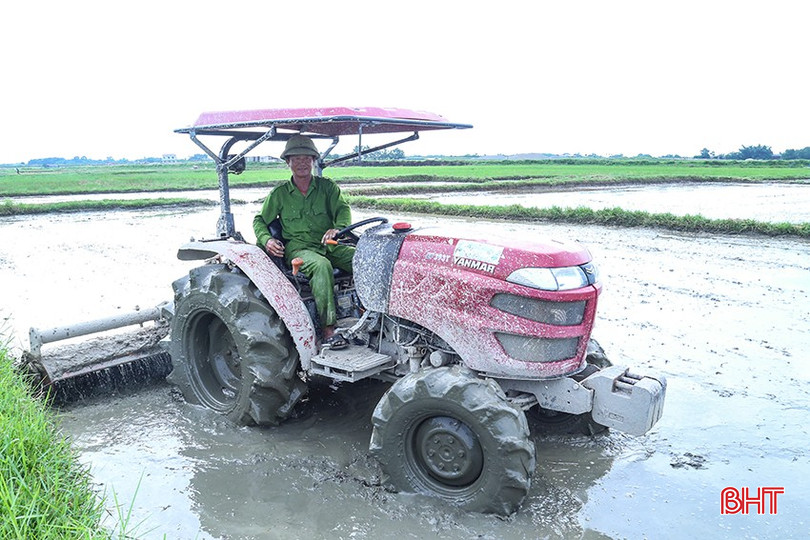
For Mr. Duong Cong Kieu (Dong Thanh residential area, Dong Mon ward, Ha Tinh city), the days of witnessing his more than 7 hectares of rice beginning to turn green were both arduous and filled with hope. Despite the significant losses from the spring crop due to unusual floods, he persevered in sowing seeds for the new season, investing his faith and love for the land into each plot. In this man, we always see unwavering determination and a willingness to overcome all difficulties to ignite the hope of a bountiful harvest. Mr. Kieu chuckled: “If we calculate according to the planting schedule compared to last year, this year's planting is almost 10 days later, but now the rice has taken root and is strong, with 3-4 seedlings already. If we lost the spring crop, we'll continue with the summer-autumn crop. We are used to the difficulties of growing rice in this region with scorching sun and heavy rains.”
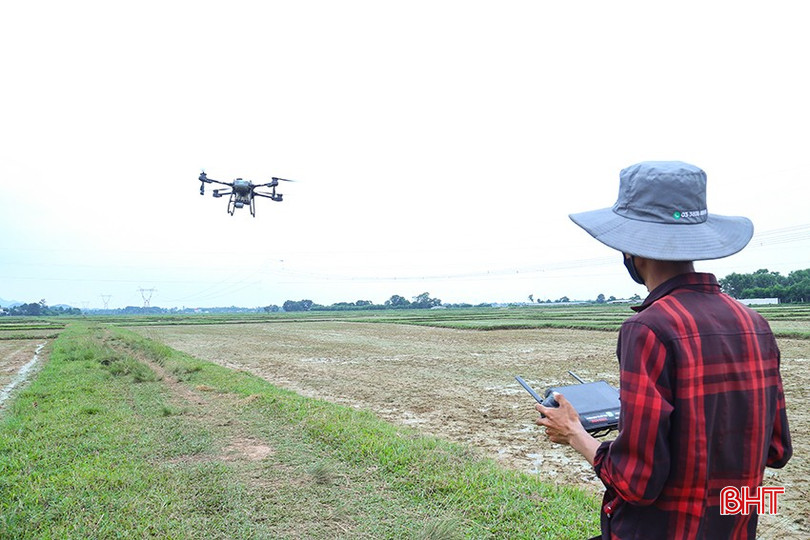
Adapting to climate change
During the summer-autumn crop season, extreme weather patterns continued to appear in Ha Tinh, with unusually heavy rains, thunderstorms, tornadoes, lightning, and unpredictable short-lived floods, causing significant damage to the people. In addition, typhoons and tropical depressions were assessed to be at a level similar to the multi-year average, but there was still a potential risk of direct typhoon landfall in the area. These unusual developments pose a major challenge to disaster prevention and response to climate change, and require localities and farmers to be more proactive in their production planning.
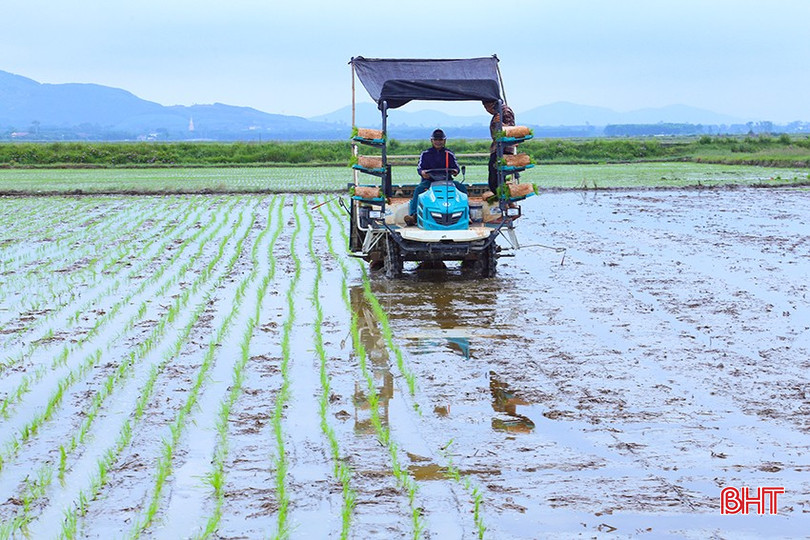
We returned to the rice-growing area of Ky Trinh ward (Ky Anh town) – where 60 hectares were damaged by heavy rains more than two weeks ago. The green of new rice plants has begun to cover many fields. Ms. Tran Thi Lanh (Ky Trinh ward, Ky Anh town) shared: “Anticipating the heavy rains caused by typhoon No. 1 that would damage some rice fields, I proactively soaked and germinated new seeds. After the rain stopped, having seeds made replanting much faster. But in agriculture, you always have to rely on the weather; we only hope for favorable weather so that this season will be successful again.”
For the people in the communes outside the dike in Duc Tho district, such as Tan Dan, Bui La Nhan, and Quang Vinh, summer-autumn production is always proactive, with the motto "one day early is one thing." The people enter production with the mindset of staying in the fields and completing the work ahead of the general planting schedule. Therefore, while other localities are just starting to grow green, the people here have already begun thinning and fertilizing for the first time.
Ms. Phan Thi Hanh (Dong Vinh village, Tan Dan commune) said: “Because this is a flood-prone area, I chose to grow the short-day BT09 variety so I could harvest early. Thanks to natural rainwater, the rice doesn't have to face drought and takes root very quickly. We focus on thinning and replanting according to the recommended density and fertilizing to ensure healthy plant growth.”
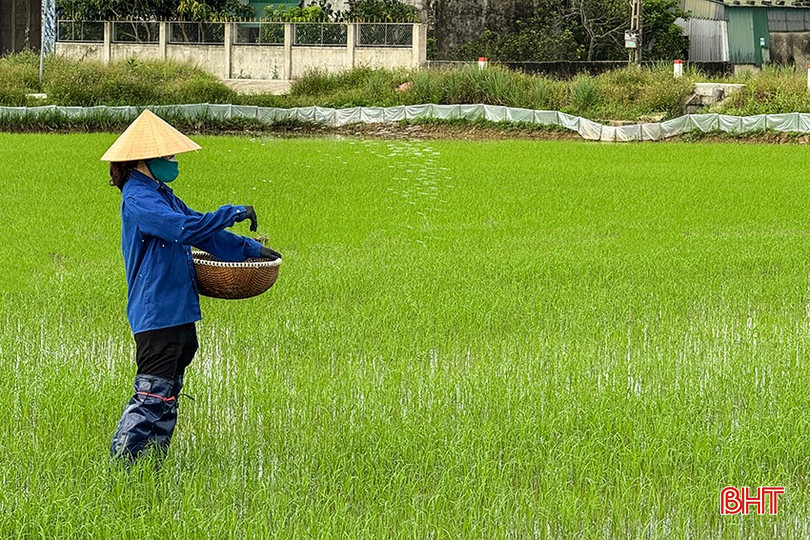
In a production season fraught with risks and seasonal pressures, large fields with integrated infrastructure, thanks to land consolidation, have enabled farmers to complete planting early, proactively manage water resources, and focus on crop care. The nearly 60-hectare model field in Phu Minh village (Ky Phu commune, Ky Anh district) stretches out in lush green.
Mr. Hoang Minh Luyen, head of Phu Minh village, said: “In 2023, implementing a major revolution in the fields according to Resolution 06-NQ/TU of the province, the village focused on land consolidation and exchange, forming a large model field of nearly 60 hectares, prioritizing the development of organic and VietGAP-oriented rice production models. To win against the weather, we tried to proactively sow all the rice at the same time and with the same variety, and invested in building a convenient irrigation system. The rice is developing well, and the villagers expect a successful harvest.”
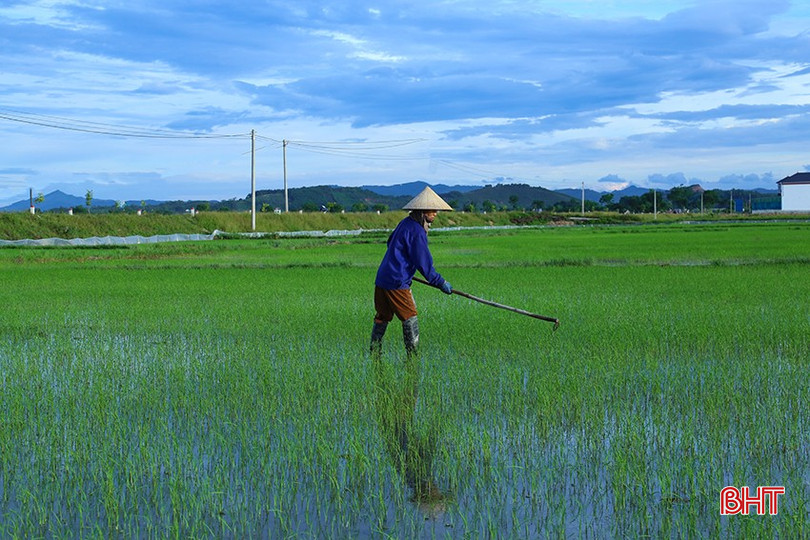
Many rice-growing areas in districts such as Duc Tho, Can Loc, and Thach Ha are entering the stage of thinning and caring for the summer-autumn rice crop.
This summer-autumn crop season, the entire province planted rice on over 45,170 hectares. With the rice plants now turning green, farmers are busy preparing for the next stages of care, fertilization, and pest control to ensure healthy growth and tillering.
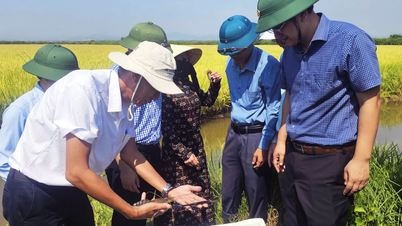
Mr. Nguyen Tong Phong, Deputy Head of the Provincial Department of Crop Production and Livestock, stated: “At this time, pests and diseases are beginning to appear irregularly. Some typical species include the small leaf-rolling caterpillar, brown planthopper, white-backed planthopper, and bacterial blight; in addition, there is a potential risk of black stripe dwarf disease and mobile yellow leaf disease in rice. These pests and diseases can cause damage, directly affecting crop yield and production. To protect the achievements of the planting season, localities should closely monitor the fields and guide farmers on appropriate care measures according to each growth stage. This includes adhering to the principle of applying fertilizer “heavy at the beginning, light at the end,” balancing macronutrients with micronutrients, prioritizing the use of specialized NPK fertilizers, limiting single fertilizers, and supplementing with organic and microbial fertilizers. Furthermore, agricultural by-products and green manure crops should be utilized to produce organic fertilizers, improve soil, and maintain fertility.”
Ha Tinh enters the summer-autumn crop season amidst the country's unpredictable weather patterns. Agricultural production faces numerous risks, but it also serves as a measure of how farmers and authorities at all levels respond to climate change. The resilience and knowledge gained from facing storms and floods by farmers fuel a hopeful summer-autumn crop season. As the green of young rice plants spreads across the fields, it begins to inspire hope in those who sow the seeds. With the summer-autumn rice planting essentially complete, farmers and relevant agencies are anticipating a bountiful harvest – following the successful spring crop; thus strengthening their confidence in achieving the agricultural sector's growth target of 2.8% in 2025.
Source: https://baohatinh.vn/khi-cay-lua-len-xanh-post290339.html
![[Image] "Journey of Hope" promotes the organ and tissue donation movement in Vietnam.](https://vphoto.vietnam.vn/thumb/1200x675/vietnam/resource/IMAGE/2026/05/20/1779294400833_1-8910-jpg.webp)
![[Photo] National Assembly Chairman Tran Thanh Man working with the Standing Committee of the National Assembly's Delegation Affairs Committee.](https://vphoto.vietnam.vn/thumb/1200x675/vietnam/resource/IMAGE/2026/05/20/1779294340023_ndo_br_1-1691-jpg.webp)
![[Photo] General Secretary and President To Lam works with the Party Committee of the Ministry of Health on the work of Vietnamese traditional medicine.](https://vphoto.vietnam.vn/thumb/1200x675/vietnam/resource/IMAGE/2026/05/20/1779294323718_a1-bnd-2978-3319-jpg.webp)

































































Comment (0)