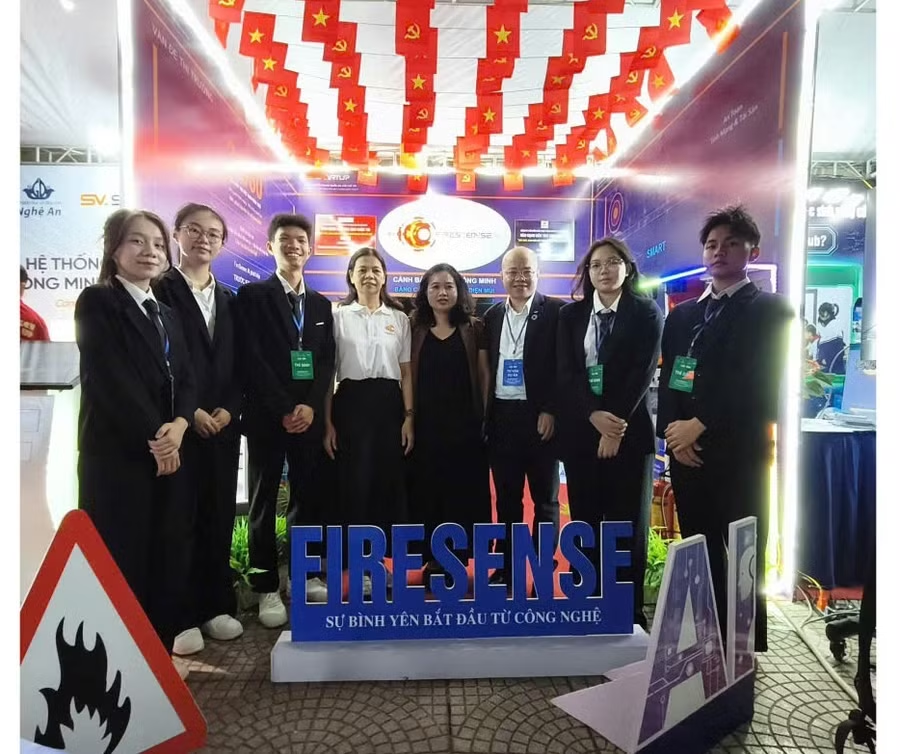
During the development of Firesense AI, the group of students from Vinh Phuc Specialized High School and Vinh Yen Secondary School not only created an artificial intelligence application to warn of fire hazards.
What's even more remarkable is that the students experienced almost all the tasks involved in a real technology project.
From idea research and product development to data collection, market research, financial planning, and presentations to expert panels, each member plays a distinct role.
Looking at Firesense AI, it's clear that the future of the technology workforce will not only be shaped by programming lessons or specialized knowledge, but also by the ability to collaborate, connect, and work together to solve real-world problems.
One project, many roles
Looking at the finished product, few would imagine that behind Firesense AI is a group of students with clearly defined roles and responsibilities.
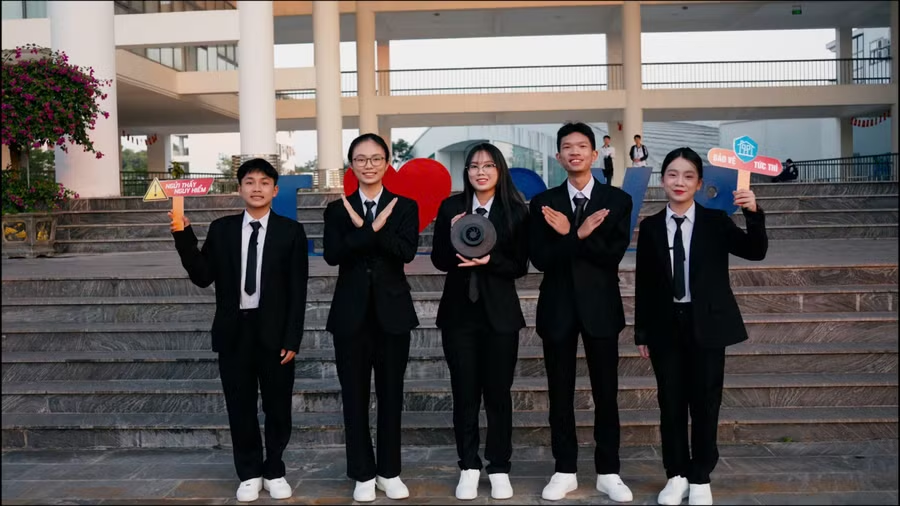
Within the team, Pham Nguyen An Chi takes on the role of coordinating and developing ideas; Le Quang Huy is in charge of technology and algorithms; Do Ngoc Ha participates in researching chemical factors related to the product; Nguyen Hieu Phong is in charge of finance; and Hoang Lan Anh is involved in operations.
Each person has their own strengths, but they must all work together to create a complete product.
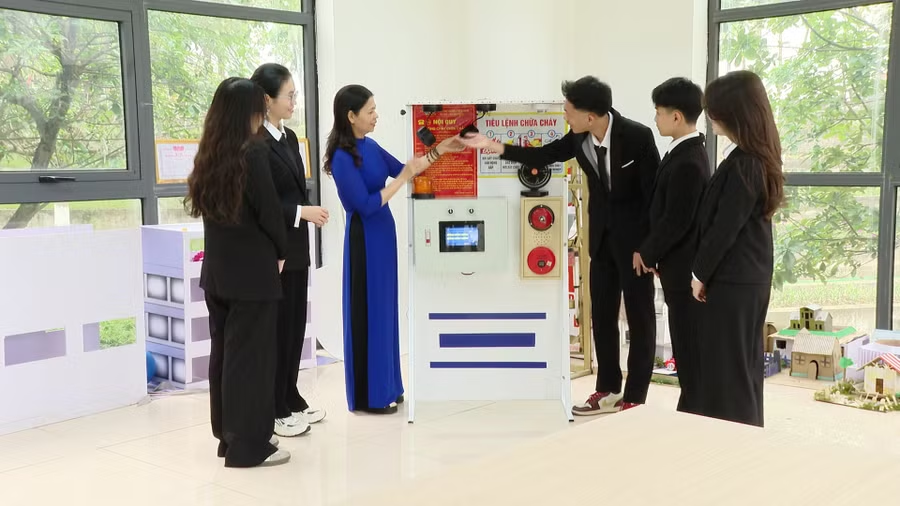
Le Quang Huy stated that the biggest challenge wasn't writing the code, but optimizing the product.
“Initially, our team’s device was quite large, with the sensor system and components taking up a lot of space. We had to constantly adjust the design, change some components, and optimize the algorithms to make the product more compact while maintaining the necessary accuracy. There were times when the whole team had to try and retry many times before finding a suitable solution,” Huy shared.
Meanwhile, Do Ngoc Ha approached the project from a chemical perspective.
According to Ha, in order for the system to be able to distinguish between a real fire hazard and normal daily activities, the team had to thoroughly research the types of gases generated in each situation.
“One of the biggest challenges is ensuring the device doesn’t give false alarms. For example, the smell of burning food or smoke from daily activities can cause the sensor to register a similar signal. We have to study the characteristics of each type of gas and each chemical reaction to find the characteristic signs of fire and explosion hazards, especially in cases of electrical short circuits or lithium battery fires,” Ha said.


![[Clip] 3-year-old girl in Ho Chi Minh City beaten and strangled by her mother's common-law husband sparks outrage.](https://vphoto.vietnam.vn/thumb/192x108/vietnam/resource/IMAGE/2026/07/03/1783085707247_1783083850450-402604765315907490-5251621102188594645-76e3321c12c51eefde707e3efe24661d-86-jpg.webp)
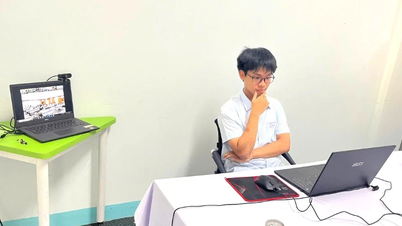
The group includes not only high school students but also middle school members.
Nguyen Hieu Phong was responsible for tasks related to finance and market research. For a middle school student, this was a completely new experience.
“Initially, I was quite unfamiliar with concepts like production cost calculation, product pricing, or return on investment. During the work process, I received a lot of guidance from my teachers and senior colleagues. Thanks to that, I understand more about how a technology product can go from idea to practical application,” Phong shared.
Hoang Lan Anh had a similar feeling when she first participated in a project with older colleagues.
“When I first joined, I was quite worried because I thought I was still young and didn't have much knowledge. But during the work process, the senior colleagues always created opportunities for me to participate in suitable tasks. Thanks to that, I became more confident and learned how to cooperate and communicate with everyone to achieve common goals,” Lan Anh said.
Lessons beyond the textbook
What's special about Firesense AI is that the most important lessons are sometimes not found in textbooks.
Those were the times the whole team debated the direction of product development. The evenings spent together finalizing the competition entry. The trials that didn't yield the desired results. Or simply the learning to listen to and respect each other's opinions.
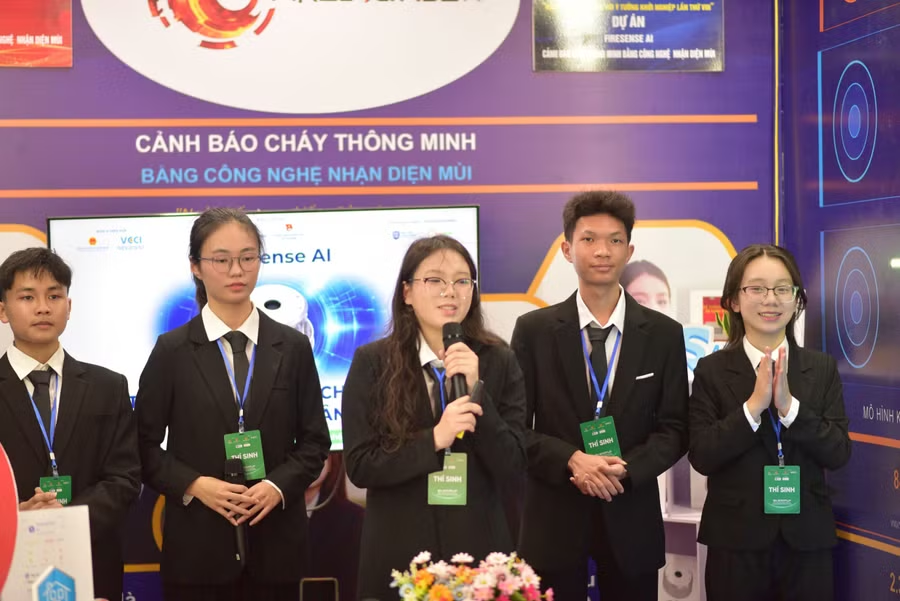
According to Pham Nguyen An Chi, the most difficult aspect of the project was not the technology itself, but how to enable team members to leverage their individual strengths while still working towards a common goal.
"Everyone has different strengths, so connecting people into a unified team isn't always easy. We have to constantly exchange information and find common ground. Through that process, I've learned a lot about teamwork skills, work management, and responsibility to the group," An Chi shared.
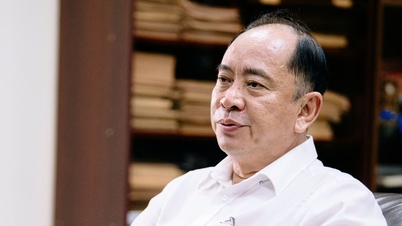
Teacher Phung Van Kiem believes this is the most important value that the project brings to students.
"Students are not just learning technological knowledge. They are learning teamwork, problem-solving, taking responsibility for their work, and overcoming difficulties when results are not as expected. These are all essential skills for the future workforce," Mr. Kiem remarked.
In the context of rapidly developing science and technology, many experts believe that the labor market is shifting from requiring single-discipline knowledge to integrated competencies. Businesses need not only people with strong expertise but also those who know how to collaborate, adapt, and innovate.
The story of Firesense AI shows that these competencies are being developed daily within the general education environment.
While the previous story about An Chi showed students approaching technology with an interdisciplinary, multi-level mindset, Firesense AI demonstrates something even more important: schools are becoming places where students can cultivate the qualities and skills of future technology professionals.
That is perhaps the most lasting value the project brings, transcending the scope of an award or a competition.
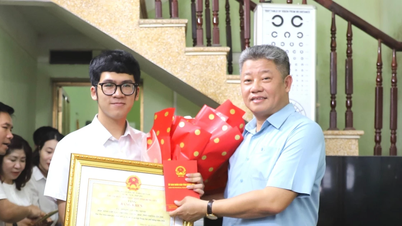
FIRESENSE AI won first prize in the Industry, Manufacturing and Artificial Intelligence category. This is not just an achievement in a competition, but also demonstrates the current high school students' access to science and technology, innovation, and entrepreneurial spirit.
(To be continued)
Source: https://giaoducthoidai.vn/khi-hoc-sinh-van-hanh-du-an-cong-nghe-post780954.html