

Non-healing scars
Children's brains are still developing rapidly, especially the areas responsible for behavioral control and emotional regulation. During this developmental process, the nurturing environment has a profound impact on a child's growth.
When children are repeatedly abused or neglected, their bodies react instinctively to survival, as if facing a serious threat. Stress hormones are released continuously, and the child's body will "fight," "flight," or "freeze" to protect itself. Constantly living in fear and threat can lead to a state of "toxic stress." Even more painful, when the threat comes from the child's own parents, the very people who provide for their basic needs like food and safety, the child's brain is forced to remain in a constant state of anxiety and vigilance to adapt and survive in what should be their safest home.
These insidious injuries cause brain restructuring. The "fight or flight" response area becomes overdeveloped, while areas responsible for regulating emotions, cognitive thinking, and judgment are suppressed. Children with this condition have poorer concentration, declining academic performance, an inability to process everyday information, and become sluggish and listless.
Research published by the American Academy of Pediatrics shows that both abuse and neglect lead to severe cognitive developmental delays and learning failures that persist from childhood into adulthood. Physical abuse involves antisocial and delinquent behaviors. Psychological abuse involves psychotic disorders and serious mental health problems. Neglect can impair emotional processing abilities, and this harm can last into middle age. Child abuse, especially psychological abuse and neglect, causes a range of long-term negative consequences for a child's health and development.
 Repeated abuse and neglect can cause long-lasting damage to a child's emotional life and cognitive development. (Image: Pexels)
 The damage is more severe with younger children. Children neglected during the first four years of life show a gradual decline in cognitive function, accompanied by a noticeable reduction in head circumference.
However, the most serious consequence of abuse is the breakdown of trust formation and the severance of a child's sense of security and emotional connection. Children should learn that the world is safe, that adults can be trusted, and that they deserve to be loved, but instead, they learn the complete opposite.
These deeply ingrained experiences from early childhood, if left untreated, can last a lifetime. However, that doesn't mean there's no hope: with timely support, children can absolutely recover. That's why early intervention isn't an option, but a necessity.
Build a stronger protection system.
According to the former Ministry of Labour, Invalids and Social Affairs , Vietnam records more than 2,000 serious cases of child abuse and mistreatment each year, mostly perpetrated by people the children know and trust. In 2020 and 2021, 120 children died as a result of physical abuse. This highlights the urgent need to build more support systems.
A reliable and accessible reporting system is needed. The 111 child protection hotline already exists, but public awareness and trust in its responsiveness are uneven. Each year, the hotline receives approximately 300,000 calls, indicating a significant need and the requirement for efficient handling of each report.
Mandatory reporting mechanisms are essential. Countries with effective child protection systems require certain professional groups, such as teachers, healthcare workers, social workers, and police officers, to report suspected cases of abuse. Vietnam could significantly strengthen this mechanism through clear procedures and legal protections for whistleblowers.
Community-based social work is crucial. Families in crisis need support before the situation escalates. Well-trained local social workers, capable of identifying vulnerable families and connecting them to support, are one of the most effective investments in child safety.
Providing mental health support and parenting skills training is crucial. Many abusive parents are actually facing stress, helplessness, life pressures, or untreated mental trauma, or simply because they have never been exposed to non-violent parenting models. Unable to control their anger and frustration, and not understanding why their children are so disobedient, they resort to physical punishment. Therefore, non-discriminatory mental health support services and parenting skills education programs, especially for young families under pressure, are essential preventative tools.
A quality alternative care system is needed. For children who can no longer live safely with their families, there is a need for alternative care models and foster care facilities that are adequately invested in, closely supervised, and prioritize the child's well-being over administrative convenience.
Early childhood rights education is crucial. Children need to learn, in age-appropriate ways, that their bodies are their own, that some adult behavior is wrong, and that there are always trustworthy adults to turn to for help. Schools and communities play a vital role in this.
International approach
Decades of research in various countries have revealed truly effective ways to protect children.
The Nordic model: prevention is fundamental. Countries like Norway, Sweden, and Finland build child welfare systems based on early support rather than simply reacting after an event occurs. Norway's approach emphasizes prevention, early intervention, and support. Around 80% of children in its welfare system receive support services rather than simply being investigated or separated from their families. The core philosophy is that struggling families need help before harm occurs. This requires long-term investment in universal services such as healthcare, parenting skills programs, and school support to reach families before crises arise.
Mandatory reporting must be accompanied by substantive support. The UK, Australia, and Canada all have mandatory reporting laws, but the most effective systems are those that combine reporting obligations with practical support services for struggling families, rather than just investigating and considering separating children from their families.
Inter-sectoral coordination is crucial. Effective child protection requires information sharing and coordinated responsibility from the health, education, social work, police, and community sectors. Fragmented responses can easily lead to children being overlooked by different agencies. Vietnam can benefit from tightly coordinated inter-sectoral processes to ensure no child is left behind.
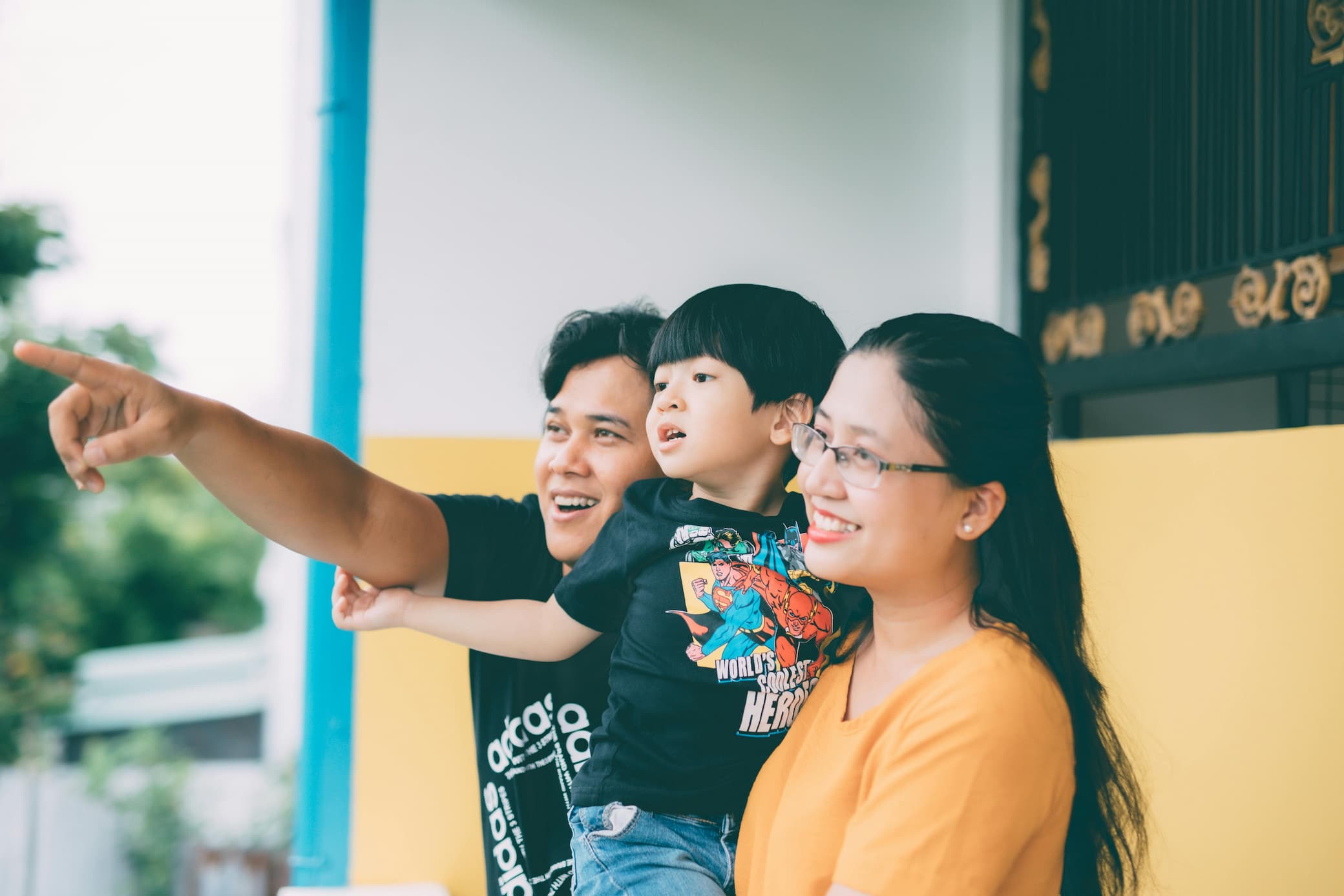 Child protection is most effective when it is seen as a responsibility of the entire society, rather than a private matter for individual families. (Image: Pexels)
 A consistent lesson from effective systems around the world is that child protection is most effective when viewed as a societal responsibility rather than a family-specific issue. Many countries have reached significant consensus on early investment, building community trust, training and resource provision for frontline workers, and viewing child safety as a shared societal responsibility.
Conclusion
Is it possible to build a society where neighbors feel both empowered and responsible to speak up, where struggling parents can seek support without shame, where social workers have the capacity and resources to act, and where children grow up believing that their safety is not a private matter but a community commitment?
The answer is yes. Such a society is entirely possible. But it requires political will, sustained investment, and a cultural shift in how we view the relationship between children, families, and community responsibility.
We cannot turn back time before the scars have formed on the children who have been harmed, but right now, in every province and city across Vietnam, there are still children in dire circumstances who can receive timely support. That is the task we need to undertake in the coming period.
Article by: Dr. Nguyen Ngoc Quynh Anh, Head of Psychology Department, Faculty of Science, Engineering and Technology, RMIT University Vietnam
If you are concerned about your child's safety, please call the Vietnam Child Protection Hotline: 111
(Free / Operates 24/7)
In the following article, an RMIT University lecturer will analyze how social media can contribute to raising awareness, promoting early intervention, and preventing child abuse in Vietnam.
Source: https://www.rmit.edu.vn/vi/tin-tuc/tat-ca-tin-tuc/2026/may/khi-mai-nha-khong-con-la-chon-binh-yen



















































































Comment (0)