

Why is silver always associated with circulation and production?
The role of silver stems not only from its monetary institution but also from its physical properties. Silver has the chemical symbol Ag, atomic number 47, and belongs to the transition metal group.
This metal has the highest electrical and thermal conductivity of all metals, while also possessing ductility and the ability to reflect visible light up to approximately 95%.
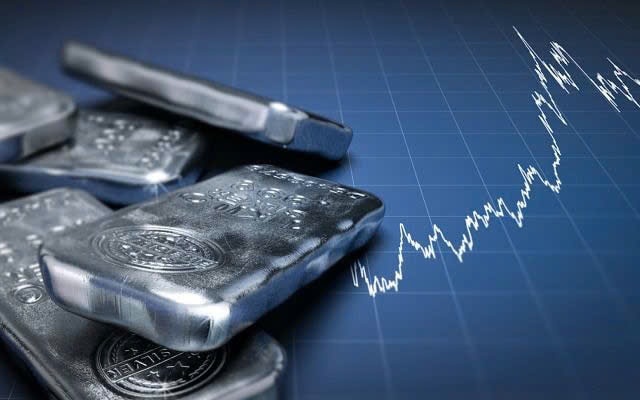
Silver is also widely used for disinfection, preventing and treating common diseases such as rhinitis, skin diseases, and burns. These properties have led to its early use in crafting tools, exchange implements, and products for handicrafts and many other applications in life.
Under normal conditions, silver oxidizes very little and mainly tarnishes when in contact with sulfur compounds. Because of this, silver retains considerable durability over time. Many silver artifacts dating back thousands of years still retain their original shape, reflecting the relative physical stability of this metal.
However, that sustainability does not mean silver is a rare metal in the absolute sense. Silver is more widely available than gold, but it is mainly distributed in dispersed forms within low-grade ores, leading to high mining and refining costs as easily accessible deposits have declined.
Even the idea of producing "artificial" silver through nuclear reactions has been considered, but it is currently not economically feasible due to the exorbitant energy costs. This shows that, despite advancements in mining and refining technology, silver remains subject to physical and economic limitations for which there is no completely effective solution in the short term.
The combination of its physical properties, workability, and scarcity linked silver to practical economic life, particularly in pre-industrial societies. Silver was used in transactions, as a medium of exchange, and to support handicraft production, rather than simply being stored as a store of value.
In Vietnam, this characteristic was clearly evident during the Nguyen dynasty. Gold was primarily kept in the national treasury and served a symbolic purpose, while silver ingots became the means of payment in large transactions such as land sales, tax payments, official salaries, and foreign trade.
The system of minting, inspecting, and circulating silver reflects a commodity economy with a certain degree of standardization, suggesting that silver was at the heart of trade flows centuries before paper money and fiat currency became widespread.
However, over time, the development of the fiat currency system gradually led to silver's withdrawal from its role as a central currency. This did not diminish silver's economic value, but rather shifted the metal to a new phase where physical properties and production needs played a more decisive role.
From currency to critical materials in digital infrastructure
From around 3,000 BC, silver was used as a measure of value by civilizations such as Sumer. The Spanish silver "pieces of eight" coin, produced from silver mines in the New World , circulated widely and is considered one of the earliest global currencies.
However, with the development of industry, gold and banknotes gradually played a larger role, while silver retreated to a supporting role, linked to both finance and production.
Today, the demand for silver is strongly influenced by industry, particularly electronics and information technology. Silver's electrical and thermal conductivity makes it a preferred choice in systems requiring high processing speeds and stable temperature control. This doesn't mean silver is irreplaceable, but rather reflects that replacing it with other metals like copper or gold often involves trade-offs in performance or cost.
Copper is cheaper but conducts electricity and heat less efficiently, resulting in greater energy loss and higher excess heat, which can reduce equipment lifespan. Gold is more corrosion-resistant but more expensive and has lower electrical conductivity than silver.
Therefore, in applications requiring stable transmission and high component density, such as certain components in GPUs, semiconductor chips, or specialized cooling systems, silver continues to be used as a balance between performance and cost.
The wave of investment in hardware infrastructure for artificial intelligence (AI) and large-scale computing is driving a rapid increase in demand for industrial silver. Total global computing capacity is projected to increase from 0.93 GW in 2000 to nearly 50 GW by 2025, triggering a surge in data center construction and hardware purchases.
In 2024, industrial silver demand reached a record high of 680.5 million ounces, explaining why silver is widely used in many industries, not just computing but also solar energy, medical devices, and high technology.
However, this increase in demand is putting pressure on supply. The period from 2021-2024 recorded a cumulative deficit of approximately 678 million ounces, equivalent to nearly 10 months of global production, compared to an average of 819.7 million ounces in 2024.
The gap between demand and production is causing inventories to narrow as the amount of silver in the London physical silver market (managed by the LBMA standard) and the amount of silver delivered at COMEX gradually decreases, putting pressure on the physical silver segment. As a result, silver prices are reacting more strongly to fluctuations in industrial demand and actual inventory levels, rather than solely to currency or geopolitical changes.
In retrospect, silver doesn't hold an absolute position in any one role—it's not purely currency, not purely an industrial material, and not solely a financial asset. It is this intermediate nature that allows silver to reflect many aspects of the economy, from consumption levels in production, the pace of technological expansion, material supply pressures, and financial sentiment. If gold is seen as a long-term store of value, silver more clearly reflects short- and medium-term fluctuations related to production and consumption.
Therefore, instead of viewing silver as a metal with a uniquely superior role, it can be understood as a data-rich indicator of how the economy has evolved over time from ancient trade to modern technological infrastructure. Every fluctuation in supply and demand leaves its mark on the price of silver and its usage patterns.
Source: https://daibieunhandan.vn/khi-vang-de-danh-bac-phan-chieu-thi-truong-10402847.html


![[Photo] General Secretary and President visit the China-ASEAN AI Application Cooperation Center](https://vphoto.vietnam.vn/thumb/1200x675/vietnam/resource/IMAGE/2026/04/17/1776404277677_vna-potal-tong-bi-thu-chu-tich-nuoc-tham-trung-tam-hop-tac-ung-dung-ai-trung-quoc-asean-8706616-2286-jpg.webp)



























![[Photo] National Assembly Chairman Tran Thanh Man attends the policy seminar to promote Vietnam-Türkiye cooperation.](https://vphoto.vietnam.vn/thumb/1200x675/vietnam/resource/IMAGE/2026/04/16/1776351415367_vna-potal-chu-tich-quoc-hoi-tran-thanh-man-du-toa-dam-chinh-sach-thuc-day-hop-tac-viet-nam-tho-nhi-ky-8705791-jpg.webp)































































Comment (0)