

WATER RESOURCES DECLINE, DROUGHT, AND INCREASING SALINITY
In recent times, climate change has had an increasingly serious impact on the Mekong Delta. Low flood levels, droughts, salinity intrusion are becoming more severe, and serious erosion is a constant worry for the people.

According to Associate Professor, Dr. Nguyen Phu Quynh, Deputy Director of the Southern Institute of Water Resources Science, in recent years, saltwater intrusion in the Mekong Delta has become increasingly complex, directly affecting the drinking water and agricultural production of the people.
Notably, the region's surface water resources depend 95% on upstream Mekong River flows, while endogenous sources account for only about 5% and are mainly concentrated during the rainy season.
Monitoring data from the Tan Chau station from 1990 to 2025 shows that the flood trend on the Mekong River is clearly decreasing.
According to Associate Professor, Dr. Dao Duy Huan, Vice Rector of Nam Can Tho University, the worst-case scenario if water security is not ensured in the face of climate change in the Mekong Delta is increased riverbank and coastal erosion, especially in An Giang and Dong Thap provinces, where agricultural land will be significantly degraded. This is no longer a prediction, but a reality unfolding every day. Along with that, freshwater and brackish water ecosystems are being altered. The ecological environment is experiencing significant damage. "Another problem is land subsidence, the main cause of which is groundwater extraction." There is a lot of information suggesting subsidence of 1-2 cm per year, even 3 cm in some places, which I believe is true, and it could even be higher. It's worth noting that we not only overexploit resources but also use them very wastefully. "If we don't change how we use these resources, they will quickly be depleted," Associate Professor, Dr. Dao Duy Huan stated. |
Since 2012, there have been virtually no major floods exceeding alarm level 3, replaced instead by a series of prolonged periods of minor floods. Along with this, saltwater intrusion in the Mekong Delta has occurred earlier and more severely than before 2013.
According to forecast scenarios, the saltwater intrusion boundary continues to penetrate further inland. On the Tien River, a salinity level of 4g/l could penetrate approximately 55.5 km inland by 2030 and about 62.5 km inland by 2050.
According to Nguyen Minh Khuyen, Deputy Director of the Department of Water Resources Management, Ministry of Agriculture and Environment, the flow from upstream to the Mekong Delta is showing a clear downward trend, decreasing by about 13% compared to the multi-year average. Specifically, it decreased by 36% during the 2015-2016 dry season and by 28% during the 2019-2020 period.
Meanwhile, tides are trending upwards, increasing by an average of about 12 cm over 25 years, leading to a 20-25 cm increase in storm surges. Saltwater intrusion therefore tends to occur earlier and more intensely.
On the other hand, pressure from socio-economic development is increasing. The total amount of water exploited in the entire region reaches approximately 32.25 billion m3/year. Of which, water for agriculture and aquaculture is 31.54 billion m3/year; domestic use 0.57 billion m3/year; and industrial use 0.13 billion m3/year.
The increasing discharge of wastewater, especially untreated wastewater that does not meet standards, is putting serious pressure on water quality.
Increased conflicts in water exploitation and use pose a major challenge to water security in the region.
According to Associate Professor, Dr. Le Anh Tuan, Senior Lecturer at the Faculty of Environment, Can Tho University, and Scientific Advisor of the Mekong Institute, water security in the Mekong Delta is currently facing at least seven major challenges, including three external factors and four internal issues.
Three external challenges include: the increasingly evident impact of climate change; the development of upstream hydropower projects that deplete sediment and silt; and the risk of water diversion during the dry season, exemplified by the Funan Techo canal project (Cambodia).
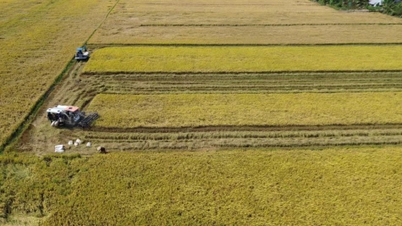
Meanwhile, internal issues are also putting significant pressure on the region: excessive groundwater extraction for production; water pollution due to the overuse of fertilizers and pesticides. Furthermore, water use efficiency remains very low. The main reason is the excessive water consumption for rice production. Producing one ton of rice requires 4,000-5,000 cubic meters of water. Changes in land use are also negatively impacting water resources in the region.
FLEXIBLE ADAPTATION
Given the extreme impacts of climate change, implementing solutions to ensure water security, aimed at safeguarding the livelihoods and production of people in the Mekong Delta, is a pressing issue today.

According to Associate Professor, Dr. Nguyen Phu Quynh, to ensure water security for the Mekong Delta region, it is necessary to shift the mindset from agricultural production to agricultural economics, considering saltwater, brackish water, and freshwater as all resources. Water management must move from individual projects to inter-regional and inter-provincial management, aiming for modern governance.
Key solutions include: improving forecasting capabilities and ensuring the interconnected operation of irrigation systems; organizing flexible production based on water resource conditions; and promoting digital transformation in management.
One of the key solutions is to continue investing in salinity control projects, building control systems in major rivers; upgrading sea dikes and developing water transfer facilities to connect water sources between regions.
At the same time, focus should be placed on large-scale water storage solutions in canal systems and small-scale solutions at the household level such as ponds, ditches, and rice fields to proactively respond to drought and salinity intrusion.
"The Mekong Delta remains a key agricultural region, but it is facing increasingly serious impacts from upstream development, climate change, and land subsidence."
Therefore, development orientation must be towards controlled adaptation, proactively regulating water resources to minimize risks and ensure sustainable development,” Associate Professor, Dr. Nguyen Phu Quynh emphasized.
From an expert's perspective, Associate Professor, Dr. Le Anh Tuan believes that the Mekong Delta needs to adjust its water use strategy towards greater sustainability as soon as possible.
One of the issues raised is whether to continue maintaining three rice crops per year and a closed dike system in areas such as the Long Xuyen Quadrangle and Dong Thap Muoi. Excessive flood control reduces natural water storage capacity and increases the risk of urban flooding.
"Regarding water storage solutions, we need to avoid the trend of digging ponds and lakes too deep. In reality, ponds deeper than 3 meters can cause acidification and draw water from surrounding areas, exacerbating local water shortages during the dry season," added Associate Professor, Dr. Le Anh Tuan.
According to Nguyen Minh Khuyen, Deputy Director of the Department of Water Resources Management, the water resources plan for the period 2021-2030, with a vision to 2050, identifies the overarching goal of ensuring water security, including in the Mekong Delta region. The major orientation is to optimize water resources from the Mekong River.
At the same time, we must proactively adapt to climate change and fluctuations from upstream. Surface water is the primary source of water for daily life and economic sectors.
The central solution is to effectively utilize water resources from the Tien River, Hau River, Co Chien River, and Ham Luong River. At the same time, it is necessary to increase water storage and maintain freshwater levels, especially in areas frequently affected by drought and saltwater intrusion, such as coastal areas and the Ca Mau Peninsula.
The construction of appropriately sized reservoirs and the improvement of irrigation systems need to be prioritized. Regarding groundwater, the requirement is rational exploitation, not exceeding limits, combined with controlling land subsidence, prioritizing domestic water supply, and limiting indiscriminate exploitation for production…
C. TRI - T. DAT
Source: https://baodongthap.vn/khi-vua-lua-doi-mat-con-khat-nuoc-a238640.html



































































Comment (0)