Following Typhoon Yagi, the greatest loss to heritage sites in the province was perhaps the loss of the green spaces. Many of these trees not only enhance the landscape but also hold special value associated with historical sites and scenic spots. Along with natural recovery, many localities and units have implemented solutions to gradually restore the greenery of heritage sites…
Ha Long Bay with the goal of becoming a "Flower Bay"
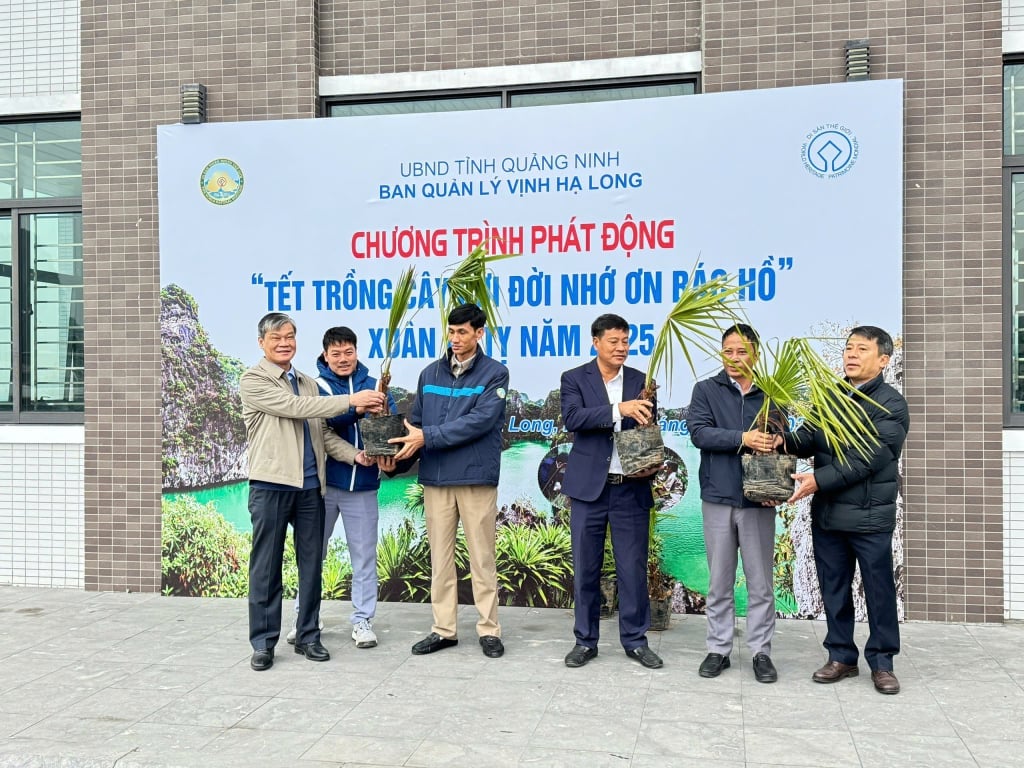
To implement the project "Ha Long - City of Flowers" and to gradually restore the vegetation ecosystem on the limestone mountains affected by Typhoon No. 3 (Yagi), from the end of December 2024, the Ha Long Bay Management Board planted 200 magnolia trees and 100 Chinese elm trees at tourist spots in Ha Long Bay, such as the Hang So Island area and the Me Cung area. To ensure the effectiveness of the planting, the unit directed its subordinate conservation departments and centers to determine suitable planting locations based on actual terrain conditions, manage and protect the trees after planting, and assess the trees' development after 1 month, 3 months, 6 months, and 9 months in the first year of planting.
According to information gathered from the relevant unit, the Ha Long Bay Management Board has planted several native flowering plants and ornamental trees to enhance the landscape of the area, such as magnolia, flowering larch, and bougainvillea, at tourist attractions on the islands within the heritage site. Basically, the planted trees are thriving and creating beautiful scenery for the tourist sites.
However, due to the unique topography of Ha Long Bay, which is mainly limestone mountains, with some areas of poor soil and mangrove swamps, in order to implement the "Flower Bay" model as outlined in the "Ha Long - City of Flowers" project, the Ha Long Bay Management Board will take the lead and coordinate with organizations and individuals engaged in socio -economic activities in the bay to continue maintaining and caring for the aforementioned plant species.
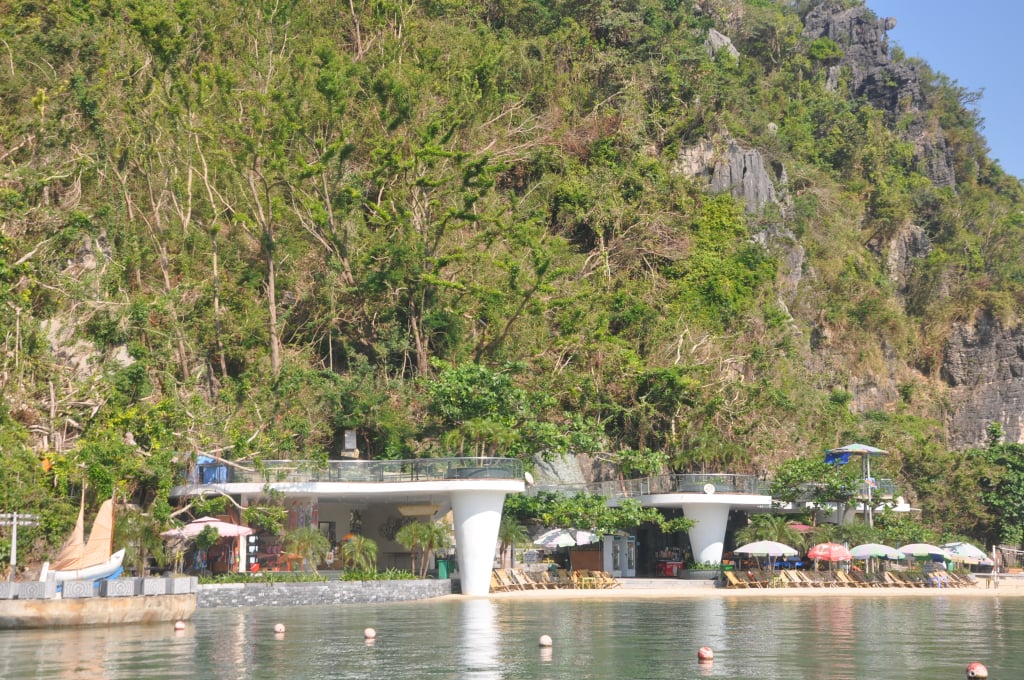
Simultaneously, new tree and flower species that are native or endemic to Ha Long Bay, or species with natural distribution outside the area, will be planted at Ben Doan working port and new tourist attractions in the bay. Weak or damaged trees will be replaced with native species of high aesthetic value at tourist attractions in Ha Long Bay. The implementation period is from 2024 to 2030.
Accordingly, most recently in early February, the unit launched the "Tree Planting Festival in Eternal Gratitude to President Ho Chi Minh," with a plan to plant nearly 800 trees to create a beautiful landscape, including native and endemic species of Ha Long, such as: Lagerstroemia indica, Bauhinia variegata, palm, Ha Long cycad, Terminalia chebula, Magnolia grandiflora, Schefflera arboricola, spotted slipper orchid… The trees will be planted at tourist spots and limestone island areas where conditions are suitable for growth.


With its vast area and thousands of limestone islands, restoring the natural vegetation on the islands after a storm will primarily rely on natural recovery. However, the period after the storm is mostly dry, with little spring rainfall, so many rocky islands in the bay still show signs of barrenness… The aforementioned tree planting activities will contribute to greening the tourist attractions, adding to the beauty of the heritage site when welcoming visitors.
Planting trees in spring at historical sites.
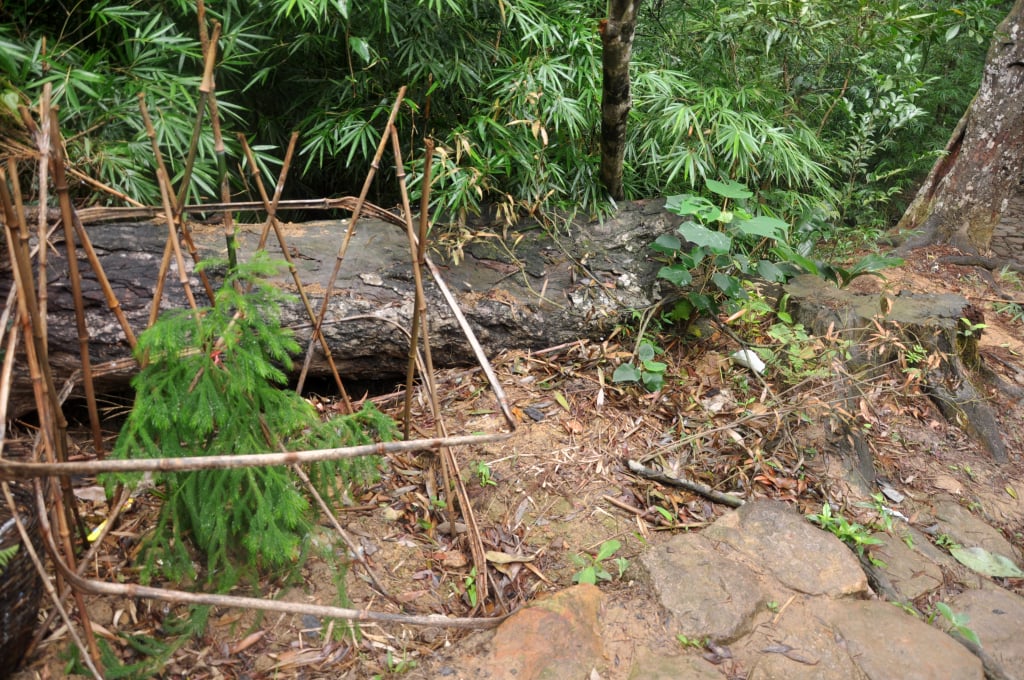
Not only are the trees on the rocky mountains of Ha Long Bay awaiting the rainy season, but the sight of trees pruned after Typhoon Yagi, with their bare branches and inability to regain their lushness, is quite common at many historical sites throughout the province. For example, at Yen Tu, the trees planted by a business at the foot of the mountain have yet to recover their vibrant greenness, while on the mountain itself, the pine trees along the road are sparse, revealing large gaps where three ancient pine trees were broken and felled after the storm. The once-famous beauty of the pine tree road has therefore been significantly affected…
Mr. Le Tien Dung, Head of the Management Board of Yen Tu National Monument and Forest, said: "Trees also follow the cycle of birth, aging, illness, and death, with a certain life cycle. These pine trees are hundreds of years old, so many have been affected by pests and decay… After the storm, many couldn't withstand it and were uprooted or broken. We had people cut them down and clean up after the storm. Restoring the beauty of the pine tree path with its tall, ancient pine trees will take time. Previously, we had a project to 'treat' the pine trees to extend their lifespan, and at the same time, plant more pine trees in the Yen Tu forest, planting young pine trees in the areas near those that were broken or felled due to pests, diseases, lightning strikes…"
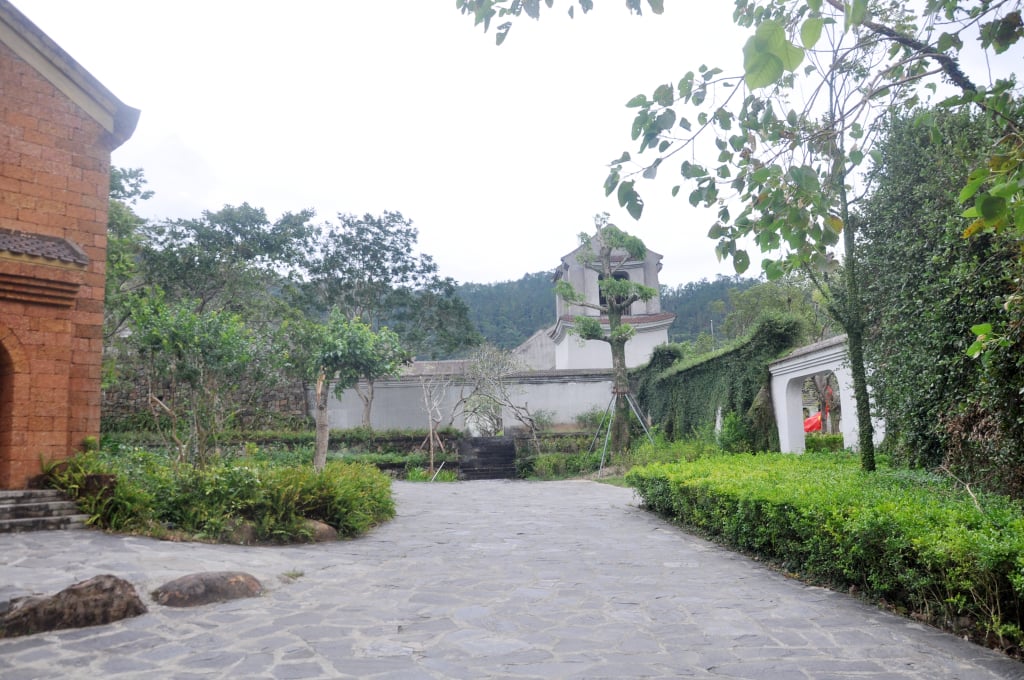
Recently, in 2024, Mr. Dung said that the unit also coordinated with Tung Lam Development Joint Stock Company to plant one thousand cypress trees in Yen Tu, some trees reaching 5-6m in height, others 50cm tall… These trees were directly planted by the enterprise using socialized capital. The trees were planted among the old cypress trees, scattered throughout the Yen Tu forest, especially along pilgrimage routes, in the pagoda garden and temples, from Giai Oan Pagoda to Bao Sai Pagoda, Van Tieu Pagoda...
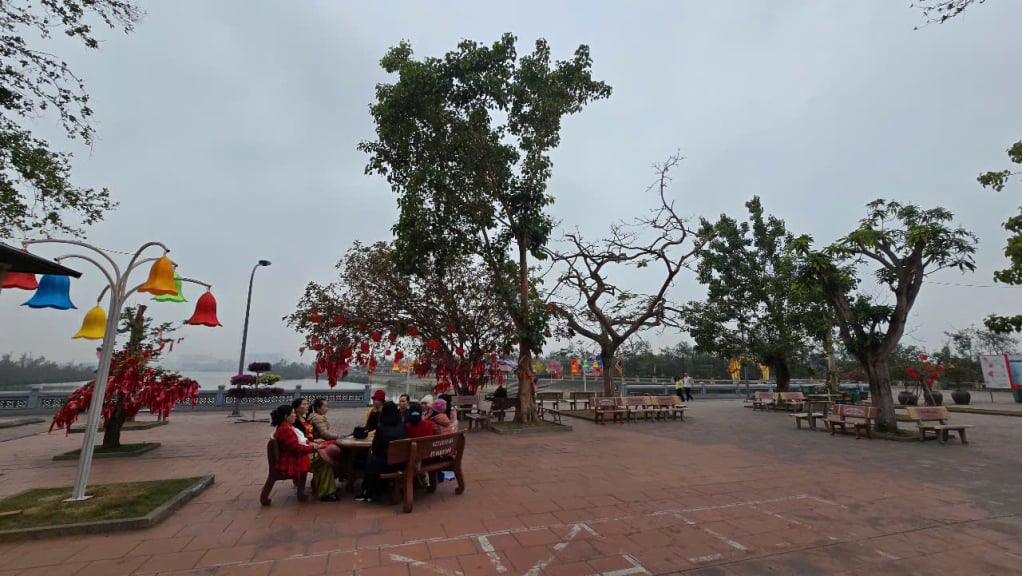
Located in the estuary area, the green spaces at the Bach Dang Historical Site were also severely affected by Typhoon Yagi. Mr. Pham Chien Thang, Head of the Bach Dang Historical Site Management Board, recalled: "After the typhoon, the site's green spaces suffered heavy damage; many large trees were uprooted, branches broken, and even the tops snapped off. We invited tree care experts to assist, and we managed to save many large trees, including banyan trees that were uprooted and had to have their branches cut, holes dug, and re-erected... The green lim tree garden was also re-erected because hundreds of trees were uprooted, broken, or had their tops torn off… Along with replanting the fallen trees and pruning the broken branches, we also repaired the tree planting holes in the grounds and renovated the courtyard. By this spring festival season, many trees have sprouted new branches and leaves, but it will take many more years to completely restore the green space to its former beauty."

As spring arrives, localities organize tree planting festivals. For heritage sites in the province, this year's tree planting festival holds special significance in contributing to restoring greenery to the sites after the impact of Typhoon Yagi. Mr. Thang said that Quang Yen town has assigned the town's Youth Union to launch a tree planting campaign during Youth Month at the Bach Dang historical site this coming March.
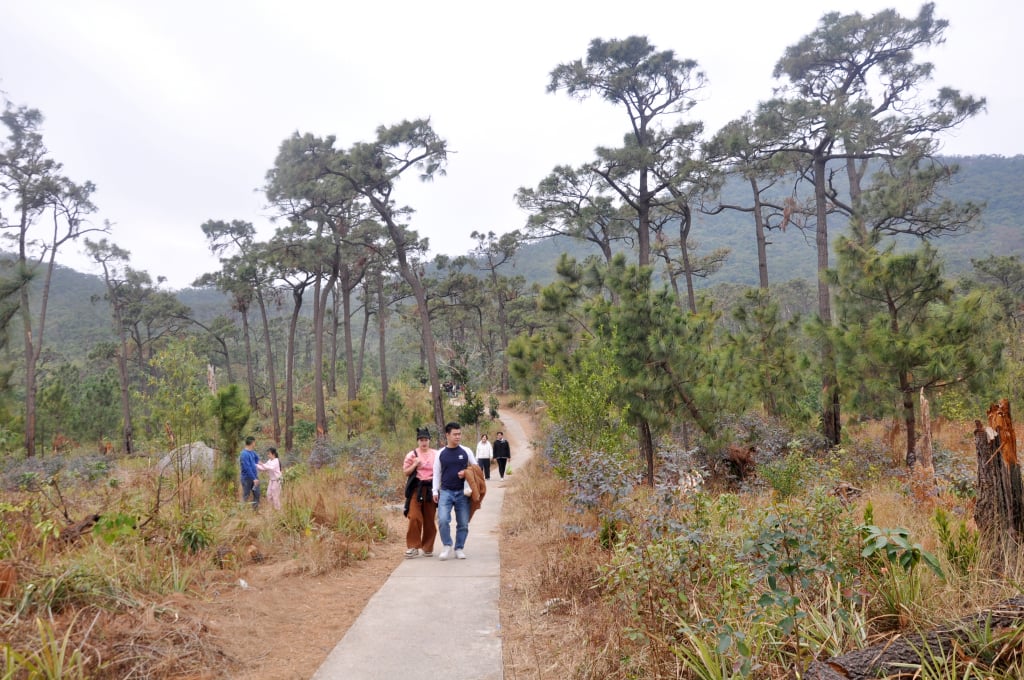
Earlier than the Bach Dang event, on February 15th, the Tree Planting Festival was launched at the Ngoa Van historical site (Dong Trieu). This program involved the cooperation of many units, including the Provincial Buddhist Association, the Environmental Crime Prevention and Control Police Department, Dong Trieu City, and the Ngoa Van - Yen Tu Cultural Tourism Joint Stock Company, a business operating in Ngoa Van.
The program is expected to plant 1,500 Bodhi trees, Bauhinia trees, and other species along the pilgrimage route to Ngoa Van Pagoda; the first phase will involve planting 500 trees. The trees are guaranteed to survive, contributing to environmental protection, biodiversity conservation, and the preservation of the natural landscape of Ngoa Van – a top-priority heritage site within the Tran Dynasty National Special Historical Site complex in Dong Trieu.
Source