

Since the end of 2023, the recovery of the international consumer market has created favorable conditions for businesses in the garment and footwear sectors to restore production and employment for workers. Many businesses have been continuously recruiting new workers to meet the deadlines of signed orders. The garment and footwear business community is also making new efforts to meet the increasingly stringent production standards of the market, aiming to optimize business profits.
 Tien Son Group Joint Stock Company is one of the first companies in the province to produce orders using the FOB (Free On Board) method.
Orders are increasing, jobs are secure.
Thieu Do Garment Co., Ltd. is located in Thieu Hoa town (Thieu Hoa district) with a total factory area of 3.8 hectares. The company currently has 10 shirt production lines and 6 suit production lines, producing goods for export to Japan, the US, and European countries. According to a company representative, anticipating the market recovery, in 2023 the company focused its capital on expanding the factory and investing in more modern machinery. From the beginning of the year until now, the company has produced nearly 1.4 million shirts and 240 suits, with revenue reaching 4.3 million USD. Orders for the coming period have also been signed, guaranteeing work until May 2025. The company currently provides stable employment for 1,100 workers, with an average income of nearly 8 million VND per month.
According to statistics from the Department of Industry and Trade, the province currently has nearly 300 enterprises operating in the textile and garment sector, creating jobs for approximately 150,000 workers. In addition, the footwear and leather sector has 27 enterprises providing employment for about 133,000 people.
Although the main consumer markets for Thanh Hoa's garment and footwear industry—the United States and EU countries—have declined sharply since the second half of 2022, businesses have proactively approached new markets such as Asia, especially Southeast Asia. They have also diversified their product lines and accepted low-priced orders to maintain employment for workers. These flexible solutions have yielded positive results for these industries in 2024.
For example, at 888 Garment Co., Ltd. (Quang Xuong), from the end of 2022, when the US and EU markets experienced a decline in consumption, along with accepting more small orders and discounted orders, the company expanded and successfully conquered 8 more customers in Asia, resulting in a 20% increase in production compared to 2023.
According to data from the General Statistics Office, in the first seven months of 2024, the garment industry produced 391.7 million products, an increase of 13.5% compared to the same period last year. Notably, production volume increased and stabilized more significantly towards the end of the year compared to the early months. In the footwear industry, production volume in the first seven months also reached 153.6 million pairs, an increase of 16.7% compared to the same period last year.
Change to survive.
Despite positive signs regarding order volumes, Thanh Hoa's garment and footwear industry still faces many challenges. These include the fact that order prices have not yet recovered to pre-recession levels in 2022, while input costs remain high, impacting business profits. Furthermore, major importing countries have recently been imposing new requirements for imported products that meet green, circular production criteria, ensuring social and environmental responsibility. These are new challenges that will continuously evolve, requiring businesses to diligently research and invest to adapt.
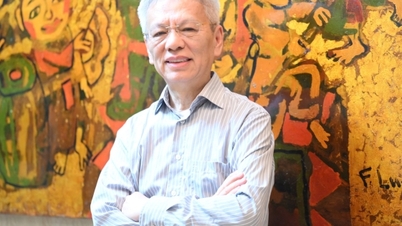
According to Trinh Xuan Lam, Chairman of the Thanh Hoa Textile and Garment Association, despite being the "garment and footwear center" of North Central Vietnam, Thanh Hoa's garment industry only meets the criteria for job creation. Production profits for businesses are not high because they mainly operate under the CMT (Contract Manufacturing) method, depending on importers for everything from design samples to raw materials and transportation. Within the association, some businesses have taken the lead in transitioning garment production to FOB (Free On Board) production, while a few have "experimented" with higher-standard ODM (Original Design Manufacturer), such as Tien Son Group Joint Stock Company and Hue Anh Garment Co., Ltd., with profits from these orders increasing threefold compared to contract manufacturing.
To gradually meet the criteria of green, circular, sustainable, and environmentally friendly production, as required by importing partners, some businesses have proactively equipped their factories with facilities and equipment to save fuel and protect the environment.
According to Le Van Bac, CEO of 888 Garment Co., Ltd., “Some demanding customers from Japan always have high requirements for green, clean, and safe production for workers. Therefore, from the factory grounds to the lighting system, air safety standards are always carefully considered by the company. Along with that, the company also invests in energy-saving input systems in production. In addition to applying solar energy, we are also researching solutions for fabric-burning boilers to regenerate energy for other production and business activities.”
With a determination to achieve a growth target of 10-15% in 2024, businesses are continuing to strengthen interaction and exchange management, technical, and technological experiences to cooperate on orders that match the production capacity of their factories; investing in machinery and technology to improve labor productivity. In the long term, Chairman of the Textile and Garment Association Trinh Xuan Lam shared: "We are encouraging businesses to research and overcome challenges from raw materials to capital, management skills, and human resources to access increasingly higher production levels and standards. Accordingly, in the short term, businesses need to quickly participate in domestic and inter-bloc supply chains for raw materials and components within countries participating in new generation free trade agreements to benefit from tax incentives." At the same time, businesses should rapidly shift from export processing to FOB production or even higher levels like ODM, and boldly pursue OBM (brand building, design, sourcing raw materials, processing products, and delivering products directly to consumers) in accordance with the scale and capabilities of each enterprise."
Text and photos: Minh Hang
Source: https://baothanhhoa.vn/khoi-sac-nganh-may-mac-giay-da-222972.htm
![[Image] Shipbuilders exposed to steel and record-breaking heat.](https://vphoto.vietnam.vn/thumb/1200x675/vietnam/resource/IMAGE/2026/06/04/1780545781745_ndo_br_img-5402-4683-jpg.webp)















































![[Video] Sunset at Lap An Lagoon – Where the sun sets over the fishing nets](https://vphoto.vietnam.vn/thumb/1200x675/vietnam/resource/IMAGE/2026/05/31/1780192137701_beach-landscape-sea-water-nature-grass-745871-pxhere-com.jpeg)






























Comment (0)