- Interviewer: Sir, in recent times, the scientific research movement in schools in Quang Tri has continuously made its mark at national and international competitions. From a management perspective, how do you evaluate these results?
- Mr. Mai Huy Phuong: We are very pleased that students from Quang Tri are continuously making their mark in domestic and international competitions. This is the result of our strategic investment plan. We now have leading talents with the ability to master high technology.
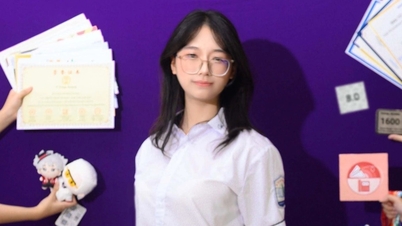
For example, Quang Tri High School has written golden pages for the province's education . In 2017, Pham Huy's project "Robot Arm for People with Disabilities" excellently won third prize at the International Science and Engineering Fair (ISEF) in the United States. Maintaining its high standards, in 2025, Cao Trung Quan and Le Minh Hieu's project "Wheelchair to Assist People with Amyotrophic Lateral Sclerosis" won fourth prize at the ISEF. Most recently, in the 2025-2026 school year, the project "Robot Exoskeleton System to Assist Mobility and Communication for People with Hemiplegia After Stroke" by the school's students excellently won second prize nationally.
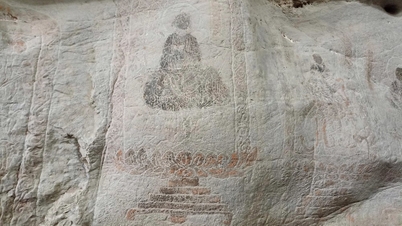
While Quang Tri High School excels in robotics and physics, Le Quy Don Specialized High School is a pioneer in software, AI, and entrepreneurship. In the 2023-2024 school year, the school's students' project, "Electronic Gloves that Convert Sign Language into Natural Language for the Deaf," won first prize nationally and was selected to compete internationally. Following that, their project, "Quang Tri Ancient Citadel 3D," won first prize in the national competition "Students and Young Entrepreneurs with Startup Ideas." Most recently, the school had two outstanding projects that successfully conquered national-level competitions.
 |
| From the "nursery" of Le Quy Don Specialized High School, many students have developed excellent projects and conquered major competitions - Photo: QH |
- Interviewer: Besides the leading figures, how has the wave of scientific research, digital transformation, and innovation developed and spread throughout the entire education sector, sir?
- Mr. Mai Huy Phuong: In recent times, the Department of Education and Training has issued many directives to promote scientific research and digital transformation. Training programs on digital skills for administrators and teachers are regularly implemented. The education management system is being digitized step by step.
To date, digital infrastructure and education system management have seen many positive changes. 100% of educational institutions in the area have implemented student management systems and electronic records. The movement for applied pedagogical research and the writing of innovative teaching experiences among teachers is regularly maintained. Every year, thousands of innovative teaching experiences and research projects are implemented based on practical teaching.


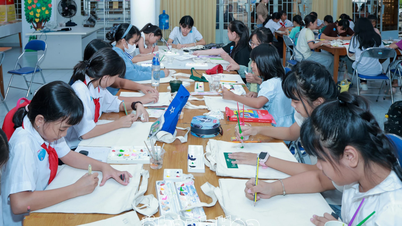
Currently, the Quang Tri Education Department is continuing to promote STEM/STEAM education activities in schools. Reports indicate that 100% of general education institutions in the province have implemented STEM education activities. These activities have contributed to helping students shift from passive learning to learning through experience, practice, and problem-solving.
- Reporter: Besides the positive signs, could you tell us what difficulties the industry is facing in promoting digital transformation and innovation?
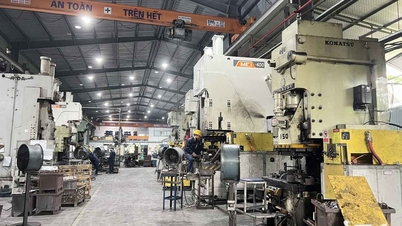
- Mr. Mai Huy Phuong: Currently, the sector is facing three "bottlenecks" in infrastructure, human resources, and data exploitation. Specifically, the disparity in physical facilities between regions is a major obstacle. In some schools in remote, mountainous, and border areas, equipment and technological infrastructure are still very limited.
In terms of human resources, the sector still lacks teachers in several subjects that play a crucial role in the development of science and technology, such as information technology, technology, and foreign languages. Another reality is that current digital transformation mainly focuses on digitizing records and administrative management. The exploitation of educational data for governance, analysis, and decision-making is only in its early stages.
- Reporter: To realize the breakthrough goals in educational development in accordance with Resolution No. 71-NQ/TW and Resolution No. 57-NQ/TW, where will the sector begin its changes during the 2026-2030 period, sir?
- Mr. Mai Huy Phuong: Educational reform must first begin with a reform of management thinking. This is the "starting point" of all transformation. Schools must shift strongly from an "administrative management" model to "innovative and creative school management." The head of an educational institution cannot simply sit and manage procedures; they must play the role of a creator of a creative space, dare to take responsibility, and dare to empower others. When the head of the institution changes their mindset, innovation can truly manifest in every lesson and every student's work.
Furthermore, the education sector has identified the need to build a closely integrated ecosystem based on the "school-enterprise-research institute" model. Increased attention will also be paid to investing in digital infrastructure and developing education in disadvantaged areas. In particular, the sector will strive to improve policies and incentives for teachers.
We understand that when trusted, respected, and given the opportunity to develop, the teaching staff will become the most important endogenous resource, a direct driving force for innovation throughout the entire sector.



- Interviewer: Thank you, sir!
Quang Hiep (compiled)
Source: https://baoquangtri.vn/giao-duc/202606/khoi-thong-dong-chay-sang-tao-df82b7e/