

Therefore, unlocking credit capital for lending to serve the development of social housing is considered an important task for credit institutions as well as the banking system today.
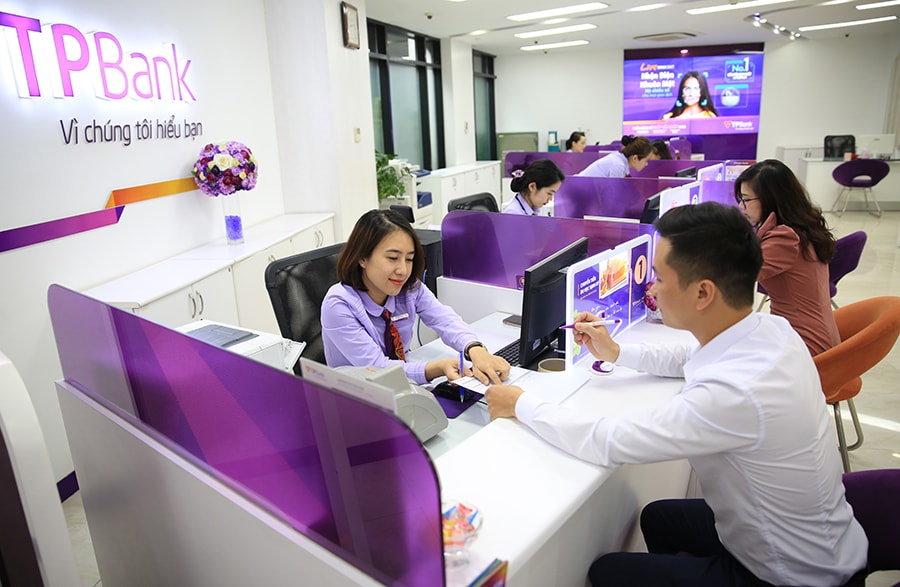
Current status of 3 social housing credit programs
According to Deputy Governor of the State Bank of Vietnam Pham Quang Dung, the State Bank is currently tasked with implementing three credit programs related to the development of social housing. Specifically, for the 120,000 billion VND program, nine banks have registered to participate with a total amount of 145,000 billion VND, exceeding the 120,000 billion VND limit.
The second program currently being implemented is credit for people under 35 years old. The third program is social housing loans under Government Decree No. 100/2024/ND-CP (dated July 26, 2024) detailing some provisions of the Law on Housing regarding the development and management of social housing (maximum loan amount of 80% of the contract value for purchasing or lease-purchasing social housing, interest rate equivalent to the interest rate for loans to poor households).
Regarding the 120 trillion VND credit package, the State Bank of Vietnam has requested credit institutions six times to lower lending interest rates, from the initial 8.7%/year to 6.4%/year for developers and 5.9%/year for homebuyers, even lower than the lending rate for poor households (approximately 6.6%/year).
In terms of results, commercial banks committed to disbursing 8,300 billion VND for 41 social housing projects, which is only about 5.7%. In addition, the Social Policy Bank has outstanding loans for social housing under Decree 100 reaching over 19,000 billion VND.
It is known that 9 banks are participating in the social housing credit program worth 145 trillion VND, including: Agribank , VietinBank, Vietcombank, BIDV, HDBank, VPBank, Techcombank, TPBank, and MB. Accordingly, these banks have their own preferential policies for people under 35 years old when borrowing money to buy social housing with preferential interest rates, generally 1% lower per year than the average medium- and long-term lending interest rate in VND of the 4 state-owned commercial banks (Agribank, BIDV, Vietcombank, and VietinBank), and in accordance with the requirements and policies set by the State Bank of Vietnam (interest rates are re-announced every 6 months).
With preferential loan programs for customers under 35 and those needing loans to buy, build/renovate houses, commercial banks actively participating include MB, HDBank, BIDV, Sacombank,SHB , ACB, etc.
Lending interest rates need to be adjusted.
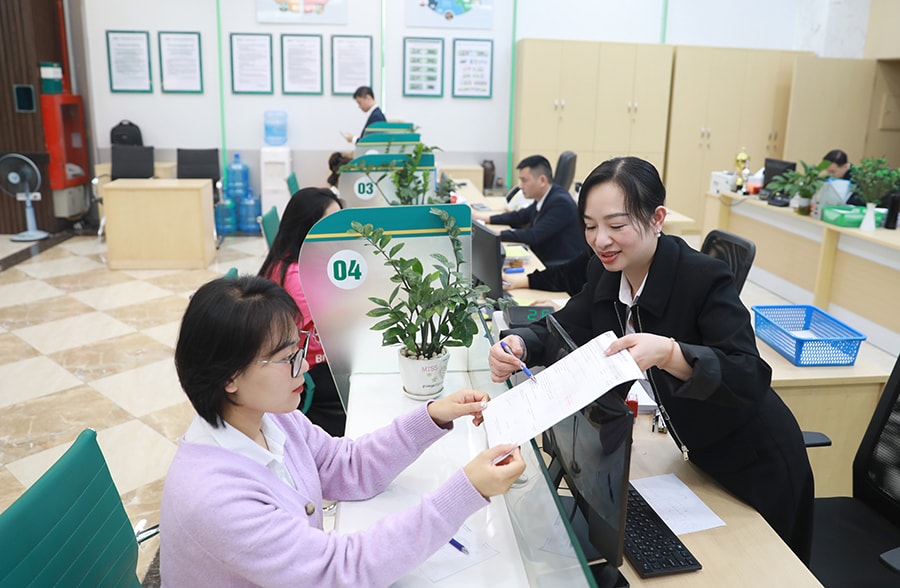
Despite achieving certain results, the disbursement rate of credit programs supporting social housing development has not been truly accelerated due to numerous bottlenecks. If credit policies only focus on lowering interest rates without supporting implementation mechanisms, accessing capital will be very difficult. The implementation of many loan packages is a positive sign, but if the root causes on the supply side are not addressed, preferential credit policies will struggle to be effective.
Experts believe that many obstacles remain in the implementation of preferential loan programs for social housing. Specifically, the supply of social housing is insufficient and does not match demand. Land is scarce, legal procedures are complex, and profits are low, making many investors reluctant to participate. The project approval process is slow, failing to create a sufficiently large product scale to attract the market. Furthermore, difficulties related to the criteria for determining eligible borrowers exist, as the maximum income threshold of 15 million VND/month for individuals and 30 million VND/month for households is not suitable for the reality in many localities.
Therefore, many experts recommend that the State Bank of Vietnam adjust the income criteria and reconsider lending interest rates, as the 6.6%/year rate applied by the Social Policy Bank is higher than the lending interest rates at some commercial banks.
From the borrower's perspective, interest rates on social housing loans under the 120 trillion VND package, as well as credit for young people under 35, remain high and unstable, making it difficult for most low-income individuals to access them.
To facilitate access to social housing loans, experts suggest that the government should provide capital to commercial banks at very low preferential interest rates, up to a maximum of 3% per year, so that these banks can then lend at around 5% per year. The banking system needs to simultaneously meet three criteria: stable long-term interest rates, transparent loan procedures, and strict oversight mechanisms to prevent profiteering. This means redefining the relationship between capital, projects, and borrowers, and importantly, shortening the approval process, applying digital technology to manage files, and reducing paperwork.
Recently, the Ministry of Construction also proposed reducing the preferential loan interest rate for those buying or renting social housing. Currently, the applied interest rate is 6.6% per year, the same as the lending rate for poor households in each period. However, this rate is higher than many other preferential credit programs, causing many borrowers to face difficulties in balancing costs.
According to the Ministry of Construction, interest rates for loans to purchase or lease-purchase social housing should be reduced to 5.4% per year. For loans to build, renovate, or repair housing, interest rates will continue to be applied at the rates for loans to poor households, depending on the period, as stipulated by the Prime Minister.
Source: https://hanoimoi.vn/khoi-thong-nguon-tin-dung-cho-nha-o-xa-hoi-716171.html




![[Image] Shipbuilders exposed to steel and record-breaking heat.](https://vphoto.vietnam.vn/thumb/1200x675/vietnam/resource/IMAGE/2026/06/04/1780545781745_ndo_br_img-5402-4683-jpg.webp)















































![[Video] Sunset at Lap An Lagoon – Where the sun sets over the fishing nets](https://vphoto.vietnam.vn/thumb/1200x675/vietnam/resource/IMAGE/2026/05/31/1780192137701_beach-landscape-sea-water-nature-grass-745871-pxhere-com.jpeg)



































Comment (0)