|
| Children from welfare facilities in the city participate in hands-on experiences with traditional crafts. |
Reduce child labor.
Along with socio -economic development and the synchronized implementation of social welfare programs, the prevention and reduction of child labor in the area has achieved many positive results in recent years. In particular, the health sector, as the state management agency for children, has been implementing many practical solutions to protect children from the risk of early labor, especially for vulnerable and disadvantaged groups of children.
According to statistics from the Hue City Department of Health , there are currently 273,215 children in the city, accounting for approximately 24.7% of the population. Of these, 4,205 are children with special circumstances; and more than 4,000 children are receiving social assistance and care in various forms.
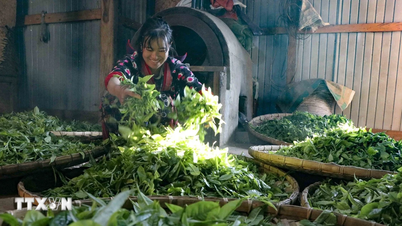
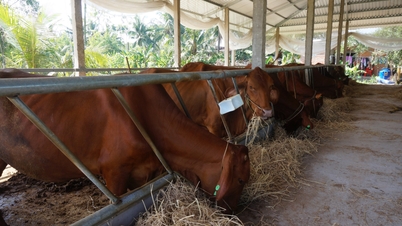
In reality, the illegal use of child labor in businesses and production facilities in the city is largely non-existent. However, in some remote areas and ethnic minority regions, there are still instances of children participating in family labor such as livestock farming, mowing grass, selling goods on the street, doing housework, or assisting in restaurants and small businesses.
In fact, children participating in suitable work to support their families or develop life skills is not a cause for concern. However, if the work is prolonged, exceeds their physical capacity, affects their studies, or hinders their physical and mental development, it can lead to many long-term consequences. In many cases, children have to put their education on hold, lose opportunities for self-development, or face the risk of workplace accidents, impacting their health and future.
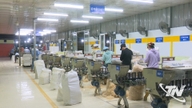


According to the leaders of the Hue City Department of Health, the main reason for children participating in early labor stems primarily from family economic conditions. In disadvantaged areas, especially in ethnic minority regions, some families still rely on their children's labor for support in daily life and production. Some children do not perform well in school, lack career guidance and future prospects, so they choose to drop out of school early to work and earn extra income.
However, in recent years, the effective implementation of sustainable poverty reduction programs has made a significant contribution to preventing child labor. As family economic conditions improve, children have more opportunities for education and better care, thereby reducing the risk of early labor.
Strengthen communication
Recognizing communication as a key solution, the Hue City Department of Health has recently collaborated with other departments, agencies, and localities to promote the dissemination of the Party and State's policies and guidelines related to child protection. Communication activities have been organized in diverse forms to raise awareness among parents, schools, and the community about children's rights and the harmful effects of child labor. Inspection and monitoring of the implementation of children's rights at the grassroots level have been strengthened; cases of children at risk of exploitation or in difficult circumstances are proactively identified and supported promptly.
Many practical activities are also organized to create a healthy living environment for children during the summer. Life skills classes, self-protection skills classes, safe digital environment participation skills classes, accident and injury prevention classes, and child abuse prevention classes are widely implemented. Many localities also organize free talent classes, martial arts, music, sports classes, military training camps, and swimming lessons for disadvantaged children.
According to Ms. Phan Minh Nguyet, Deputy Director of the Hue City Department of Health, in the coming time, the health sector will continue to mobilize social resources, encourage businesses and organizations to invest in technological solutions to serve child protection; and at the same time improve digital skills for children, especially in border communes, remote areas and areas with difficult socio-economic conditions. The sector will also continue to maintain and expand recreational activities, free swimming lessons, and create more safe and beneficial playgrounds for children during the summer.



Along with social welfare policies and sustainable poverty reduction, strengthening child protection and care activities will contribute to building a better future for the younger generation, aiming towards the goal of eliminating child labor due to difficult circumstances or lack of community protection.
Source: https://huengaynay.vn/chinh-polit-xa-hoi/an-sinh-xa-hoi/khong-de-tre-em-phai-lao-dong-som-166637.html