Intensive training for 2 hours of performance.
As evening falls over the Son Tra coastline, in a small house in Tan Thai fishing village (formerly Man Thai ward), Mr. Phung Tan Phong sits leaning back in an old chair, his eyes gazing out at the sea. Twenty years have passed since he last joined the boat-rowing team, but whenever someone mentions the old songs, his memories come flooding back. Trembling slightly, he begins to sing: “By day, we leisurely race across the water / By night, we fish and make a living / The small boat floats thanks to the Lord / Through rain and sun, thanks to His protection / Through storms and tempests, He provides assistance / To this day, the village offers countless prayers to Him / The boatmen go to serve the Lord…”
Born in 1933, Mr. Phong belongs to the last generation of artisans who still fully remember the ancient melodies of the "ba trạo" folk singing style. More than half a century ago, when the fishing festival was the biggest event of the year in coastal villages, he joined the "ba trạo" troupe and gradually became the keeper of the songs and rhythms for the younger generation.
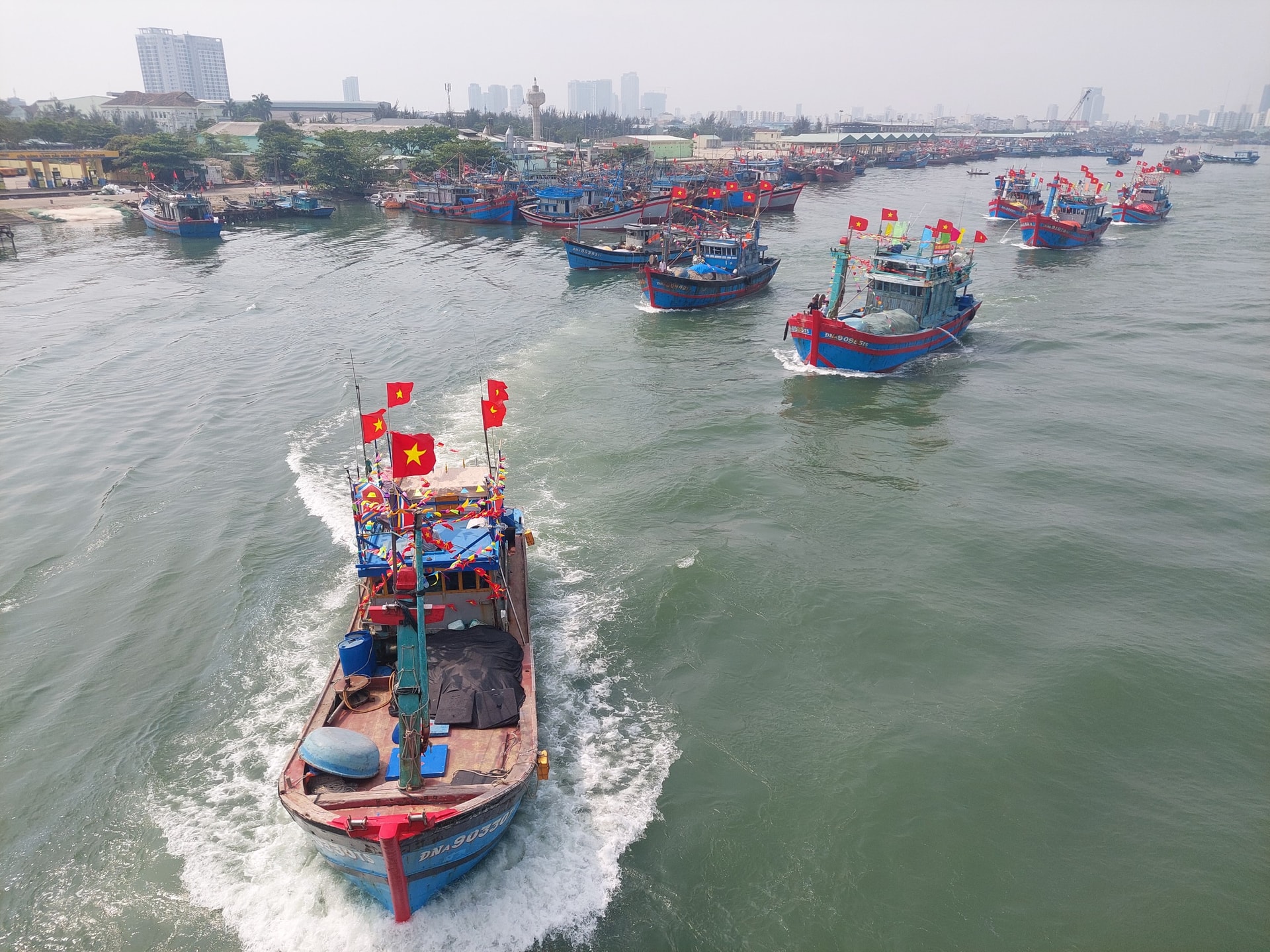
In his memory, the fishing festival was held only once every three years. The whole village prepared for months beforehand. Some built the ceremonial platform, others repaired the communal house, and some practiced singing… but the soul of the festival remained the "ba trạo" dance. Because for fishermen, the sea is both a source of livelihood and a place always fraught with danger. "Sometimes we encounter storms, accidents at sea. Sometimes people save us, sometimes the gods save us. We must remember to be grateful to them. The 'ba trạo' dance is to express that gratitude," he said.
According to Mr. Phong, a traditional boat rowing troupe consists of 15 people. Twelve rowers, holding oars, stand in two rows like oarsmen on a boat navigating the waves. The performance is directed by the headman, the water bailer, and the helmsman. The water bailer is usually the one with the best singing voice, excellent improvisational skills, and who handles the most important parts of the performance.
In the past, whenever the songs reached emotional parts, the audience would even give money to the lead actors and actresses of the theatrical troupes. In the "Ba Trao" performance, there were almost no superfluous movements. The oar symbolized the seafaring profession and the struggle for survival. The changes in formation suggested the boat struggling amidst the waves and storms. The lyrics recounted voyages at sea, encounters with storms, and gratitude towards those who rescued them at sea.

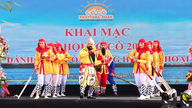
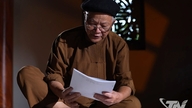
“The most difficult part isn't the movements, but the lyrics. Learning was extremely hard back then because there were no books. The elders passed down the tradition orally to the next generation. To follow along, you had to memorize hundreds of songs and remember the correct sequence of each scene. Many people studied for several years and still didn't dare to take on the lead role,” said Mr. Phung Van Phuc, son of Mr. Phong. That's why, in Tan Thai fishing village today, artisan Phung Tan Phong is considered a “living book” preserving many precious memories of the traditional boat dance.
Preserving the ethics of seafarers.
While Mr. Phung Tan Phong preserved ancient songs through memory, artisan Cao Van Minh (formerly of Nai Hien Dong ward) spent many years researching the structure, meaning, and ritual system of this unique performing art. Mr. Minh often refers to the "ba trao" as the "soul of the fishing festival." According to him, many people only see the oars, the songs, or the performance formations, but behind it lies an entire system of rituals formed over generations of coastal residents.
“The fishing festival has 15 rituals, and 3 of them are associated with the 'ba trạo' ritual. The 'ba trạo' is not a performance but an integral part of the ceremony. From the moment the deity is invited to the temple until the 'Long Chu' (dragon boat) is sent out to sea, the 'ba trạo' is present,” Mr. Minh said.
According to him, during the ceremony of inviting the deity of the South Sea, the boatmen use songs, chants, and symbolic rowing movements to invite the deity and spirits of the river and sea to attend the ceremony. When the deity enters the temple, performances such as the "Fisherman's Play" and "Spiritual Play" continue to praise the merits of the South Sea deity, commemorate the one who saved fishermen at sea, and pray for calm seas and abundant catches of shrimp and fish. At the ceremony of sending off the Dragon Boat, the boatmen take on the role of bidding farewell and praying for peace.
Beyond its unique ritual content, the "ba trao" performance also bears the strong imprint of Central Vietnamese folk music . Many melodies are influenced by classical theater, especially the Nam Ai melody, along with storytelling, call-and-response, and chanting styles. In addition, there is a blend of local folk songs, rhymes, and chants. The music in "ba trao" is not elaborate but rich in evocative power. The sound of the single-stringed lute, combined with the drums and the rhythm of the oars, creates a performance space that is both sacred and imbued with the spirit of the sea.
According to Mr. Minh, each act of the performance has its own function. There are acts of invitation, procession, prayer, sending off, and farewell; the order cannot be reversed. The stage manager must understand the rituals and express the unique characteristics of the fishing village culture along with the artistic essence passed down from their ancestors. What worries him is that many places today only restore the formal aspects while the original cultural meanings and rituals are gradually being simplified. He believes that if the restoration is done correctly according to the documentation, the "ba trạo" (boat dance) alone contains a very large part of the artistic value of the fishing festival.
“The vitality of the 'ba trao' folk song lies in the moral principles conveyed through each verse and rowing rhythm. Amidst the uncertainties of the open sea, gratitude becomes the way of life for seafarers. Those rescued remember their rescuers, and those who receive kindness always think about repaying it. Therefore, the 'ba trao' folk song is passed down as a song of gratitude among seafaring people,” Mr. Minh emphasized.



Mr. Huynh Van Muoi, who has spent many years researching the coastal village culture of Da Nang, believes that when artisans like Mr. Phung Tan Phong reach the age of 93, the preservation of the "ba trao" folk singing style cannot be delayed any longer. What needs to be done immediately is to record, film, and digitize the songs, lyrics, and memories of these elderly artisans. "These elders are living archives. If we don't preserve them in time, many valuable assets will be lost along with them," Mr. Muoi said.
According to him, preserving the traditional boat rowing songs should not be limited to festivals but should also include mechanisms to support artisans in passing on their knowledge in coastal villages and community clubs; and at the same time, build a digital documentation system so that the younger generation can access it. Because if one day these boat rowing songs disappear, the documents preserved today will help future generations better understand the life, beliefs, and morals that their ancestors instilled in each stroke of the oar on the open sea…
Source: https://baodanang.vn/khuc-hat-bao-an-3339603.html

![[Photo] Opening Ceremony of the 13th National Congress of the Ho Chi Minh Communist Youth Union](https://vphoto.vietnam.vn/thumb/1200x675/vietnam/resource/IMAGE/2026/06/24/1782286753905_ndo_br_1-8510-jpg.webp)
![[Photo] The 13th National Congress of the Youth Union conducts personnel work.](https://vphoto.vietnam.vn/thumb/1200x675/vietnam/resource/IMAGE/2026/06/24/1782299943080_ndo_br_1-6868-jpg.webp)
![[Photo] General Secretary and President To Lam attends the Central Public Security Party Committee Conference](https://vphoto.vietnam.vn/thumb/1200x675/vietnam/resource/IMAGE/2026/06/24/1782302063612_a1-bnd-9302-9166-jpg.webp)