Supply chain disruptions from the Middle East
The conflict between the US, Israel, and Iran disrupted about one-third of the global helium supply, creating a major shock to many industries that depend on this rare gas.
The epicenter of the disruption lies in Qatar, one of the world's largest helium producers. According to data from the U.S. Geological Survey, the country is expected to produce approximately 63 million cubic meters of helium in 2025, accounting for nearly one-third of the global total, equivalent to 190 million cubic meters. However, Qatar's role extends beyond production; it occupies a central position in the supply chain, particularly through its strategic shipping routes.
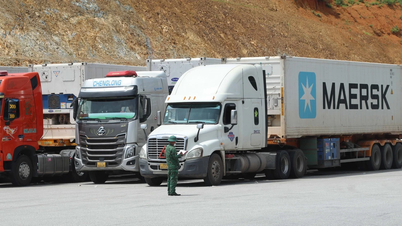
One of the most significant "bottlenecks" is the Strait of Hormuz, a vital shipping lane in the Gulf region. Iran requires ships to obtain permits before passing through, resulting in a severe drop in shipping traffic. While not completely blockaded, the strait has been virtually paralyzed for many Western nations.
Not only has transportation been disrupted, but production has also been severely affected. Helium is essentially a byproduct of the liquefaction of natural gas (LNG). Therefore, any disruption in LNG production leads to a decrease in helium supply. Attacks on energy facilities in Qatar, particularly at Ras Laffan, which processes about 20% of the global LNG supply, have exacerbated the situation.
Iranian attacks disrupted approximately 17% of Qatar's LNG production capacity, resulting in an estimated $20 billion in annual revenue losses. As a direct consequence, Qatar Energy, the national oil and gas company, cut its liquid helium exports by about 14% annually.
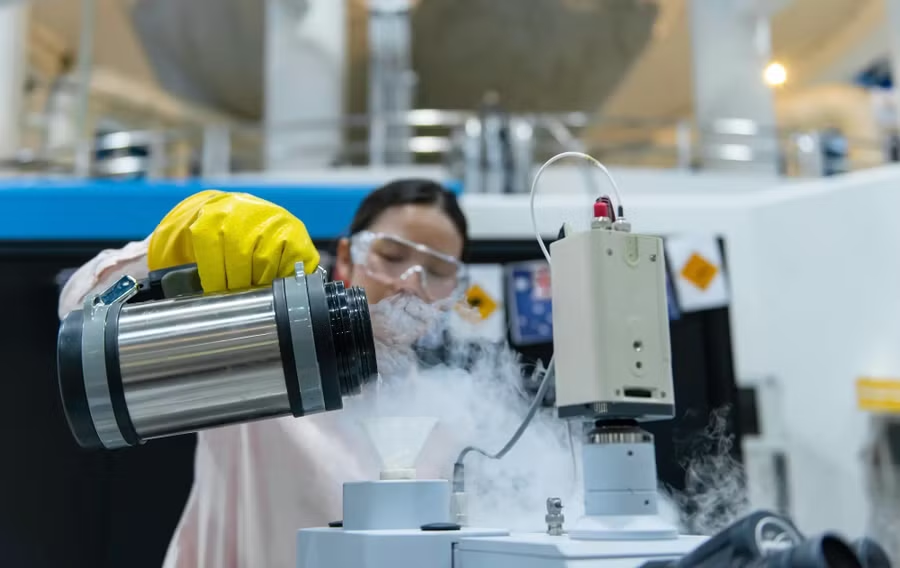
Transporting helium, already complex, has become even more difficult. Due to its very low density, helium is typically liquefied and stored in cryogenic tanks. However, even under optimal conditions, liquid helium can only be transported for about 45 days before gradually evaporating. This makes delays in transport a serious problem, as each day of delay means a loss of resources.
This disruption is most strongly affecting Asian countries such as South Korea, Japan, and China, as they are heavily reliant on helium for high-tech manufacturing. Although much of the supply is tied up in long-term contracts, the market is beginning to see signs of scarcity.
Experts warn that if the disruption lasts 30 days, spot helium prices could rise by 10-20%. If it lasts for 2-3 months, the increase could reach 50%, especially for businesses without long-term contracts.



The ripple effect on healthcare and technology.
Helium plays an irreplaceable role in many important fields. Its unique physical properties allow it to reach temperatures close to 0 Kelvin (absolute zero) while remaining in a liquid state. Therefore, it is an ideal coolant in high-tech systems.
One of the most important applications of helium is in magnetic resonance imaging (MRI). These machines use superconducting magnets, which need to be constantly cooled to maintain operation. Liquid helium helps keep the temperature extremely low, reducing electrical resistance to near zero, thereby creating a magnetic field strong enough to produce detailed images of the inside of the body.
Approximately one-quarter of the world's helium is used for this purpose. When the supply is disrupted, hospitals face the risk of delays or reduced MRI scanning capacity.
Not only healthcare, but the semiconductor industry is also heavily impacted. Helium is used in chip manufacturing to cool and ensure a non-reactive environment. This is especially important for modern electronic devices, from smartphones to cars and data systems.
In the context of a world already facing a chip crisis, a helium shortage could exacerbate the situation, leading to widespread economic consequences.
One concerning aspect is that helium has virtually no substitutes. No other element can replicate its thermodynamic properties. This makes the supply of helium a "strategic vulnerability" in the global supply chain.
In fact, this is not the first time the world has faced a helium crisis. Since 2006, there have been at least five major disruptions. However, each time has provided lessons about over-reliance on a few sources of supply.



The medical and technological industries have begun to find ways to adapt. Some research has developed MRI machines that do not require helium or have the ability to recycle the gas. However, these technologies are not yet widespread, and much of the current system still relies on liquid helium.
On the supply side, the US is currently the world's largest producer of helium, accounting for over 40% of global output. Companies like Exxon Mobil, along with operators in Canada, are working to increase production. However, expanding production cannot happen in the short term due to infrastructure requirements and costs.
Even in North America, businesses still rely on supplies from the Middle East. The fact that some major distributors have announced cuts in supply shows the severity of the situation.
Source: https://giaoducthoidai.vn/khung-hoang-heli-toan-cau-post776965.html