

The drafting of the Decree on Strategic Trade Control is a significant step in institutionalizing international commitments and perfecting the legal framework for Vietnam to proactively respond to non-traditional security risks in international trade. The draft is meticulously prepared, systematic, practical, and in harmony with international practices. However, to ensure feasibility and effectiveness in implementation, further improvements are needed in several aspects.
Being a responsible nation in the global supply chain.
Against the backdrop of increasing proliferation of weapons of mass destruction (WMD) and dual-use technologies, countries are tightening strategic trade controls as a crucial part of their security and trade policies. Given its important geopolitical position and high import-export growth rate, Vietnam needs a unified and transparent legal framework to tightly control dual-use goods.
The draft Decree adheres closely to the provisions of the Law on Foreign Trade Management, the Law on Commerce, the Law on Investment, and is consistent with international commitments to which Vietnam is a signatory, such as: Resolution 1540 of the United Nations Security Council, the Treaty on the Prohibition of Nuclear Weapons (NPT), and the Wassenaar Agreement. This is a prerequisite for Vietnam to affirm its role as a responsible nation in the global supply chain.
The concept and scope of regulation are clear. The draft specifically defines key concepts such as "dual-use goods," "end users," "internal compliance programs (ICP)," etc., which many existing legal documents do not clearly address. The scope of application is reasonably limited, avoiding overlap with defense and security sectors.
Notably, with the mechanism of decentralization and inter-sectoral coordination: Delegating authority to ministries (Industry and Trade, Science and Technology, Finance, Foreign Affairs, Health, etc.) in developing the list of dual-use goods and managing them according to their specialized fields is reasonable. This facilitates the control of goods according to their technical and technological characteristics, while simultaneously enhancing the central coordinating role of the Ministry of Industry and Trade .
In addition, electronic declaration on the National Single Window Portal (vnsw.gov.vn) helps reduce the time and compliance costs for businesses, while enhancing transparency, ease of monitoring, and traceability.
Encouraging compliance through ICP, a mechanism that exempts construction companies from reporting requirements and allows for ICP approval, is an initiative that encourages proactive compliance, a shift from pre-approval to post-approval management, in line with modern governance trends.
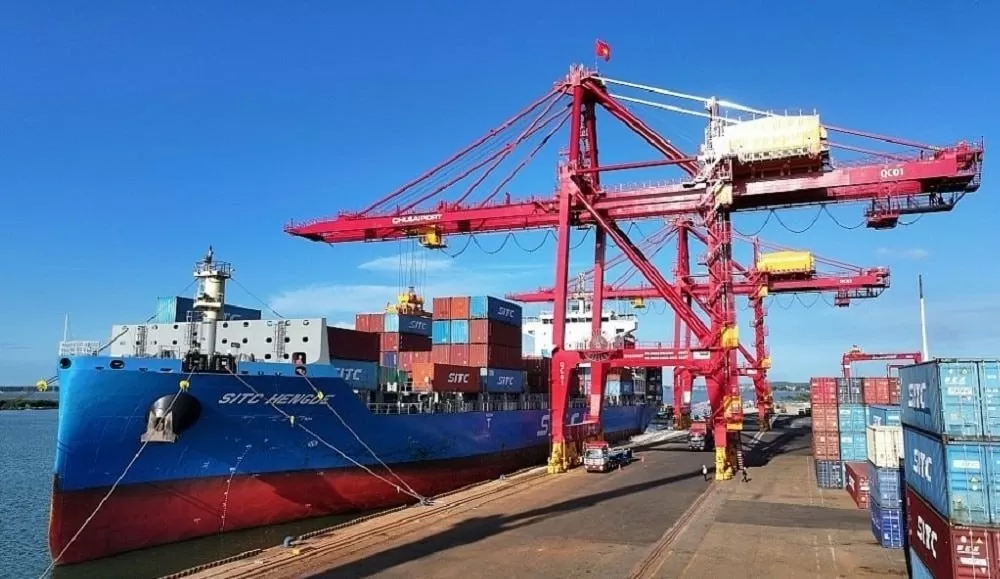 |
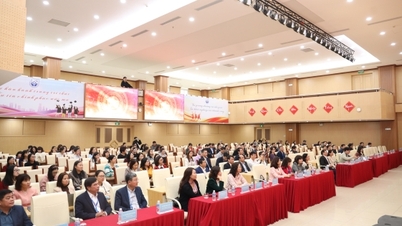
| The Ministry of Industry and Trade has drafted a Decree on controlling strategic trade. Photo: Linh Nhi |
There are still many things that need to be improved.
Although the regulations are clearly designed, the criteria for evaluating the ICP need clarification. While Appendix III details the procedures within the ICP, the criteria for assessing the completeness and effectiveness of the program are not yet specific. Guidance on quantitative evaluation, such as the number of periodic training sessions per year, the number of dedicated personnel, and the record retention period, should be added to ensure consistency in implementation and verification.
Furthermore, it is necessary to ensure the enforcement capacity of customs authorities and relevant ministries. Delegating authority to multiple ministries to issue the Dual-Use Goods List poses a risk of fragmentation if there is a lack of coordination and standardization mechanisms for the list of customs codes. Simultaneously, investment is needed to enhance the technical identification and analysis capabilities of customs officers at border crossings to prevent fraud and false declarations.
Furthermore, policies supporting small and medium-sized enterprises (SMEs) need careful consideration. SMEs, which often lack the resources to develop their own ICPs, require support mechanisms such as process transfer, training, or suitable ICP models. This avoids the risk of regulations becoming technical barriers to the increasingly integrated private sector.
Furthermore, adjustments are needed to harmonize with new-generation FTAs. The draft decree needs to be reviewed to ensure it does not conflict with commitments to open trade in goods and transparency of procedures under the CPTPP, EVFTA, and RCEP agreements that Vietnam has signed, especially in the provisions on control procedures and processing times.
In order for the Decree, once issued, to effectively serve as a management tool while avoiding excessive administrative burdens on businesses, the following is necessary:
Firstly, issue a circular providing detailed guidance on procedures, forms, and processing times to avoid situations where each ministry applies them differently.
Secondly, we need to strengthen the digitalization of monitoring processes and the interconnection of data between agencies such as the Ministry of Industry and Trade, Customs, the Police, and the Ministry of National Defense.
Third, organize regular training for businesses and enforcement agencies on dual-use goods and control of sensitive transactions.
Fourth, incorporate regulations on stronger deterrent penalties for violations into the decree or a related document.
International experience and the integration of the draft
In the context of globalization and increasingly complex transnational supply chains, building a strategic trade control system is a key criterion for countries to be assessed as having "international compliance capacity." Vietnam's draft decree is gradually approaching these standards, but a broader perspective is still needed to learn from and adjust policies to align with international practices.
In the United States, the control model is linked to national security. Accordingly, the US is a leader in building a dual-use goods control system with the "Export Administration Regulations" (EAR) mechanism and the "Commerce Control List" (CCL). Any goods that could support the development of weapons of mass destruction, high technology, or even artificial intelligence are subject to control. Notably, the US applies a very strong post-inspection and sanction mechanism, along with maintaining an "Entity List" to prohibit transactions with suspected parties.
Meanwhile, South Korea employs a hybrid technology-legal model. As a member of the Wassenaar Agreement, South Korea has built a strategic control system based on the International Trade Control Act, classifying goods according to national dual-use categories, and requiring businesses to establish mandatory internal audit systems when engaging in high-tech goods transactions. South Korea has also invested heavily in artificial intelligence and big data to identify risks in import and export declarations.
Singapore, on the other hand, focuses on legal harmonization and trade facilitation. Specifically, Singapore applies the "Strategic Goods Control Act" model with a pre-declaration, post-approval, and digital post-inspection mechanism. Notably, the country allows businesses access to an online self-assessment tool for identifying dual-use goods and provides very specific guidance on how to build an International Contingency Plan (ICP). This enables businesses to both comply with regulations and maintain a fast pace of trade transactions.
Based on international experience, several key policy implications for Vietnam can be drawn:
Firstly, harmonize the list of dual-use goods with the CCL systems of the US, EU, and ASEAN countries to facilitate connection and traceability of cross-border transactions.
Secondly, establish a system of suspicious entity lists (blacklists) to provide early warnings to businesses showing signs of violating weapons proliferation regulations or transferring sensitive technologies.
Thirdly, invest in digital platforms and automated risk assessment systems to enhance the ability to detect violations and reduce reliance on manual inspection processes.
Fourth, develop an "online self-assessment" toolkit for businesses regarding the dual-use nature of goods, coupled with transparent and regularly updated guidance.
Fifth, strengthen technical cooperation with international organizations such as UNODA, EU P2P, and the US Bureau of Industry and Security (BIS) to improve institutional capacity and train highly skilled human resources.
| The draft Decree on Strategic Trade Control is a step in the right direction, clearly demonstrating a proactive spirit of integration and enhancing state management capacity in the sensitive field of foreign trade. With some reasonable adjustments, this document will become a powerful tool to help Vietnam ensure national security, fulfill international commitments, and support businesses in sustainable development within the global supply chain. |
Source: https://congthuong.vn/kiem-soat-thuong-mai-chien-luoc-huong-di-can-thiet-trong-hoi-nhap-382954.html











































![[Photo] Closing Ceremony of the 15th Conference of the Central Committee of the 13th Party Congress](https://vphoto.vietnam.vn/thumb/402x226/vietnam/resource/IMAGE/2025/12/23/1766462841764_a1-bnd-3731-1647-jpg.webp)




















Comment (0)