

Four times the amount of foreign investment.
The State Bank of Vietnam (SBV) Ho Chi Minh City branch reported that remittances to Ho Chi Minh City in the first nine months of 2024 reached nearly US$7.392 billion, a 10.5% increase compared to the same period last year. Although remittances in the third quarter decreased slightly by 4.1% compared to the second quarter, this figure still represents 78.1% of the total for 2023 (the year with the highest remittance volume, reaching US$9.46 billion). Of the total remittances, those channeled through economic organizations (remittance companies) reached US$5.485 billion, and those channeled through credit institutions reached over US$1.9 billion. Remittances from Asia continued to account for the highest proportion (53.8%) and maintained the best growth rate, increasing by 24.1% year-on-year. Remittances from the Americas increased by 4.4%; and from Oceania by 20%. Europe saw a 19.1% decrease compared to the same period last year…
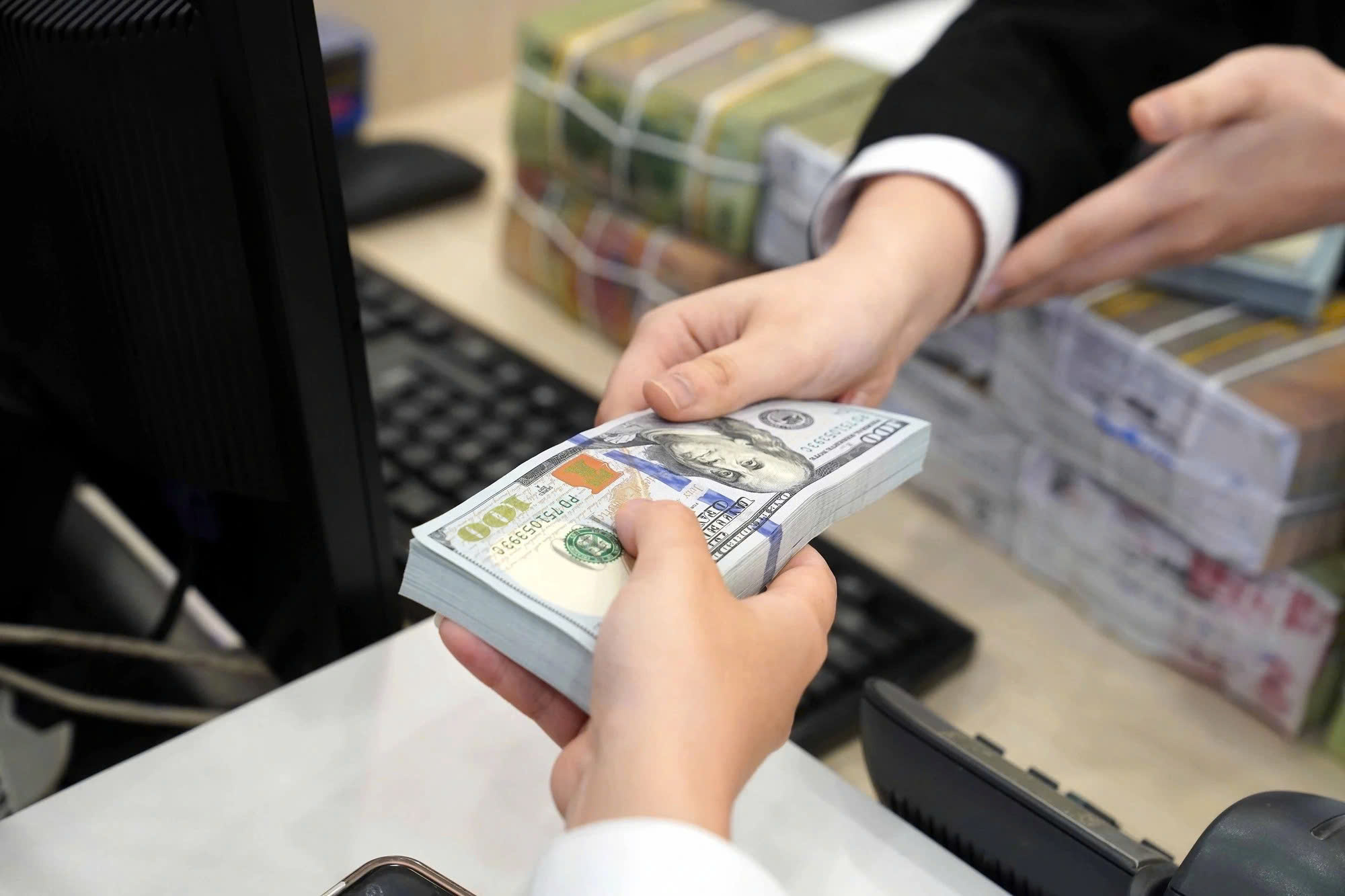
Attracting remittances will continue to be a bright spot for Vietnam.
Photo: NGOC THANG
Notably, remittances to Ho Chi Minh City in the first nine months of 2024 exceeded the figures for the whole of 2020 (US$6.1 billion), 2021 (US$7.1 billion), and 2022 (US$6.6 billion). This amount of remittances is nearly four times higher than the amount of foreign direct investment (FDI) into the city (approximately US$1.91 billion). Overall, during the period 2012-2023, remittances transferred to Ho Chi Minh City through commercial banks, economic organizations, and remittance companies reached over US$65 billion, with an average annual growth rate of 3-7%.
According to city data and statistics from previous years, remittances to Ho Chi Minh City account for 38-53% of the total remittances nationwide. Therefore, it is projected that in 2024, remittances nationwide will reach approximately 19 billion USD, a record high previously achieved in 2022.
Mr. Nguyen Duc Lenh, Deputy Director of the State Bank of Vietnam's Ho Chi Minh City branch, analyzed: Although remittances to the city have decreased in recent quarters, it is projected that they will maintain a growth rate from now until the end of 2024. This forecast is based on actual statistics from previous years and the growth trend of remittances in the fourth quarter of each year, which is the last quarter of the year, including the Lunar New Year holiday, so this source of money usually has a high growth rate. Specifically, in Q4/2021, remittances increased by 26.1%; in Q4/2022, by 12.7%; and in Q4/2023, by 17.9%. It is projected that remittances will still achieve a growth rate of approximately 10% per year in 2024.
This trend, linked to the growth rate of remittances in the last quarter of the year, is usually higher than in previous quarters. More importantly, the steady increase in remittances to Ho Chi Minh City over the years will create potential for the coming years thanks to positive factors from policies attracting remittances, labor market development policies, overseas Vietnamese policies, and remittance payment services. Therefore, according to Mr. Leinh, to continue creating potential for the coming years, the current solution is to maintain and promote these positive factors. In particular, doing a good job of communication is crucial, with information disseminated about policies, the investment environment, and the country and people of Vietnam, especially remittance payment services, so that overseas Vietnamese and Vietnamese working and studying abroad can easily understand and transfer remittances back to the country.
Currently, Vietnam has approximately 6 million overseas Vietnamese living, working, and studying in 130 countries and territories. Of these, over 80% are in developed countries, with about 600,000 overseas Vietnamese holding a university degree or higher. The lives of overseas Vietnamese are improving, and they represent an important resource contributing to the country's development.
An attractive investment environment for capital flows.
According to the World Bank and the International Organization for Migration, Vietnam has received an average of US$17-18 billion in remittances annually over the past three years. In the last 10 years, remittances have been a bright spot for Vietnam. Although affected by various factors, and experiencing some years of decline following the general trend of other countries, Vietnam has consistently maintained its position among the top 10 countries with the largest remittances globally and among the top 3 countries receiving remittances in the Asia-Pacific region.
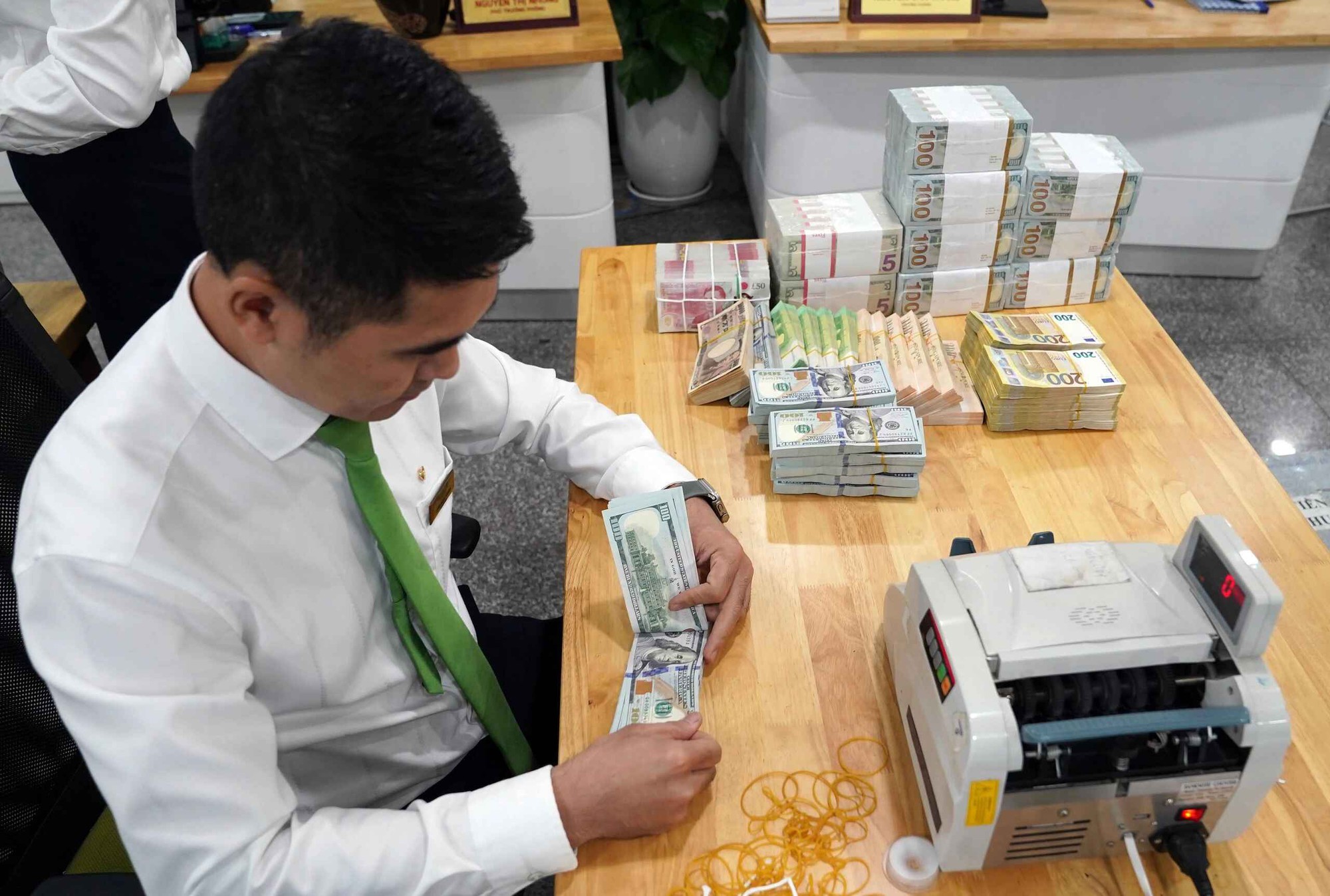
Remittances to Vietnam continue to increase. In particular, remittances to Ho Chi Minh City in the first nine months of 2024 were higher than in both 2021 and 2022 combined.
Photo: NGOC THANG
Looking at the overall picture, economist Associate Professor Dr. Dinh Trong Thinh (Finance Academy) commented: Remittances to Vietnam continue to increase, reaching a record high of approximately 19 billion USD in 2022. In 2023, due to global economic difficulties, the flow of money from Vietnamese people to Vietnam decreased, but at a certain level.
16 billion USD is also a very high amount. This is a large source of capital that supplements investment in the domestic private sector. "The money sent by overseas Vietnamese to their relatives and families for spending, construction, and buying houses... also contributes significantly to ensuring the livelihoods of many families and supporting social welfare in the country," Mr. Thinh said. Especially in recent years, remittances have almost equaled FDI inflows into Vietnam and have become an important resource, increasing the flow of foreign currency to meet domestic needs. This helps Vietnam maintain a stable exchange rate policy and ensure the country's foreign exchange reserves.
"Over the years, the Government has implemented policies to encourage and facilitate overseas Vietnamese to return home to invest and do business, as well as to send money for investment or to support relatives. Among these, the high proportion of remittances sent back for investment further demonstrates the attractive business and investment environment in Vietnam. Especially with the Real Estate Business Law coming into effect on August 1st, allowing overseas Vietnamese to invest and conduct real estate business like domestic citizens, remittances to Vietnam will continue to increase," Associate Professor Dr. Dinh Trong Thinh anticipates.
Also appreciating the contributions of overseas Vietnamese with the annual remittances sent back to Vietnam, which have contributed to the socio-economic development of the country, economic expert, Professor Vo Dai Luoc, said that any country needs foreign currency for trade, foreign exchange reserves, etc. The capital sent back by Vietnamese people working and settling in other countries is usually to help relatives and then to invest. Vietnam's savings interest rates are always high, reaching 6-7% per year, more than double the interest rates in many countries. This is an attractive factor that encourages overseas Vietnamese to send foreign currency back home, converting it into Vietnamese dong to earn high interest. In particular, remittances from the US are expected to increase in the near future because that country has begun to lower interest rates, and if this trend continues, the amount of remittances to Vietnam is likely to be higher than in recent years.
Continue to encourage and welcome remittances with open arms.
The amended Land Law and the new Real Estate Business Law both contain provisions aimed at better protecting the legitimate rights and interests of land users, such as expanding land use rights for Vietnamese citizens, including those residing abroad. Vietnamese citizens residing abroad (those who still hold Vietnamese citizenship) will enjoy the same housing rights as domestic citizens. Furthermore, overseas Vietnamese will be allowed to invest in and conduct real estate business like domestic citizens. Thus, overseas Vietnamese will be permitted to invest in the construction of housing and other buildings for sale, lease, or lease-purchase; and to invest in the construction of technical infrastructure within real estate projects for transfer, lease, or sublease of land use rights with existing infrastructure.
For people of Vietnamese origin residing abroad but without Vietnamese citizenship, they also have the rights and obligations of citizens regarding land; the general rights of land users; the individual rights and obligations of land users; the right to convert, transfer, lease, sublease, inherit, gift land use rights, mortgage, contribute capital using land use rights; receive land use rights; the rights and obligations of individual land users, including individuals in Vietnam and Vietnamese citizens residing abroad, are equal and equitable… These regulations are opening the door for an even stronger flow of money from overseas Vietnamese.
Associate Professor Dr. Dinh Trong Thinh emphasized: Previously, regulations allowed overseas Vietnamese to purchase real estate in Vietnam, but many had to rely on relatives to register ownership. Concerns about complex procedures and regulations, and the inability to register ownership in their own name, deterred many. Therefore, along with the government's incentive policies in recent years, the new regulations in the Real Estate Business Law will make it easier for overseas Vietnamese to own houses and land in Vietnam.
This will contribute to a higher increase in remittances to Vietnam in the future. At the same time, the government needs to continue creating favorable conditions and simplifying administrative procedures for overseas Vietnamese to travel to and from Vietnam quickly and integrate easily. It should also consider more flexible regulations, allowing people of Vietnamese origin (even without Vietnamese citizenship) to invest in Vietnam in certain sectors and industries, similar to domestic investors. This will further encourage and attract more remittances to Vietnam.
As a Vietnamese-American who frequently lives and works in Vietnam, economist and PhD Nguyen Tri Hieu commented: The biggest advantage of remittances is that they do not carry the same risks as foreign direct investment. Unlike foreign loans or ODA funds that require specific conditions to be received, remittances are a voluntary flow of money, transferring only in one direction from abroad without any conditions attached. Therefore, remittances are an extremely valuable resource, significantly supplementing Vietnam's foreign exchange reserves and playing a crucial role in the country's economic development. For this reason, Vietnam has many policies to attract remittances. Recently, through the Committee on Overseas Vietnamese, Ho Chi Minh City has a project titled "Policies to effectively utilize remittance resources in Ho Chi Minh City from now until 2030," which includes issuing bonds to attract remittances for investment in infrastructure, healthcare, etc.
"Although the issuance is still in its early stages, this is the first time there has been a specific plan to attract remittances into specific sectors. If issues such as interest rates and bonds are attractive enough to overseas Vietnamese, it could be a solution to increase remittances to Vietnam. Historically, overseas Vietnamese often sent money back to their families, sometimes sending money back to Vietnam to benefit from the difference when domestic interest rates were higher than international rates. Currently, with USD interest rates at 0%, this phenomenon no longer exists, but the increased remittance flow is partly due to Vietnamese working abroad believing in the stability of the economy and seeing better investment opportunities in the domestic market," said Dr. Nguyen Tri Hieu.
Vietnam is among the top 10 countries receiving remittances.
For many years, Vietnam has been among the top 10 countries in the world in terms of remittances received. The State Committee for Overseas Vietnamese reported that remittances to Vietnam from 1993 (the first year remittances were recorded) to the end of 2023 reached over 206 billion USD, nearly equal to the amount of disbursed FDI capital.Maximizing the potential of remittances.
The project "Policies to Effectively Utilize Remittance Resources in Ho Chi Minh City from Now to 2030" includes comprehensive solutions with high practical significance. In addition to continuing to implement solutions to maintain the annual growth rate of remittances, and to attract and utilize this resource, there are also solutions and orientations for the effective use of remittance resources. This includes researching and proposing economic measures to attract and concentrate remittances for investment in socio-economic development programs and projects in the city, resulting in higher and greater efficiency. To effectively implement this solution, information and communication are also crucial to advise and inform citizens and beneficiaries on the effective use of remittances. Remittances can be used for consumption to support daily life; invested in production, business, trade, and services; deposited in savings; or invested. Purchasing local government bonds… Clearly, focusing remittance resources on developing socio-economic programs and projects will yield much higher efficiency and bring practical benefits to both the economy and the people. In this process, the efficient use of remittance resources is also a solution to attract remittances for sustainable growth.Mr. Nguyen Duc Leinh, Deputy Director of the State Bank of Vietnam, Ho Chi Minh City branch.
Thanhnien.vn
Source: https://thanhnien.vn/kieu-hoi-chay-manh-ve-viet-nam-185241018221318772.htm
![[Photo] General Secretary and President visit the China-ASEAN AI Application Cooperation Center](https://vphoto.vietnam.vn/thumb/1200x675/vietnam/resource/IMAGE/2026/04/17/1776404277677_vna-potal-tong-bi-thu-chu-tich-nuoc-tham-trung-tam-hop-tac-ung-dung-ai-trung-quoc-asean-8706616-2286-jpg.webp)



















![[Photo] National Assembly Chairman Tran Thanh Man attends the policy seminar to promote Vietnam-Türkiye cooperation.](https://vphoto.vietnam.vn/thumb/1200x675/vietnam/resource/IMAGE/2026/04/16/1776351415367_vna-potal-chu-tich-quoc-hoi-tran-thanh-man-du-toa-dam-chinh-sach-thuc-day-hop-tac-viet-nam-tho-nhi-ky-8705791-jpg.webp)













































![[Video] Preserving the "green gold" on Hong Thai Mountain](https://vphoto.vietnam.vn/thumb/402x226/vietnam/resource/IMAGE/2026/04/18/1776468522858_a1-jpg.webp)




Comment (0)