

Carefully reading energy labels is a key indicator that helps consumers shop for what they need, avoiding waste of both money and resources.
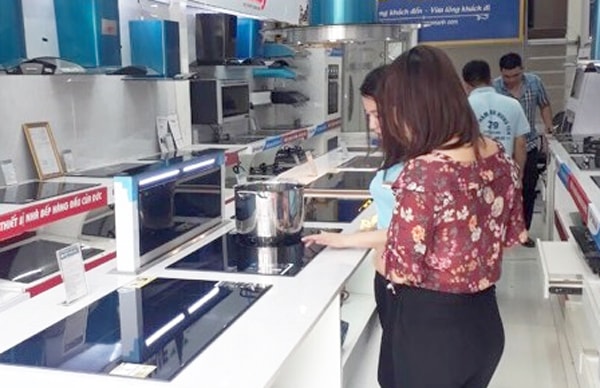
Choosing appliances with the wrong power rating for the room size, number of users, or frequency of use is a major reason why many families experience high monthly electricity bills.
Ms. Nguyen Thu Huong (Phuc Thinh commune) shared: “Previously, my family installed an 18,000 BTU air conditioner for a bedroom of only about 15m² because we thought a higher capacity would cool the room faster. After a few months of use, the electricity bill increased significantly. When the technician advised me again, I realized that capacity was too high for the room size, causing the machine to constantly turn on and off, wasting electricity and reducing the lifespan of the equipment.”

Mr. Le Dinh Dung, a technician at Phuong Thao Electronics Store (Thien Loc commune), said: “When choosing an air conditioner, in addition to the energy efficiency rating, consumers need to pay attention to the cooling capacity (BTU) to select the right size for the room. For refrigerators, consider the capacity based on the number of family members instead of buying a large one just for 'necessary use'. For washing machines, small families don't necessarily need a 10-12kg capacity if the need is only 6-8kg per wash cycle.” Carefully reading the energy efficiency label will help consumers know the average annual electricity consumption (kWh/year) or the consumption per operating cycle, which is an important basis for calculating projected electricity costs.
According to regulations from the Ministry of Industry and Trade , many groups of electrical and electronic appliances such as air conditioners, refrigerators, washing machines, electric fans, light bulbs, rice cookers, televisions, etc., are required to have energy efficiency labels before being sold on the market. On each product, buyers can easily find two common types of labels: Comparative labels (with a star rating from 1 to 5 stars) and certification labels (usually stating "Highest Energy Efficiency"). Comparative labels show the energy efficiency level of the product through the number of stars. The more stars, the more energy-efficient the product is compared to the average for the same group of appliances. Certification labels are for products that meet or exceed the highest efficiency level according to current standards. However, in reality, many consumers still make purchases based on impulse: choosing attractive designs, low prices, and high power consumption without paying attention to the information on the energy efficiency label. The consequence is that the appliance may exceed their needs, leading to increased electricity consumption, higher operating costs, and faster deterioration.
Energy experts say that if each household prioritizes choosing 4-5 star rated appliances instead of 2-3 star ones, electricity savings could reach 10-30% depending on the product group. With millions of households nationwide, this would significantly reduce pressure on the national power grid, especially during peak hot months. Furthermore, using high-efficiency appliances helps reduce greenhouse gas emissions by decreasing electricity production demand, contributing to green growth and efficient energy use.
Energy labeling is not only a government regulation requirement but also a tool to help consumers be more proactive and intelligent in their spending. Carefully reading energy labels before purchasing electrical appliances is the most practical way to start saving money for your family, while also contributing to protecting the environment and the common resources of society.

Source: https://hanoimoi.vn/kim-chi-nam-tranh-doi-chi-phi-su-dung-dien-736459.html































































![[Video] Sunset at Lap An Lagoon – Where the sun sets over the fishing nets](https://vphoto.vietnam.vn/thumb/1200x675/vietnam/resource/IMAGE/2026/05/31/1780192137701_beach-landscape-sea-water-nature-grass-745871-pxhere-com.jpeg)
































Comment (0)