

 |
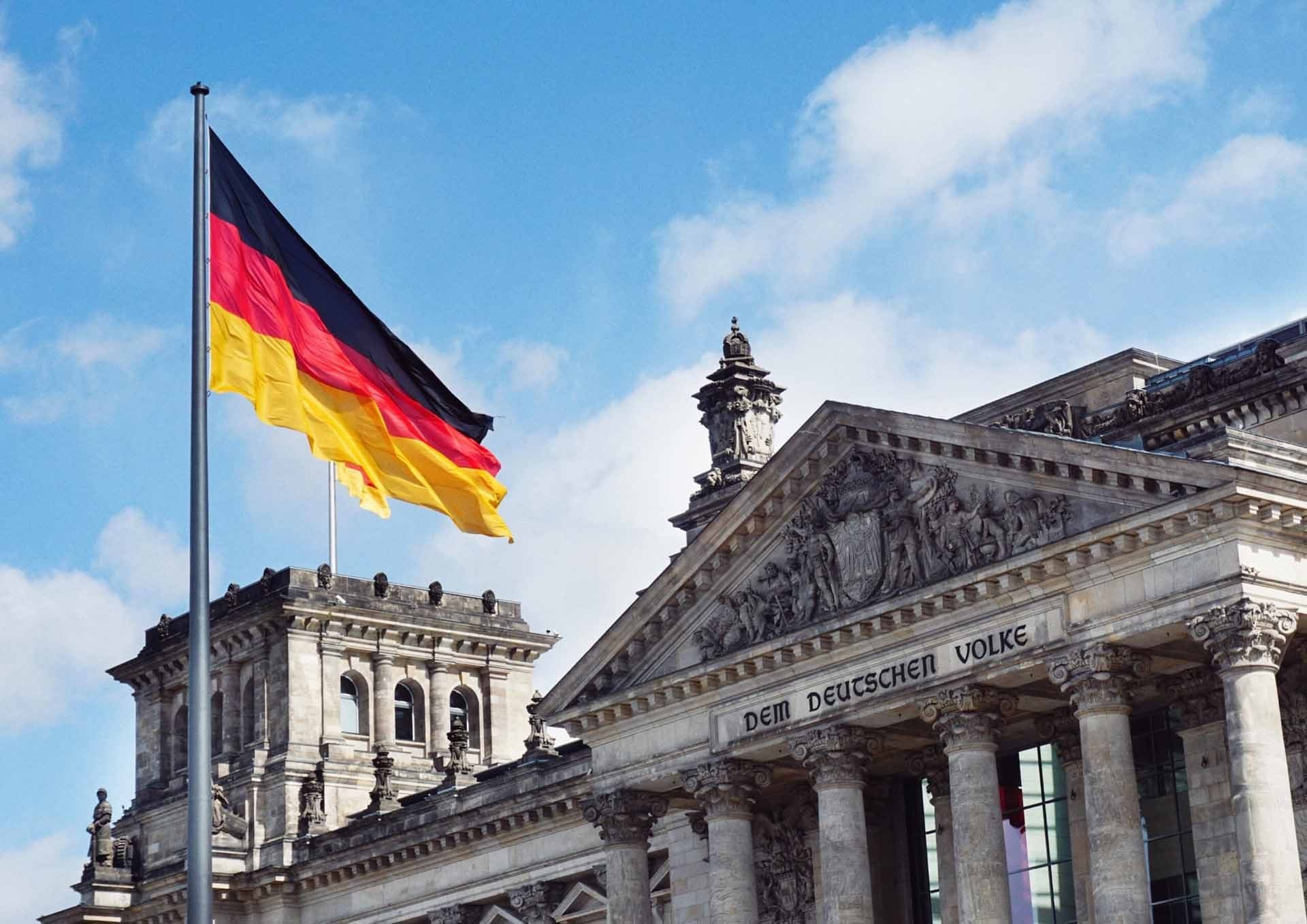
| Germany will have to make a great deal of effort to overcome the current situation. (Source: EIU) |
The latest figures for Europe's largest economy are not positive. According to the German Federal Statistical Office (Destatis), GDP in 2023 was 0.3% lower than the previous year, making Germany the world's worst-performing major economy.
"Breaking the rules"
Both the IMF and OECD share the same forecast regarding the "gloom" of the German economy. One obvious reason is the global downturn in manufacturing, which has brought German industry – which accounts for one-fifth of total output – to a standstill.
Political obstacles, the lingering effects of the pandemic, the unpredictable Russia-Ukraine conflict, and the uncertain outlook for the Chinese economy all pose significant challenges to the recovery of Europe's leading economic power. Furthermore, recent geopolitical conflicts globally have contributed to increased instability in Berlin's economy, which has long relied on cheap oil and gas imports from Russia.
Inflationary pressures are impacting the production processes of German companies, which are optimized for efficiency. According to Destatis, the production of cars and other transport equipment recorded significant growth last year, but output declined in energy-intensive industries.
Household and government spending recorded a decline for the first time in nearly 20 years. Destatis said this was due to the cessation of government support measures for the fight against Covid-19, such as vaccinations and compensation for hospitals to provide free beds.
Overall, the growth outlook for the new year remains quite uncertain. After the end of 2023, Europe's largest economy had a difficult start, with prolonged strikes related to wages, working hours, and cuts to government fuel subsidies.
Although inflation has eased, prices remain high across Europe's largest economy and have hampered economic growth. Rising interest rates have made it more difficult for German companies to secure financing, as well as increasing operating costs and weakening domestic and international demand.
The only way?
Recent figures from the Bundesbank also show that in the first half of 2023, foreign direct investment in Germany was only 3.5 billion euros, a sharp decline from 34.1 billion euros in the same period of 2022 and the lowest figure in almost 20 years. Many have expressed doubts about the competitiveness and attractiveness of the German economy today.
Innovation has long been a driving force of the German economy, with the country being one of the biggest spenders on research and development (R&D) in the bloc – at more than 3% of GDP per year.
Furthermore, in a world where countries, from China to the US, are increasingly subsidizing domestic businesses and enacting policies to protect their domestic economies, Germany also needs to make long-term investments in infrastructure, government efficiency, and fostering the business ecosystem.
This will strongly attract foreign investment, enabling Germany and its EU partners to innovate and maintain competitiveness in the global market, according to Steven Vass, an analyst at The Conversation.
Therefore, experts believe that the only way to overcome this downward trend is to bet on innovation. Accordingly, the only path forward for Germany is to invest heavily in infrastructure, boost R&D and catch up with new technological developments, as well as promote more effective government actions to help businesses transform themselves and maintain global competitiveness.
It is noteworthy that Germany's investment level remains roughly the same as it was a decade ago, while countries like the US and Japan are investing at nearly 3.5% of their GDP.
Berlin “wakes up”
The Economist commented that Europe's largest economy has just "awakened," having rested on its laurels until the Russia-Ukraine conflict jolted it awake.
Recognizing flaws in the economic structure, high labor costs, and other administrative barriers, the German government was ready to make changes when asked what it would do to save the economy.
Prime Minister Olaf Scholz said his government is setting up numerous new projects at “an incredible pace” to accelerate the transition to renewable energy and boost the labor supply.
Positive signs are beginning to emerge for Germany's industrial future. Chipmakers Intel and TSCM – a Taiwanese semiconductor manufacturer – have presented plans to build large factories in Germany, although these projects are only secured by subsidies of around 15 billion euros.
Most economists believe that Berlin is on the right track by trying to address structural problems rather than implementing short-term fiscal stimulus measures.
According to Holger Schmieding, chief economist at Germany's Berenberg bank, "the German government is addressing a number of important issues," including amending several laws to accelerate priority investments and attract more skilled workers from abroad.
Some economists believe that Germany will not remain stagnant for long. The cyclical difficulties will ease as energy prices fall and exports to the Chinese market recover.
“I would say that pessimism is a bit excessive,” and forecasts that German economic growth will return to the Eurozone average of 1.5% by 2025,” according to senior economist Florian Hense at Union Investment Management.
The consumer sector of the German market also shows signs of recovery, with wages in the country having risen by more than 5%, while inflation is projected to halve to 3% by 2024. Jörg Krämer, chief economist at Germany's Commerzbank, said: “The rise in real wages is one of the main reasons we think only a mild recession has passed.”
Some optimists even suggest that the current difficulties will force the government to address labor market issues and supply-side reforms. This could usher in a new era of exceptional efficiency, similar to what the country achieved in the 1990s.
Nevertheless, Chancellor Olaf Scholz still faces disagreements within the ruling coalition. Many also point out that Germany will have to remove several obstacles to boost investment, stimulate the economy, and especially thoroughly address bureaucracy and create a more favorable environment for businesses.
In this regard, Deputy Prime Minister Robert Habeck stated that Berlin is implementing numerous solutions and has achieved some initial results, but also acknowledged that addressing the labor shortage remains a major challenge, especially with the population trending towards aging. As a temporary measure, Germany is actively encouraging more skilled, legal immigrants.
Of course, Germany will still have a lot of work to do to overcome the current challenges. However, with its strong potential and extensive manufacturing experience, Germany is fully capable of breaking through all barriers and continuing to play a leading role in Europe.
Source





























































![[Photo] Hue: Admire the 2.4 trillion VND sea bridge, the longest in Central Vietnam.](https://vphoto.vietnam.vn/thumb/402x226/vietnam/resource/IMAGE/2026/05/24/1779614018347_anh-man-hinh-2026-05-24-luc-16-13-29.png)





























Comment (0)