

Part 1: The political system gets involved.
According to the objectives of Resolution No. 06-NQ/TU, by 2030, Lai Chau strives to complete universal preschool education for children aged 3-5; firmly maintain level 3 universal primary education and level 2 universal lower secondary education. The enrollment rate at all levels will reach high levels, with primary education reaching 99.9%, lower secondary education 98%, and upper secondary education 60% or higher. In addition, the province aims to ensure that by 2028, 100% of administrators and teachers receive basic digital skills training, and by 2030, they will achieve proficiency. This is a key highlight, reflecting the vision of bringing education in mountainous regions closer to the global trend of digital transformation.

Computer class for teachers and students at Can Co Ethnic Boarding Junior High School (Nam Ma commune).
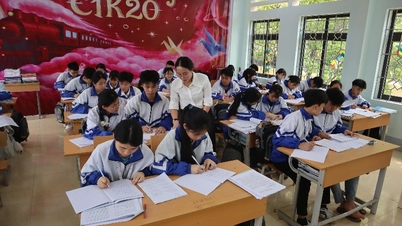
At Can Co Ethnic Boarding Junior High School (Nam Ma commune), the 2025-2026 school year will have 381 students, of which nearly 40% are boarding students. Mr. Nguyen Huu Van, the school's Deputy Principal, stated: "Despite many difficulties, to ensure that Resolution No. 06-NQ/TU is implemented effectively and achieves the expected results, the school is promoting digital transformation in management and teaching, gradually digitizing records, report cards, and gradebooks; effectively deploying online management and teaching software and a digital learning resource library. Currently, we have smart classrooms with 12 projectors in the classes, making lectures more visual and engaging, supporting ethnic minority students in accessing knowledge effectively. 100% of management activities are conducted through electronic documents and online systems, reducing meeting time by approximately 40% and improving operational efficiency." Teaching methods have been reformed to focus on developing competencies and attracting students to school; annually, the percentage of good and excellent students increases by 5.2%, the percentage of weak students decreases to below 3%, and the number of boarding students remains stable during peak periods, meeting the requirements of the resolution as well as educational reform in the current period.
Doan Ket Ethnic Boarding Primary School (Phong Tho commune) has 17 classes with 386 students, and digital transformation is being implemented synchronously in conjunction with the school year's tasks. The school is promoting the application of information technology in management and teaching; using electronic lectures and digital learning materials; training digital skills for teachers; and strengthening coordination with parents through online platforms. Currently, 100% of classrooms have projectors, the computer room is equipped with 15 computers connected to the Internet, along with an effectively operating educational management software system, contributing to improving the quality of teaching and learning.
Music teacher Bui Van Thiet shared: "I apply information technology, digitize documents, utilize online platforms, and have begun applying AI in lesson planning and student assessment. Digital transformation helps innovate teaching methods towards a more interactive and modern approach. However, the current difficulty is the lack of technical infrastructure and equipment in some classrooms. Investing in computers, projectors, televisions, or software licenses requires a considerable amount of funding."
Not only teachers, but students also clearly feel the change. Giang Thi Thai Ha (class 4A3, Doan Ket Ethnic Boarding Primary School, Phong Tho commune) shared: "We learn information technology through computer science, foreign languages, and many other subjects. The lectures are easier to understand and more interesting, helping me grasp the lessons quickly and I really enjoy coming to class."
In the 2025-2026 school year, the province will have 336 schools, 5,215 classes with nearly 150,000 students at all levels. Implementing Resolution No. 06-NQ/TU, the education sector is promoting digital transformation and administrative reform. Simultaneously, it is focusing on implementing the Ministry of Education and Training's digital competency framework, fostering digital skills for teachers, administrators, and students through online training, ongoing professional development, and blended learning.

Sung Phai Kindergarten (Doan Ket Ward) is increasing extracurricular activities to create enthusiasm for children.
Ms. Nghiem Thi Kim Hue, Deputy Director of the Department of Education and Training, stated: The department is accelerating the completion of its database, ensuring connectivity and interoperability with the national database and the provincial IOC Center, while minimizing manual reporting at the grassroots level. Simultaneously, it is implementing digital student records at the secondary level; gradually implementing digital diplomas for high school graduation certificates and vocational education diplomas according to the roadmap of the Ministry of Education and Training. The goal is to have over 80% of educational institutions implement the Artificial Intelligence (AI) application strategy in education this academic year, encouraging the application of AI solutions in management, teaching, testing, and student assessment.
From its practical implementation, Resolution No. 06-NQ/TU is gradually becoming a reality, creating significant changes in teaching methods and modern educational thinking. This affirms its role as a "lever" for educational reform, creating motivation for each teacher, student, and school to boldly change, bringing about a resurgence in education in the mountainous region of Lai Chau.
(run out of)
Source: https://baolaichau.vn/xa-hoi/ky-2-hanh-dong-tu-co-so-924931

















































































Comment (0)