

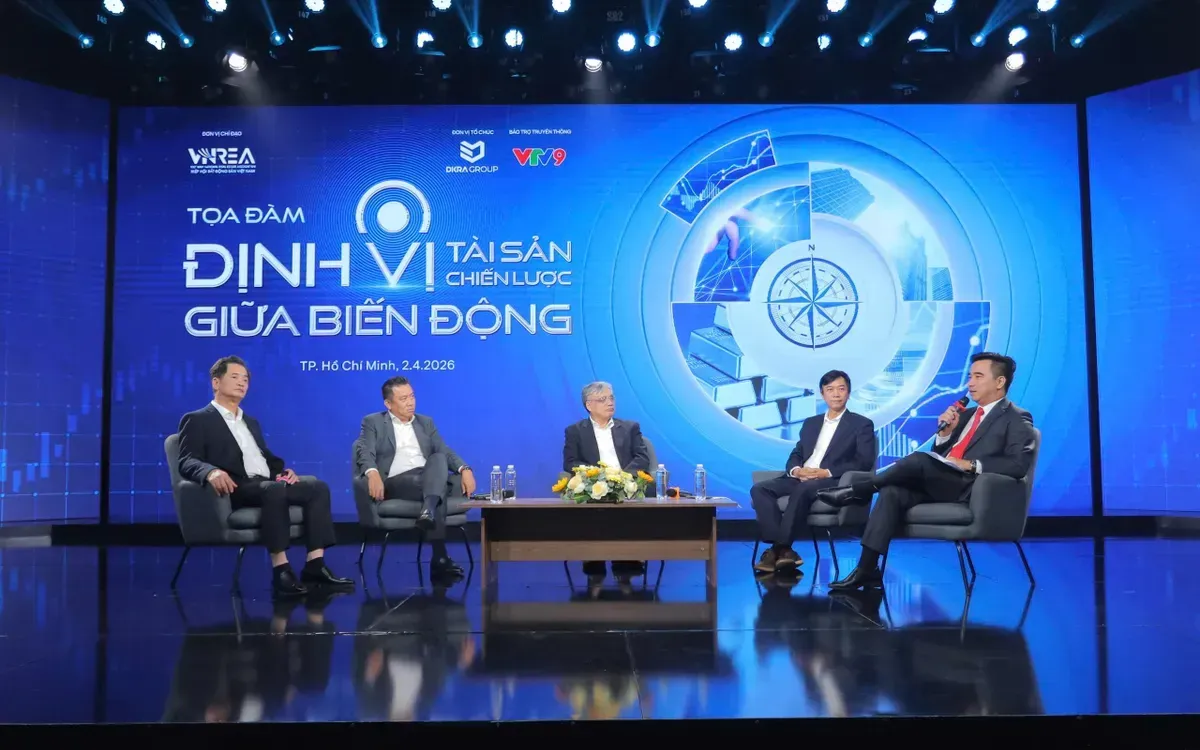
Experts shared their insights at the seminar "Real Estate Market 2026 - Strategic Asset Positioning Amidst Volatility".
The market is undergoing a strong shakeout.
The real estate market is entering an unprecedentedly challenging phase, simultaneously facing two major pressures from both external and internal economic factors. On one hand, the clear upward trend in lending interest rates from Q4 2025 has rapidly increased capital costs; on the other hand, the pressure to maintain growth amidst geopolitical instability, particularly the conflict in the Middle East, is spreading to supply chains, energy prices, and investor sentiment. In this context, the crucial question is no longer whether the market is difficult, but rather what real estate businesses need to prepare to avoid being derailed from the new development trajectory.
Speaking at the seminar "Real Estate Market 2026 - Strategic Asset Positioning Amidst Volatility," organized by the Vietnam Real Estate Association in collaboration with DKRA Group and the Southern Region Television Center - VTV9 on April 2nd, Associate Professor, Dr. Tran Dinh Thien stated that the world is in a state of "abnormality and instability," where prolonged geopolitical conflicts not only drive up energy and gold prices but also disrupt global supply chains. For an open economy like Vietnam, external shocks directly impact production, trade, real estate, credit, and other activities.
Specifically, the prevailing interest rate for real estate loans is currently around 9.6-10% per year during the preferential period and can reach 13-15% per year after the preferential period. With such rapid increases in capital costs, business models heavily reliant on bank credit inevitably face shrinking safety margins. Consequently, capital flows no longer spread as evenly as before, but instead become more selective, seeking assets with real value, the ability to retain their value, and long-term sustainability.
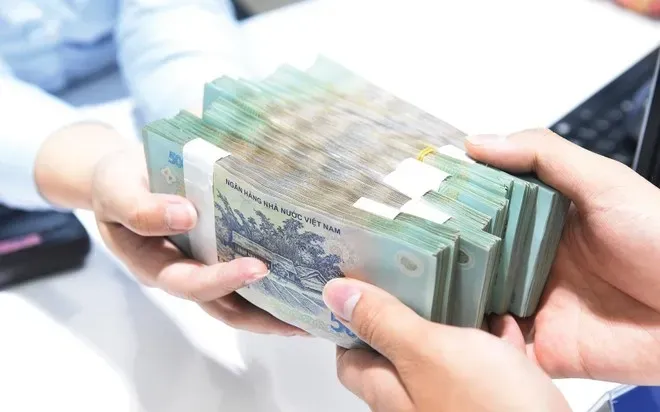
Credit controls, restrictions on financial leverage, stricter legal transparency requirements, and the promotion of data digitalization are forcing the market to return to its true value.
Credit controls, restrictions on financial leverage, stricter legal transparency requirements, and the promotion of data digitalization are forcing the market back to its true value. Projects with legal risks and businesses heavily reliant on borrowed capital are increasingly struggling to survive. Conversely, projects with complete legal frameworks and infrastructure are emerging as anchors for investment. According to experts, the current cleansing is not simply a downward cycle, but a process of eliminating inflated values to re-establish a new order for the market.
Mr. Pham Lam, Chairman and CEO of DKRA Group, believes that global conflicts are reshaping the economic order, while also opening up opportunities for Vietnam to break through on the world economic map. Although the market has been affected by many short-term fluctuations since the end of 2025, the strong screening process is creating advantages for projects with transparent legal frameworks, good liquidity, and stable capital foundations, while also opening opportunities for investors with knowledge, financial capacity, and prudent strategies.
The era of subdividing land and selling plots is over.
The ban on subdividing and selling land plots in Type I, II, and III cities has caused a 80% drop in spontaneous supply, forcing the market into a more rigorous filtering phase. In this new context, the dominant segment is land within projects with well-planned 1/500 scale layouts, while the focus of investment will shift to suburban areas of major cities, benefiting from infrastructure changes and investments. According to Mr. Vo Huynh Tuan Kiet, Director of Residential Project Marketing at CBRE Vietnam, the real estate market is witnessing the end of the "land subdivision era" for many land plot products.
Mr. Kiet believes this is also a process of eliminating "dead assets," especially agricultural land and forest land "disguised" as resort real estate, because these types of assets are officially losing liquidity due to stricter classification regulations. In other words, in the new cycle, assets lacking a legal foundation and not linked to real usage needs will become increasingly difficult to trade, and the market will no longer have room for the rampant land subdivision and sale as before.

Many experts believe that the real estate market in the new era will no longer involve the practice of subdividing land and selling plots.
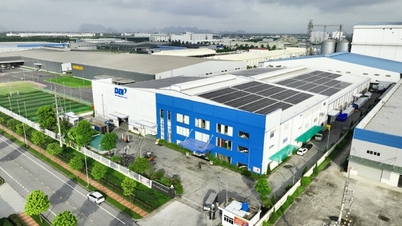
Conversely, apartments will continue to be the "backbone" of urban real estate for at least the next 5 years, while industrial real estate, logistics, and projects developed with full amenities and the TOD (Transit-Oriented Development) model will become the focal point for investment.
Furthermore, the area bordering Ho Chi Minh City is becoming increasingly attractive due to the synergy of urban development, logistics, seaports, airports, and major infrastructure projects such as Ring Road 3, Ring Road 4, the Ben Luc - Long Thanh expressway, Metro Line 4, and the Can Gio bridge. Along with that, the Hiep Phuoc - Can Giuoc area is considered a new growth pole in the next 3-5 years. However, experts also warn that benefiting from infrastructure does not necessarily mean chasing after land price increases.
Specifically, Dr. Nguyen Van Dinh, Vice Chairman of VNREA, warned that pushing land prices up unreasonably high would become a barrier to development, while the "all-in-one" trend is the way to create quality of life and sustainable economic value. Businesses, therefore, must know how to choose the right location, but even more importantly, they must create the right type of asset for that location.
"The market still offers opportunities, even huge ones, but those opportunities belong only to those who know how to adjust to stabilize in the short term and remain steadfast in their long-term goals," Mr. Pham Lam emphasized. In a cycle where money is no longer cheap, policies are no longer lenient, and buyers are increasingly demanding, businesses can only thrive when they have a healthier capital structure, more genuine products, clearer legal frameworks, and more professional management capabilities. That is also the only way for real estate to weather the headwinds and enter a more sustainable development cycle.
Source: https://vtv.vn/ky-nguyen-phan-lo-ban-nen-da-het-thoi-100260402143728387.htm















![[Photo] Prime Minister Pham Minh Chinh receives the Director of RMIT University Melbourne (Australia)](https://vphoto.vietnam.vn/thumb/1200x675/vietnam/resource/IMAGE/2026/04/02/1775142120087_thiet-ke-chua-co-ten-2026-04-02t214220784-png.webp)














































Comment (0)