1. The name of each place holds the spirit of a bygone era of our ancestors' pioneering efforts. For example, the name of Dong Chua is merely a memory of the first temple built by the village's ancestors to worship Buddha. The old temple is gone, replaced by vast expanses of rice paddies. Or consider the Bau Dung field, once a low-lying area overgrown with weeds, sedges, and reeds. Then there are Con Son, Cay Dua, Ong Le, Trung Cat…, whose names flourish in all four seasons, enveloping the villages in a peaceful, radiant glow.
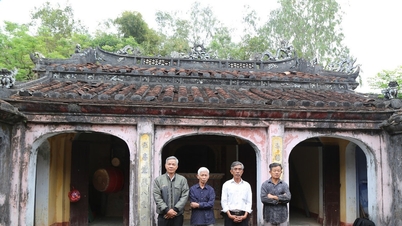
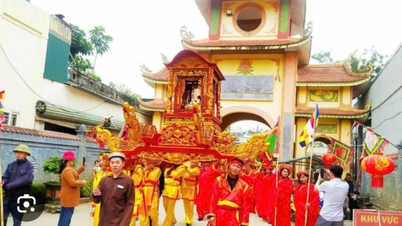
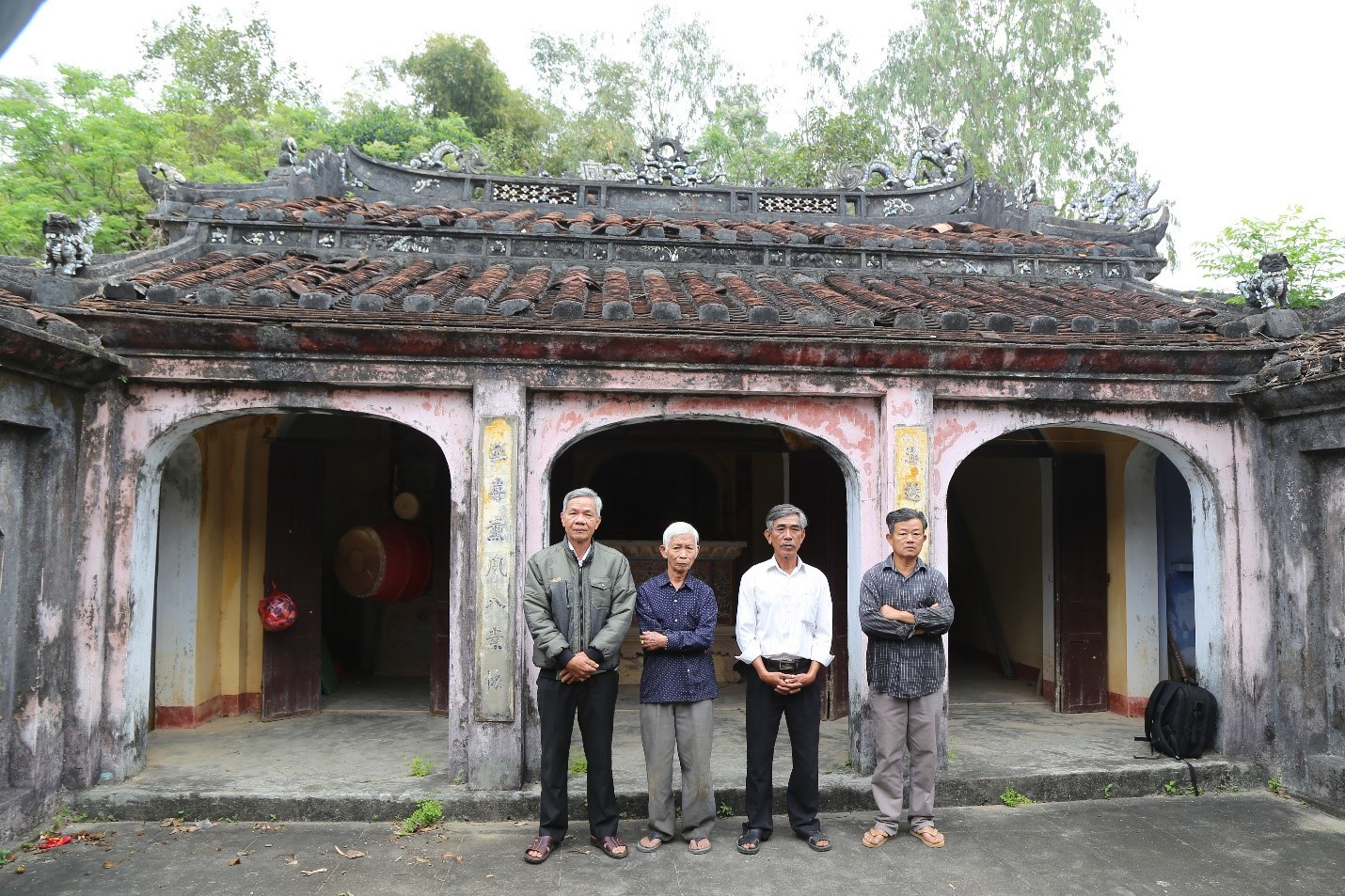
In the villagers' memories, the Quang Chau Ancestral Temple is like a heart, beating in time to form the soul of the delta countryside. That heart has nourished the souls of each resident with a sweet stream of culture.
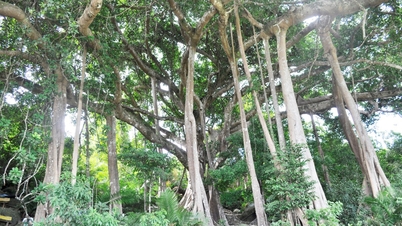
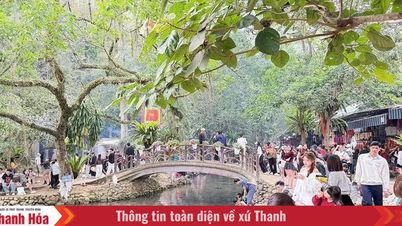
From the church's triple gate, one can see the Con Son rice paddies, and amidst the tranquil rice fields lies the evergreen Cha Va spring (pond). The elders still recount that the name Cha Va was given by their ancestors when they took over the Cham land. The Con Son rice paddies and the ever-flowing Cha Va spring, situated in front of the village church and behind the ancient Thuong Lam forest, create a "mountain-backed, water-facing" landscape, imbued with the hopes of prosperity and longevity by our forefathers.
On moonlit nights, we children would sit and listen to the adults tell the tragic love story of Mrs. Tran Thi Bang, the wife of the patriot Thai Phien. When Mr. Thai Phien was executed by the French at An Hoa execution ground, the widow used her own hair to wipe her husband's severed head and returned to her village, consumed by grief until her death. Because of this, every time we passed by the bamboo-shaded alleyway of Mr. Hoc Bang's house (Mrs. Bang's father), we would imagine her long, blood-stained hair fluttering in the wind. Just the thought alone was enough to make us run away, losing our sandals in the process.
2. The village has five hamlets: Ha Hoa, Trung Hoa, Ha Hoa, Thuong Lam, and Ha Lam, but the villagers commonly refer to them as the Upper Hamlet, Middle Hamlet, Lower Hamlet, and Forest Hamlet. My house is in Ha Hoa Hamlet, also known as the Lower Hamlet, located on one of the highest pieces of land in the village.
Every year when the floods come, the water reaches knee-deep for the adults and ankle-deep for the children. Children, being carefree, eagerly await the floods so they can wade through the water, floating on banana rafts throughout the neighborhood catching crickets. On rainy days, water from the fields overflows into the gardens, flooding the cricket burrows, causing them to crawl out and cling to each other in clumps, drifting onto the grassy banks. The plump field crickets and the sturdy, black charcoal crickets are all put into a pot and fried until fragrant.



During heavy rains when the fields are flooded, villagers often go together to check the floodwaters. They check to see how high the water is, how quickly it's rising, so they can move the rice to the upper floors, put the pigs and chickens in shelters, and then quickly gather the whole neighborhood to slaughter a pig to stockpile food for the cold, rainy days ahead.
November is also the season for threshing the long-stemmed rice. After the summer-autumn harvest, the rice stalks sprout and bear ears of grain amidst the drizzling rain and biting wind. Though the long-stemmed rice stalks are withered like orphaned children, they still bravely endure all the storms of life…
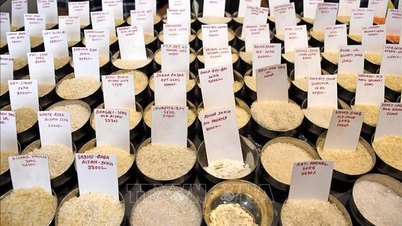
We followed the women in the village across the rice fields to "find" rice. Soaked to the bone, we waded through the flooded fields, carefully cutting the rice stalks with sickles and placing them in the woven sacks we carried. Back home, we threshed each stalk and dried them. Perhaps it was because they had absorbed the silt during the rainy season, but the rice stalks had a sweet, rich flavor that was truly captivating.
The women and girls of Quang Chau are not only famous for their gentle nature and beauty, but also for their baking skills, which have made them well-known in many places. To this day, I can never forget the aroma of dry cakes, puffed rice cakes, sticky rice cakes wrapped in thorny leaves, sticky rice candy, sesame candy... emanating from the bakeries, sweetening the winding village roads every morning.
The busiest time is the twelfth lunar month. The rhythmic pounding of flour and the grinding of thorny leaves echoes like the heartbeat of rural life, bringing a strange sense of peace to the heart. Although life is more modern now, and the stone mortars have faded into oblivion, the aroma of traditional cakes still lingers in the morning mist like a scent of home that never fades with time.
3. It's the middle of summer now, and the heat is so intense that the dry rice paddies are blistering the feet of the farmers. But the heat from the sun seems nothing compared to the heat in people's hearts. For the past few days, the men in the village have been gathering in small shops morning and evening to chat.
They weren't discussing the 2026 World Cup matches, but were anxious about dividing the village into two residential areas, Quang Chau 1 and Quang Chau 2. The reason was that for a period of time, the village's name, Quang Chau, had been changed to Quan Chau. Just the change of the "g" had caused so much turmoil for the entire village.
Some say the village gate is still there, the words "QUAN CHAU" clearly visible. The Ancestral Temple, which was recently recognized as a city-level architectural heritage site, also bears the name QUAN CHAU. Why add another G now?

Many others, citing semantic similarity, argue that our ancestors originally named the village Minh Châu, meaning "bright pearl." Later, during the reign of Emperor Minh Mạng, due to a taboo against using the name, the word MINH was changed to QUANG. This is very close in meaning. Therefore, the name QUAN CHÂU does not reflect the meaning our ancestors intended…
For me, whether there's a village or not, or whether the designation "village" gives way to "neighborhood," at the age of 530, my village remains the same as it was before. It's still the old garden anchored on the stream of time, a place for those who have left home to cling to. The lullabies still gently caress the children of the village, rocking them to sleep over the rice paddies and potato fields. Even though life has changed, there are still people who refuse to grow up, always returning to their old village with gentle memories…
Source: https://baodanang.vn/ky-uc-lang-que-3343061.html