"Centennial Trees" of Son Tra Mountain and Heritage Trees of Ngu Hanh Son
From the former Tourane concession, Son Tra Peninsula and the Marble Mountains have historically been the two green lungs of Da Nang city.
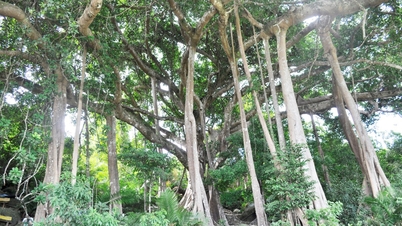
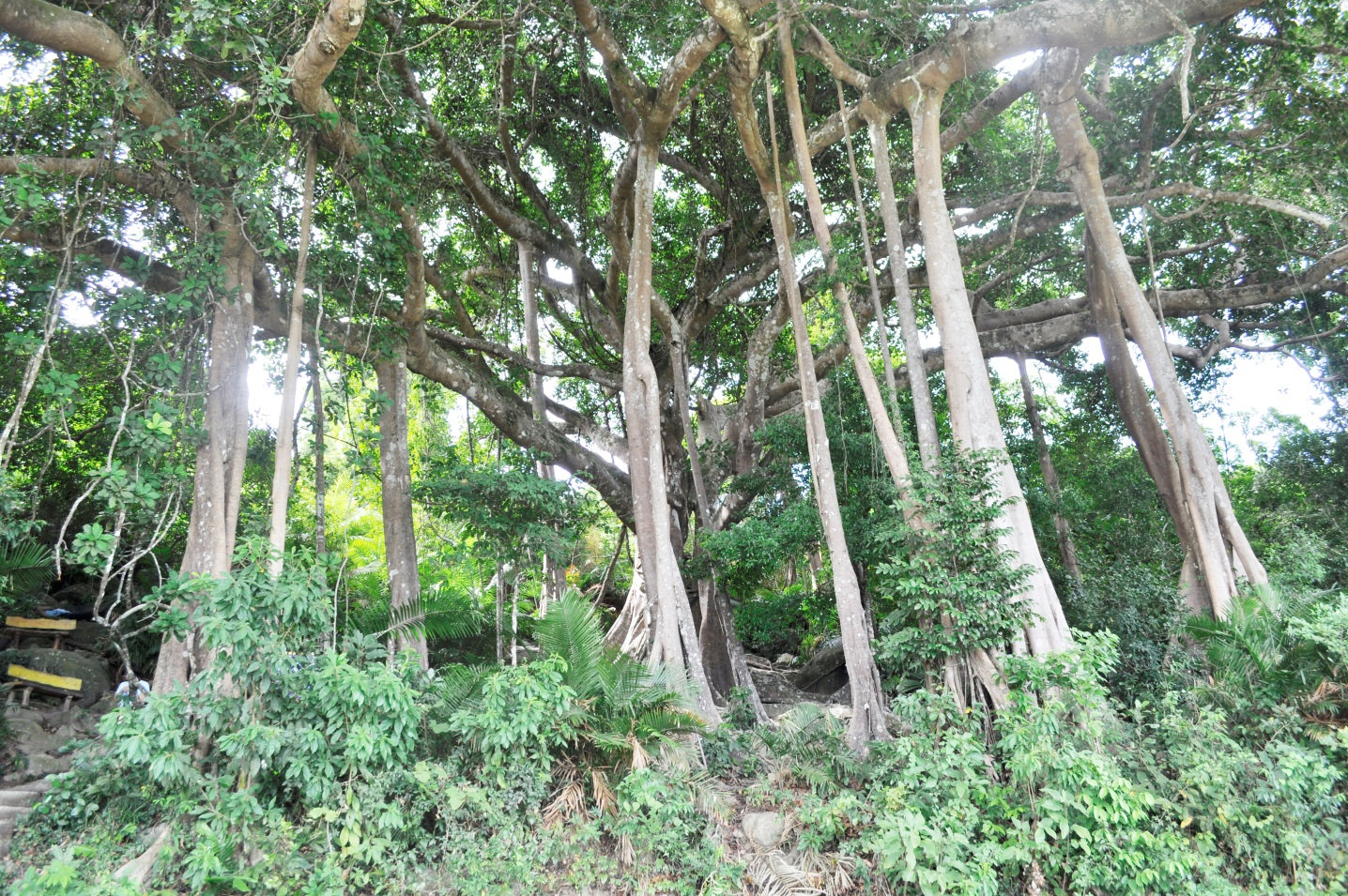
On the Son Tra peninsula, there is a heritage banyan tree over 800 years old, its wide canopy shading a corner of the forest. The tree has withstood countless storms from the East Sea and the years of war with the Mom No base, until it became a part of the heritage of Da Nang city today.
Heading south, the Marble Mountains (Ngũ Hành Sơn) National Special Monument complex is a convergence of unique cultural, spiritual, and historical values, preserving the cultures of Champa and Đại Việt. Here, you'll find seven Vietnamese heritage trees, ranging in age from 150 to 600 years: the red-leaved banyan tree on the eastern slope of Thủy Sơn peak (behind Linh Ứng Pagoda), the two yin-yang banyan trees in front of Tam Thai Pagoda on Thủy Sơn peak, the persimmon tree behind Tam Thai Pagoda, and the cluster of three acacia trees in Tàng Chơn Cave, located south of Thủy Sơn peak. These trees, their roots clinging to the marble cliffs for centuries, not only create a serene and otherworldly beauty reminiscent of Buddhist sites, but also serve as "green" witnesses to the vicissitudes of war, protecting revolutionary soldiers sheltering in the Marble Mountains caves during the resistance against the American invasion.
The "old green veterans" of Tourane
Throughout the history of Da Nang, especially during the period associated with the resistance war against the French- Spanish coalition (1858-1860) and the subsequent French colonial period, ancient trees still stand in the shade of Dien Hai Citadel, Ha Than Market, and cemeteries—places where patriotic soldiers and citizens who sacrificed their lives for a great cause are buried.


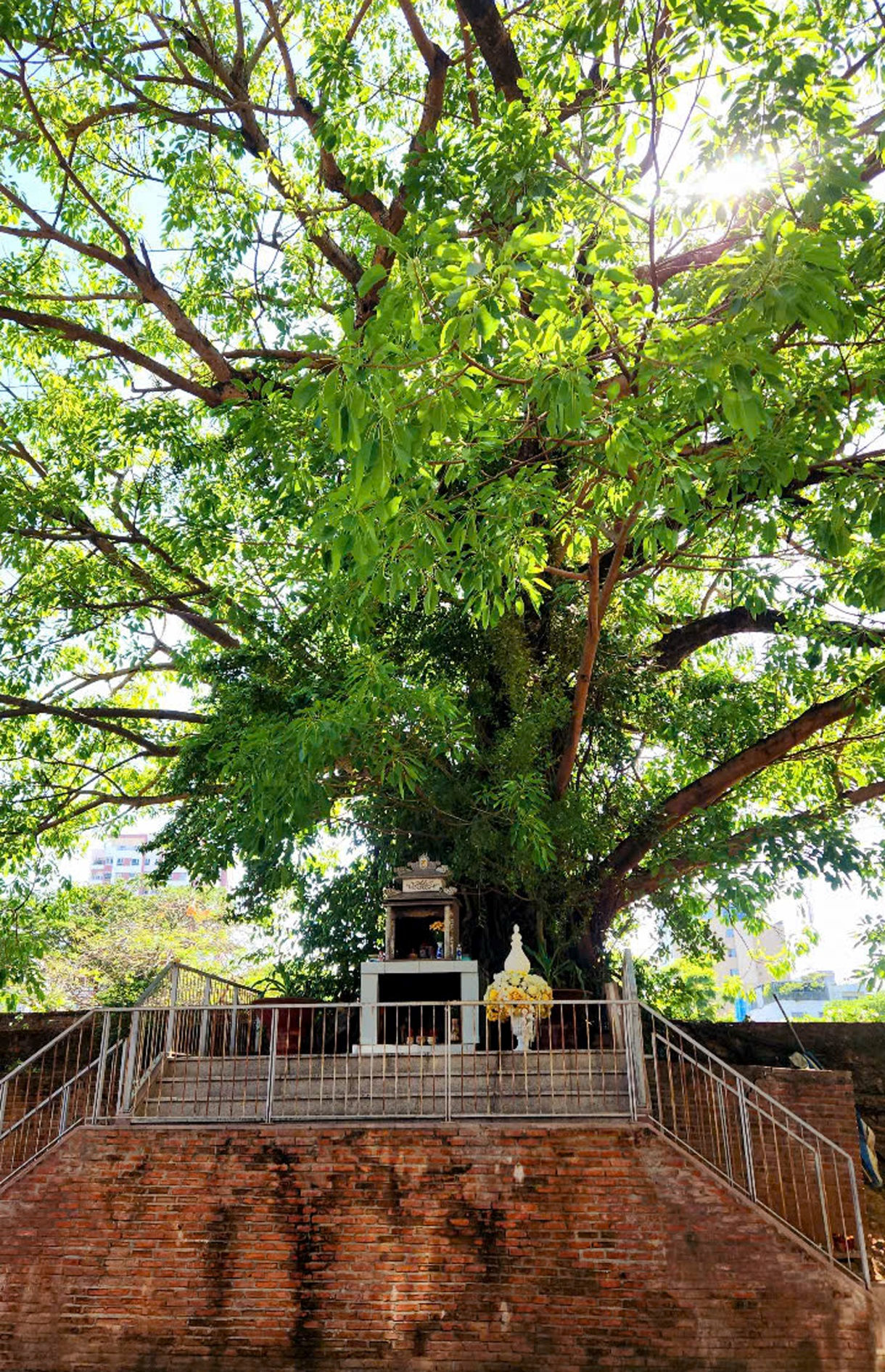
Dien Hai Citadel, on the left bank of the Han River, has ancient banyan trees on the east side that still stand there like giant sentinels. These trees have been witnesses since the French renovated and built government buildings and other structures around the city's central administrative area.
Looking across the river, you can see the Ha Than area (An Hai village) and the residential areas along the Han River. This is where the 600-year-old banyan tree has witnessed many generations of residents on the right bank of the Han River establishing villages, developing markets, and forming the ferry terminal connecting the two banks of the river.
And from Dien Hai Citadel southward, the ancient trees at Phuoc Ninh Cemetery and Hoa Vang Cemetery carry a different meaning. They provide shade and shelter for the souls of the fallen soldiers who died in the early days of the resistance against the French and in defending the country.
Think about planting trees.
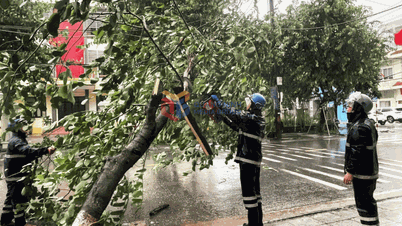
Before 1975 and even during the French colonial period, street tree planning in Da Nang followed sustainable principles. Trees were planted as seedlings, allowing their taproots to penetrate deep into the soil, making them more resilient to natural disasters. Tree species were carefully selected, focusing on canopy cover, longevity, and harmony with the architectural space. In contrast, the recent wave of urbanization has favored "instant green spaces," with trees easily falling in strong winds, lacking the solemnity, the "soul," and the vitality of the urban landscape. This represents a period of urban quiet that warrants serious reflection.
The road from Da Nang to Hoi An was once a "green paradise" shaded by bamboo. The writer Trang Thien once wrote emotionally: "The bamboo on both sides of the road, lush and green, intertwined to form an arc, a vibrant, cool green tunnel that covered the road... The road from Da Nang to Hoi An makes one forget its strange Western names, and only evokes memories of doves and yellow butterflies in folk songs, of the 'fragrant road'. I wish Da Nang had many more green trees, and I wish that one day I could visit a 'living museum' of bamboo, because after all, bamboo is most closely associated with Vietnamese culture and life."
Dealing with green heritage


To ensure these "green witnesses" continue to thrive and contribute to the city's development, each heritage and ancient tree needs to be assigned a digital identifier; a QR code containing historical information could be included. This would help management agencies update the tree's status in real time and lay the groundwork for developing green tourism tours linked to heritage and ancient trees associated with historical and cultural sites.
The ancient heritage trees of Tourane, Da Nang, are a connecting thread between the past, present, and future. Preserving these heritage trees and ancient trees is how Da Nang affirms the value of a sustainably developing city that cherishes human values and the soul of the urban landscape.
Source: https://baodanang.vn/cay-va-ky-uc-da-thanh-3343077.html