

Special voters
In a quiet house at the end of a small alley in Thanh My Tay ward (Ho Chi Minh City), Mr. Nguyen Van Tau (Colonel Tu Cang, intelligence officer) sits upright in his familiar wooden chair. At 98 years old, the veins on his hands are clearly visible, but when the upcoming election day is mentioned , his eyes still light up in a unique way.
"It's just a few days away!" He didn't say much more. For someone nearing a hundred, time is no longer measured in years and months, but in events that still hold the power to keep him looking forward to them. Election Day is one of those few days.
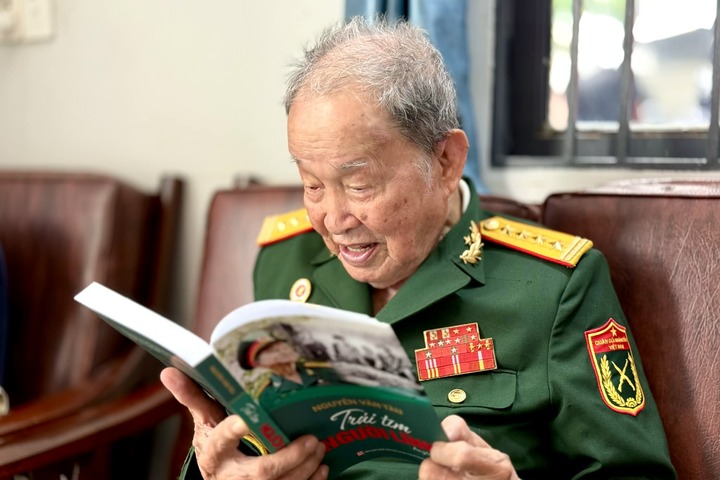
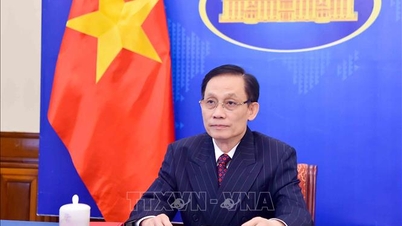
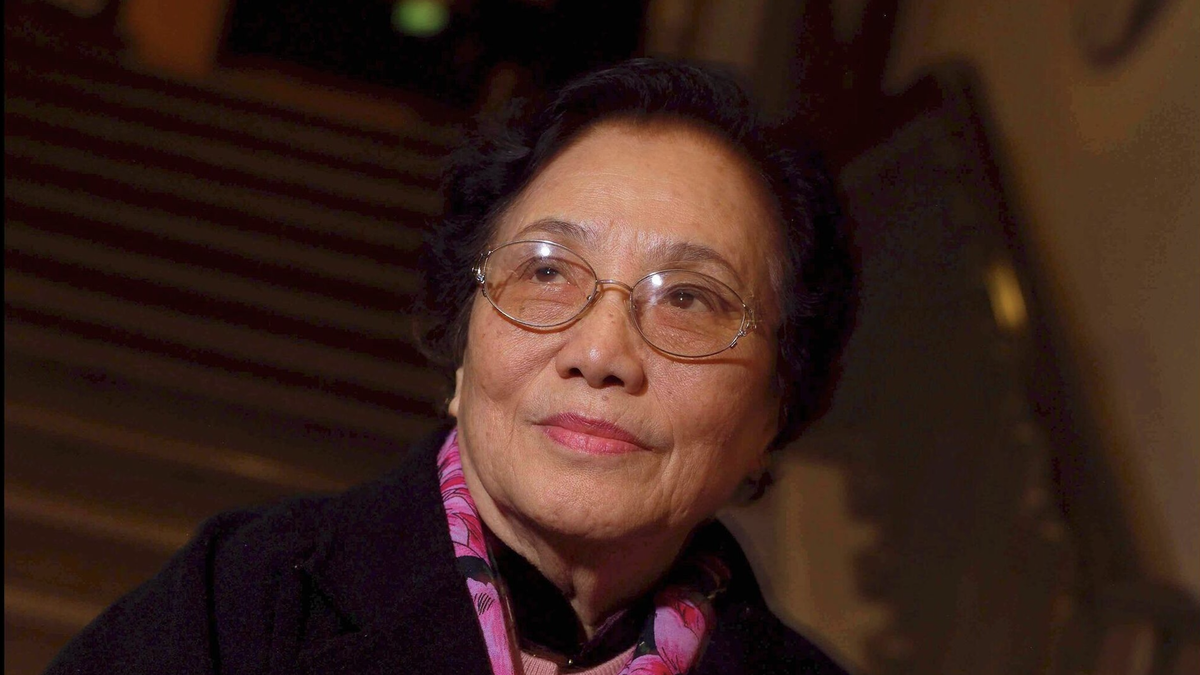
Colonel Nguyen Van Tau (Legendary intelligence officer Tu Cang) at the age of 98.
Two weeks before the election, neighborhood officials came to his house. They inquired about his health, reviewed the voter list, and then offered: If traveling was difficult, the polling station would bring an additional ballot box to his home so he could exercise his civic right.
It's a familiar process, prepared for elderly voters, those who are ill, or those who are unable to travel. Their ballots, no matter where they are, must still be secure.
But Mr. Tu Cang shook his head. "I can still go," he said slowly. "I want to go to the polling station myself."
His polling station was the Thạnh Mỹ Tây Ward People's Committee headquarters, not far from his home. Like in previous elections, this year he wanted to personally cast his ballot and enter the polling booth like any other voter. At 98 years old, "voting in person" was his way of retaining his position as a fully entitled citizen.
His answer surprised and moved the neighborhood officials. They then made him a special request: asking him to be the first person to cast his vote on the upcoming election day.
Not just because he's an elderly voter, not just because he's a legendary intelligence officer, but because of a story that spans eight decades.
In 1946, when the country held its first general election to elect the National Assembly of independent Vietnam, Mr. Tu Cang, then just 18 years old, cast his vote for the first time. On that historic morning of 1946, he voted for the first time – right in the first general election.
He didn't recount the story with pride. He only mentioned it softly, like a distant memory: "I was only 18 years old then... going to vote felt very important."
Eighty years have passed. The 18-year-old young man of yesteryear is now a 98-year-old man. But that citizen's vote still holds its full significance.
From the ballot of the first general election to the first ballot of an election eight decades later, that journey is not just the story of one person. It is the story of a civic right that has been continuously preserved through generations.
Leaving Mr. Tư Cang's small house, the story of the ballot continues in a completely different generation.
Tran Vo Minh Tri, a student at the University of Social Sciences and Humanities in Ho Chi Minh City, is on the voter list for the first time this year. Unlike Mr. Tu Cang, who has participated in eight decades of elections, Tri is only just beginning his journey as a citizen.
"I was quite surprised, but also very nervous and proud," Minh Tri said when recalling the first time he learned he was old enough to vote. "Because that's when I realized I had officially become a mature citizen, with the right and responsibility to participate in the common decisions of the country."
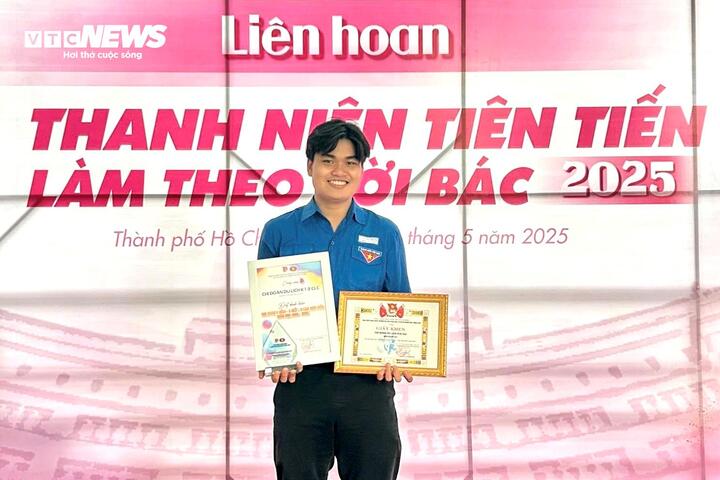
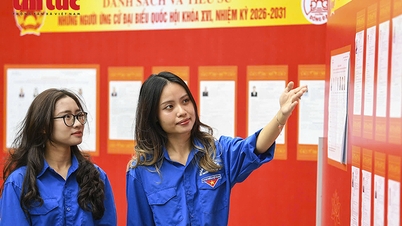
Nguyen Minh Tri actively participated in the school's Youth Union movement.
In their twenties, many milestones of adulthood come quite quietly, like a new identity card, a student ID, or their first classes at university. But appearing on the voter list takes on a different meaning. It's the first time a young person is empowered to directly participate in the process of choosing their representatives.
Minh Trí remembers the moment he realized it quite clearly: “That was when I thought I had reached an age where I was mature enough to cast a vote of confidence for those who would be involved in managing and governing the country. At that time, I saw more clearly my responsibility to society, not just a simple right.”
Previously, Tri had never personally gone to a polling station with his parents. But since childhood, he had often heard adults talk about elections as a special occasion. He heard people say that the atmosphere on election day was very lively, like a "national festival." Therefore, he always looked forward to experiencing that atmosphere himself.
For many young people, election day sometimes begins with simple curiosity: What does a polling station look like, how is a ballot cast, why is it considered such a special day? But once they enter the voter registration area, those questions gradually transform into a different feeling. A ballot is not just a piece of paper, but a participation. They believe in the value of that participation.
"I think each vote reflects the people's trust in those who can contribute to the country's development. When many votes together express the common will of society, it will create meaningful decisions for development in the new phase," Minh Tri said.
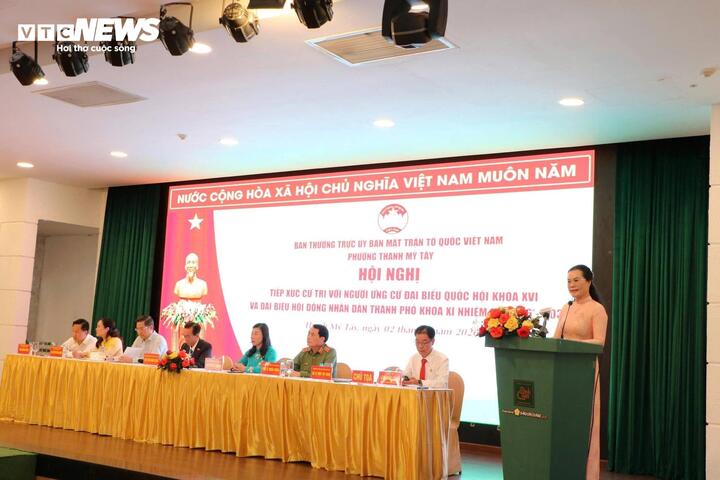
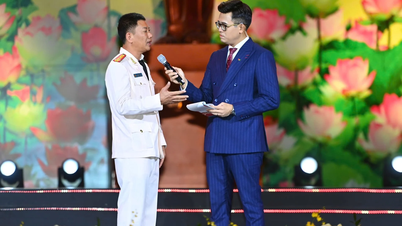
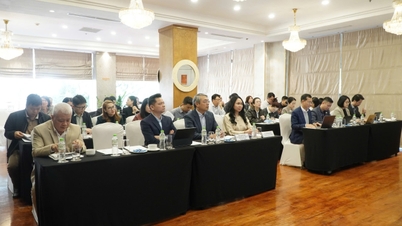
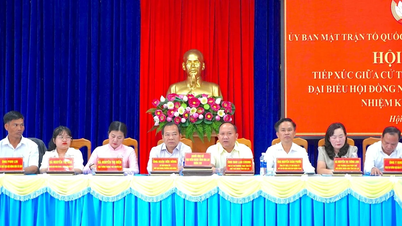
Thanh My Tay ward held a meeting with voters and candidates for the 16th National Assembly and the Ho Chi Minh City People's Council.
The story of the citizen's ballot doesn't stop at the generational gap – a 98-year-old and a student voting for the first time. In another corner of Ho Chi Minh City, that right is also reserved for those who are almost unable to leave their hospital beds.
In a small house in Thuan An ward, 67-year-old Mr. Loi lies on his side on a bed placed near the window. A stroke three years ago left the left side of his body almost completely paralyzed. Since then, walking has become impossible for him.
But a few days ago, that little house suddenly became busier than usual.
Neighborhood officials and the election committee came to review the voter list. After a few pleasantries, they gently informed him that the ward had prepared a supplementary ballot box, and if he agreed, the election committee would bring the ballot box to his home on election day.
"You can still cast your vote yourself," an official explained. Mr. Loi fell silent for a few seconds upon hearing this.
Before falling ill, he voted like everyone else in the neighborhood. Every election, he would wake up early, walk to the polling station at the community center, and chat lively with his neighbors along the way. Since becoming bedridden, he thought such activities had come to an end.
"Honestly, I didn't think I'd be able to vote anymore. But you said there would still be supplementary ballot boxes brought to my house, and I was so happy to hear that."
The 67-year-old man lying in his hospital bed said those words in a rather low voice. But for him, it wasn't just a matter of convenience. It was the feeling of not being left out of a momentous national event.
On election day, the supplementary ballot box will be sealed before being transported, accompanied by all members of the election committee, and a proper record will be made. At that small house, Mr. Loi will be given a ballot, and he will personally choose and cast it into the ballot box like any other voter.
From the perspective of the election organizers, this is simply a procedural step clearly defined in the process. But for people like Mr. Loi, it takes on a different meaning.
"Having been here for so long, sometimes I feel like I'm detached from public affairs. But when the election officials come and ask if I want to vote, I realize I'm still a citizen like everyone else," he said.
Citizens' rights are not left behind.
At the headquarters of the People's Committees of wards/communes in Ho Chi Minh City, the atmosphere these days is not noisy but tense in its own way. The voter list is reviewed multiple times. Each case of the elderly, seriously ill, or disabled is marked separately to plan for bringing supplementary ballot boxes.
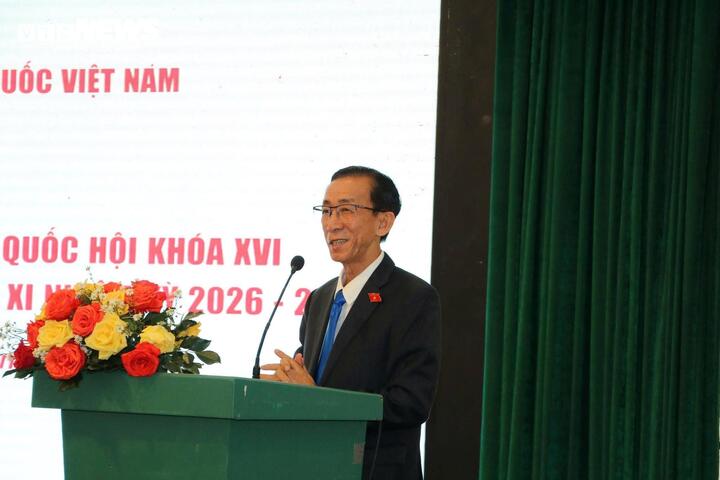
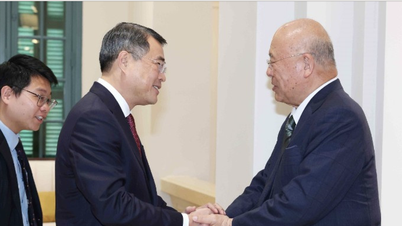
Candidate - Assoc. Prof. Dr. Tran Hoang Ngan - Chairman of the Advisory Council for Breakthrough Development of Saigon University, met with voters in the election.
According to representatives of the Thuận An ward election committee, the ward's neighborhoods have gone to each household to record cases requiring additional ballot boxes. Instead of waiting until the last minute, all lists are cross-checked with the neighborhood and residential group, and updated to each household several weeks in advance.
The supplementary ballot box is not simply a small container to be carried around. Before leaving the headquarters, the box is inspected, sealed, and documented, accompanied by members of the election committee and supervisory representatives. A confirmation report is drawn up at each stop.
"Even a small mistake can affect the entire process. We understand this is not a secondary matter, but part of ensuring the integrity of the election," this person said.
In the design of an election, such details may not appear in the newspapers. But it is precisely these details that determine the fullness of the principles of universal suffrage and equality. Not every voter can go to the polling station in person. Therefore, the system must reach them.
The supplementary ballot box – a small detail at this moment – reflects a larger principle: that citizenship rights do not depend on health, age, or mobility.
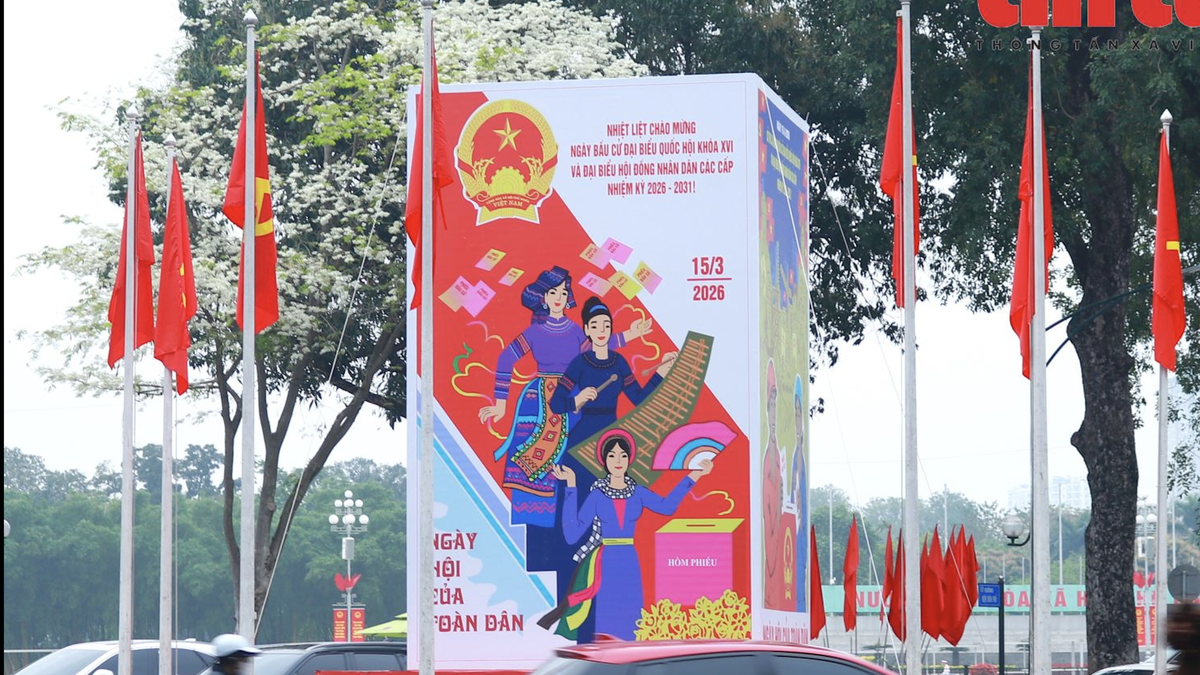
March 15th is fast approaching.
In the house at the end of the alley, Mr. Tu Cang still reminded his relatives about the time the polling station was expected to visit. Minh Tri counted down the final days before his first time voting. Mr. Loi waited for the supplementary ballot box to be brought in.
And at the ward headquarters, the election workers awaited a smooth day, when the small ballot box would leave the headquarters, travel through the alleys, stop in front of each door, and then return with ballots of all ages and backgrounds.
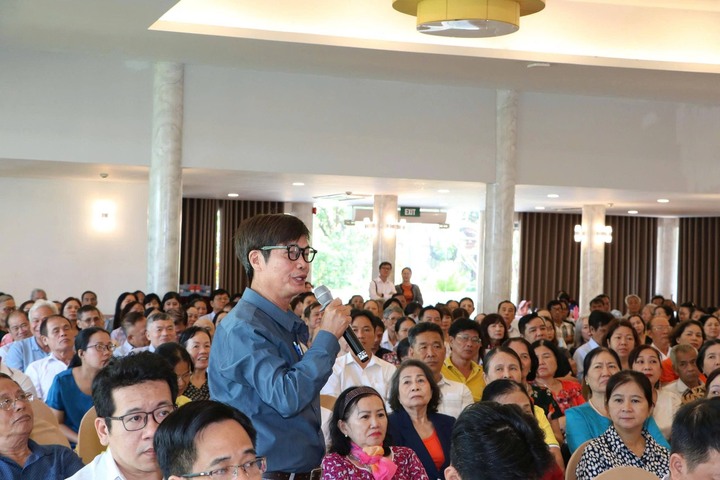
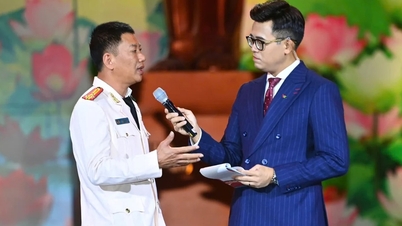
Voters ask questions of the candidates.
Democracy is not just present in the moment a ballot falls into the ballot box. It is present in how society prepares for each and every ballot to be cast. A 98-year-old can still cast their vote , a young person can enter the ballot box for the first time, and a person unable to leave the room can still have a ballot box find them.
Between them lies an institutional design operated by specific individuals.
And perhaps, before the polls open, the most noteworthy thing is not the event itself, but the quiet message being sent from each home: Citizenship does not stop at any door.
Thy Hue
Source: https://vtcnews.vn/la-phieu-cua-nhung-cu-tri-dac-biet-ar1005634.html









































![[Infographics] An Giang is ready for the national festival.](https://vphoto.vietnam.vn/thumb/402x226/vietnam/resource/IMAGE/2026/03/10/1773148917917_infographics-an-gi_345_1773147797.jpeg)








Comment (0)