


Choose a worthy representative.
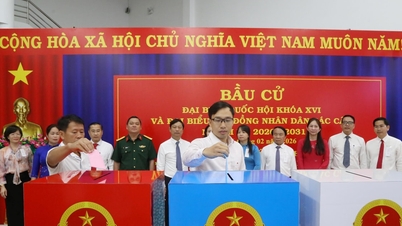
Each ballot may seem insignificant, but when placed in the ballot box, it becomes a part of the people's power; and when tens of millions of ballots are added together, it represents the will of the nation, the foundation of a State by the people, of the people, and for the people. Choosing a worthy candidate, therefore, is not simply choosing an individual, but choosing how one's voice will be translated into policy, choosing how the vital issues of life – from employment, education , healthcare, environment, culture, and social welfare – will be brought to the table and addressed.
In the context of the country entering a new stage of development with the requirement for rapid but sustainable growth, and with strong movements in institutional reform, streamlining the apparatus, and improving the effectiveness and efficiency of governance, the selection of delegates is of particular significance. We need people who are not only dedicated but also possess the capacity for policy thinking, the ability to critically analyze, a long-term vision, and the fortitude to withstand the pressure of vested interests. A worthy delegate must be someone who knows how to put the national interest above all else, knows how to listen to the voice of the people, but at the same time is astute enough to weigh immediate and long-term interests, between economic development and ensuring social justice, between growth and environmental protection, between integration and preserving cultural identity…
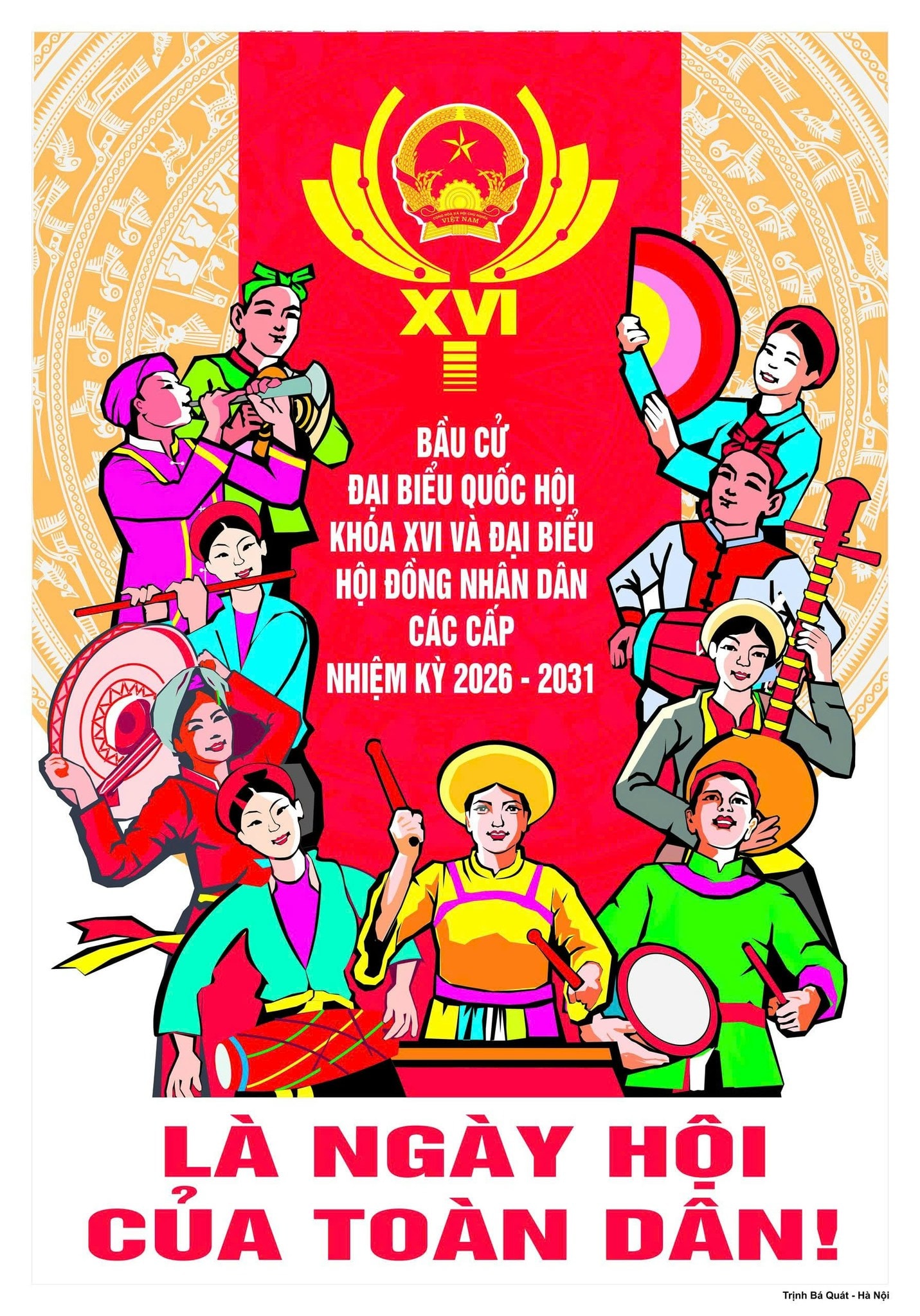
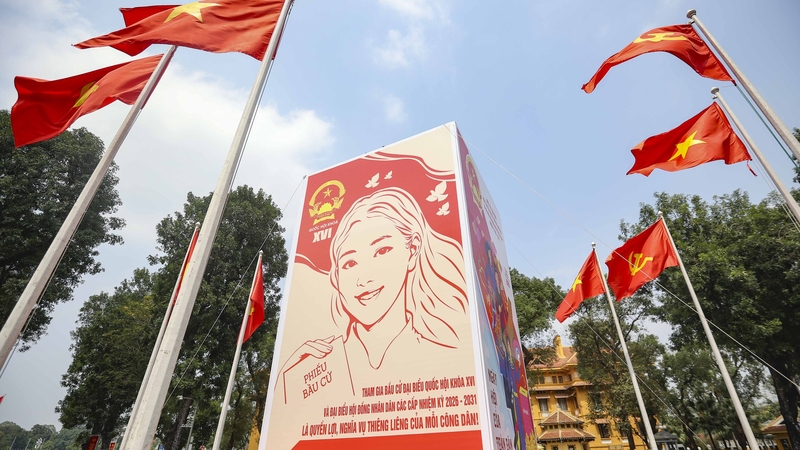
Propaganda posters by Trinh Ba Quat
A law enacted can create momentum for the development of an entire industry or locality, but if it lacks feasibility, it can also become a barrier. A budget allocation decision may open opportunities for disadvantaged regions, but without oversight, public resources may be used inefficiently. Therefore, worthy representatives must participate in legislation with the highest sense of responsibility, carefully reading each provision, listening to opinions from practice, and honestly reflecting the difficulties faced by citizens and businesses.
Equally important is the oversight function. Oversight is not about finding fault or exerting formal pressure, but about ensuring that policy promises are fulfilled, that programs and projects yield tangible results, and that the people truly benefit from development. A responsible representative is someone who dares to question thoroughly, dares to pursue recommendations after oversight, and dares to speak out about shortcomings, even if those issues are difficult or sensitive.
But if we talk about the core of a worthy representative, it is the word "representation." Representing the people is not just about speaking on their behalf in parliament, but about carrying the people's concerns into every decision, always asking oneself: Will this policy improve people's lives? Will this decision strengthen social trust? And more profoundly, it is about maintaining integrity so that the trust the people have placed in them is not betrayed.
It starts with the responsible choices of the voters.
However, the quality of representatives depends not only on the elected candidates but also on the choices of the voters. Each vote is a delegation of power, and such delegations must be exercised with prudence and responsibility. Voters should not choose based on emotion, but should thoroughly research the candidates: their work experience, professional competence, reputation in the community, spirit of service, and commitment to the people. A democratic and rule-of-law society needs not only good representatives but also responsible voters.

Every voter casts a ballot, a mandate of power. (Poster by Pham Hong Thanh)
In the context of current digital transformation and multi-faceted communication, pre-election information and communication plays an increasingly important role. Complete and accurate information helps voters understand the significance of the election, correctly identify the roles of their representatives, and enhance their responsibility in making choices. Simultaneously, spreading positive values, civic spirit, and faith in the system contributes to strengthening social consensus – a crucial element for the sustainable development of the country.
Each ballot is a message: The people empower themselves to be served; the people place their trust in the government to see concrete results in their lives; the people expect an increasingly transparent, efficient, and people-oriented system. A strong democracy is measured not only by its institutions, but also by the people's trust. That trust is built on the voters' wise choices and strengthened by the responsibility of those elected. When voters choose with understanding and responsibility, and when representatives are deeply aware of their mission to serve the people, the National Assembly and People's Councils at all levels will truly become a convergence point of the nation's wisdom, capabilities, and aspirations for development.
Election Day, therefore, is not just a political event, but also an expression of political culture – a culture of trust, responsibility, and shared aspirations. Each ballot is a small brick contributing to building the foundation of a rule of law state, of a democratic, just, and civilized society. And looking back, we will see that the future of the country is not only decided by major policy decisions, but begins with the very specific choices of each citizen on this nationwide event – a day when the power of the people is expressed directly, solemnly, and proudly.
Source: https://daibieunhandan.vn/la-phieu-cua-niem-tin-10408580.html


![[Photo] Rich in color and flavor, Spring Fair - Nhan Dan Newspaper Trade Union](https://vphoto.vietnam.vn/thumb/1200x675/vietnam/resource/IMAGE/2026/03/05/1772699709633_img-2781-2340-jpg.webp)




![[Video] Prime Minister presides over the 24th meeting of the Steering Committee for key transportation projects](https://vphoto.vietnam.vn/thumb/402x226/vietnam/resource/IMAGE/2026/03/05/1772699408783_dung00-07-53-17still002-png.webp)















































Comment (0)