Many readers shared that when they experienced back pain, a back brace became an indispensable item. They said that wearing the brace significantly reduced their back pain, but they were still worried about whether long-term use would have any negative effects.
Back braces only provide support during treatment; they do not cure the condition.
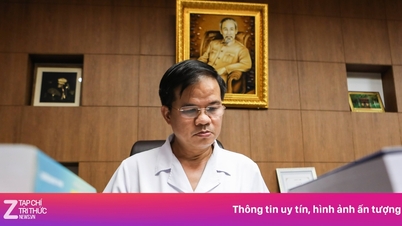
Speaking to reporters from Tri Thuc va Cuoc Song (Knowledge and Life) about this issue, Associate Professor Dr. Nguyen Thi Kim Lien, Head of the Rehabilitation Department at Viet Duc Friendship Hospital, said that spinal support belts are one of the familiar support tools for people with lumbar spine diseases. However, not everyone understands the role, uses, and proper way to use this device.
Lumbar support braces are often prescribed by doctors in conjunction with medication and rehabilitation programs. This device helps to stabilize the lower back in a proper position, limiting adverse movements of the injured spine. As a result, patients can reduce pain, improve mobility, and facilitate the effectiveness of specialized treatments.
A back brace also helps support patients during the acute phase, when the spine needs protection from excessive mechanical stress.
However, back braces are only a supportive treatment measure and do not cure spinal conditions, as many people mistakenly believe.
According to Associate Professor Dr. Nguyen Thi Kim Lien, the effectiveness of a back brace depends greatly on using it correctly and for the right duration.
In fact, many patients tend to wear back braces regularly for extended periods in the hope of reducing pain or preventing recurrence. However, over-reliance on back braces can have adverse effects on the musculoskeletal system.
If worn continuously for a long time, the spine will gradually become dependent on external support, impairing the natural function of the muscles that maintain spinal stability. In addition, improper use of the brace can cause discomfort, overheating, skin irritation, or restrict daily activities.
Associate Professor Dr. Nguyen Thi Kim Lien advises that patients should not use back braces on their own. The wearing time, level of tightness, and type of brace should be prescribed by a doctor or rehabilitation specialist.
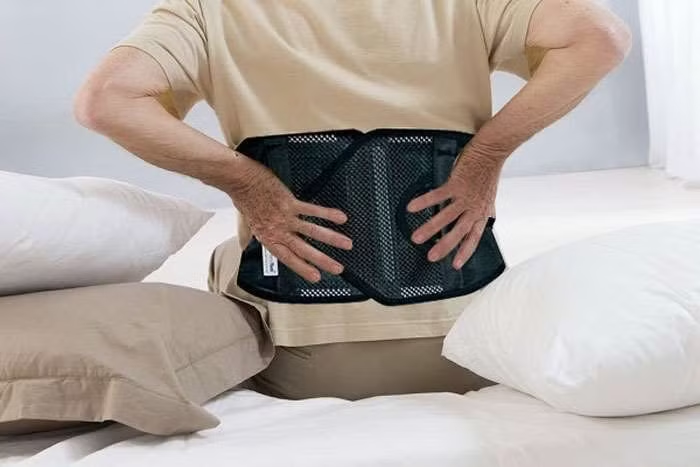


The unpredictable consequences of misusing back support belts.
Associate Professor Dr. Nguyen Dinh Hoa, a spinal surgeon and Director of the IRS Institute for Applied Research in Regenerative Medicine and Stem Cells, explains that a back brace helps increase intra-abdominal pressure. When tightened, the pressure in the abdomen increases, creating an "air bubble" that supports the front of the body, contributing to reducing the load on the lumbar discs by about 10% - 25%.
In addition, the belt helps limit excessive range of motion in the lumbar region, restricting sudden bending or twisting movements—postures that can further damage the intervertebral discs.
Therefore, back braces are valuable during the acute phase of the disease, usually lasting less than 2-4 weeks, or in cases where the patient is forced to perform heavy, load-bearing tasks.
However, when patients wear the belt continuously for more than 4 weeks or even while sleeping, the body may experience a series of adverse reactions.
Passive muscle atrophy due to neuromuscular inhibition: When the lumbar girdle takes over the role of support and stabilization from the muscular system, the brain reduces the signals to mobilize the trunk muscle groups. As a result, important muscles that stabilize the spine, such as the abdominal muscles and transverse abdominal muscles, experience reduced activity, decreased blood supply, and gradual atrophy over time.
Loss of proprioception : When a back brace is continuously wrapped around the body, signals from sensory receptors in the skin and muscles can be affected. After removing the brace, patients may easily lose control of their posture, increasing the risk of incorrect movements or injuries even during normal daily activities.
Reduced range of motion and stiffness: Prolonged restriction of spinal movement prevents the intervertebral joints from being adequately lubricated and moved by synovial fluid. Meanwhile, the ligaments around the spine lose elasticity and tend to fibrose. As a result, patients often experience back stiffness and reduced range of motion after the brace is removed.
Modern treatment aims for a "natural back support belt".
According to Associate Professor Dr. Nguyen Thi Kim Lien, the goal of conservative treatment for spinal disorders today is not to maintain dependence on external assistive devices, but to build stability from the patient's own muscular system.
In other words, instead of relying on "external stabilization," modern treatment aims for "internal stabilization"—creating a "natural back support" with a strong core muscle system.



To achieve this, patients need to gradually wean themselves off the back brace. For example, they should only wear it when riding a motorcycle or doing heavy work, and remove it completely when resting, working in an office, or sleeping.
In parallel, patients need to participate in specialized physical therapy and exercise programs to activate the muscle groups that stabilize the spine, especially the abdominal muscles (polyphalia) and transverse abdominal muscles. When these muscle groups become effective again, the spine will be better supported and the risk of recurrent back pain will be reduced.
Experts recommend that if you are regularly using a back brace without specific instructions, you should consult a specialist for assessment and to develop a suitable treatment plan, ensuring long-term effectiveness for your spinal health.
>>> Readers are invited to watch the video: People will soon receive free periodic health check-ups worth approximately 350,000 VND per visit:
Source: https://khoahocdoisong.vn/lam-dung-dai-lung-lam-hai-cot-song-post2149102536.html

































![[GALLERY] Phone screen cracked even though it wasn't dropped, shocking and unexpected culprit.](https://vphoto.vietnam.vn/thumb/402x226/vietnam/resource/IMAGE/2026/06/26/1782475538664_nut-4-png.webp)