


- Hung My is strongly developing its high-tech shrimp farming area.
- Ca Mau signs cooperation agreement to expand super-intensive shrimp farming model.
- Improve shrimp farming efficiency with a two-stage model.
From farming based on experience to farming based on standards.
In the days following the Lunar New Year, the atmosphere in the concentrated aquaculture areas of Cai Bat, Ong Kham, Tan Tao, Rau Dua B, and Bung Binh hamlets (Hung My commune) is bustling with activity. The settling ponds and water treatment ponds have been systematically invested in; water pumps and aerators operate continuously, ensuring a stable farming environment.
Currently, the entire commune has approximately 260 households engaged in super-intensive shrimp farming, covering a total area of over 265 hectares. This model plays a crucial role in the local agricultural economic structure, creating stable livelihoods and increasing income for the people. Shrimp farming is a key industry, making a significant contribution to the commune's economic growth.
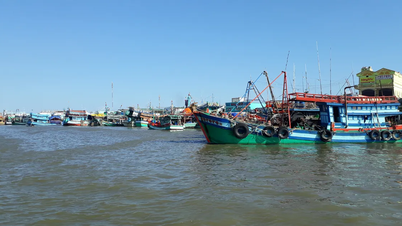
 The entire Hung My commune has approximately 260 households engaged in super-intensive shrimp farming, covering a total area of over 265 hectares. Photo: PHONG NGUYEN
However, in the context of increasingly complex climate change, rising input costs, unpredictable disease outbreaks, and increasingly stringent export market standards, traditional farming methods heavily reliant on experience reveal numerous limitations. The reality demands that farmers shift their mindset from fragmented, short-term production to controlled, science- and technology-based production chains.
Mr. Tran Chi Nguyen, from Tan Tao hamlet, said that previously his family raised shrimp by frequently changing the water, heavily dependent on natural conditions. Since switching to super-intensive recirculating shrimp farming, with less frequent water changes, the harvest rate is higher, production is more stable, and costs are better controlled.
"The most important thing is to proactively manage the water environment. In the long term, we must preserve the shared environment. If we do well, the surrounding residents will also be able to raise fish effectively. To protect water sources, households in the area also cooperate with each other to treat wastewater, ensuring that water is channeled through settling ponds and treated to meet requirements before being discharged into the environment," Mr. Nguyen shared.
Sharing the same clean production philosophy, Mr. Tran Thanh Phong, from Thi Tuong B hamlet, prioritizes raising shrimp without antibiotics to meet export requirements. His family has invested in a separate pond system to treat wastewater, disinfecting it according to proper procedures before discharging it.
According to Mr. Phong, the current market is not only concerned with production volume but also places great emphasis on traceability, food safety, and environmental responsibility. Clean production is the key to increasing the value of shrimp.
 Many households in Hung My commune have switched to raising clean shrimp in order to increase the value of the shrimp.
In fact, many businesses are partnering with farmers through providing breeding stock, selling feed on credit, offering technical guidance, and guaranteeing product purchase. This partnership model is gradually forming a standardized production chain, creating confidence for people to invest long-term.
Mr. Pham Van Muoi, Deputy Director of the Department of Agriculture and Environment, assessed: The recirculating aquaculture model with minimal water changes is a suitable solution in the current period. The model has been successfully implemented on an area of about 100 hectares and is being further expanded. Recirculating aquaculture helps to better control the environment, limit disease outbreaks, improve product quality, and meet export standards. With the support of the State, scientists, and businesses, farmers will be more confident in investing and aiming for sustainable development.
Aiming to establish a high-tech shrimp farming zone.
Based on practical production experience, Hung My commune has identified super-intensive shrimp farming using a recirculating system as its key focus for the future. According to Plan No. 0140/KH-UBND of 2025 issued by the Provincial People's Committee on expanding the model of super-intensive, recirculating whiteleg shrimp farming with minimal water changes to 1,500 hectares throughout the province, Hung My commune has been assigned to implement 20 hectares.
This is not just about the area of cultivation, but also a shift in mindset regarding production organization, aiming to enhance the value of the shrimp industry.
RAS (Recirculating Aquaculture System) allows for the reuse of water through a closed-loop filtration and treatment system, minimizing the need to exchange water into the environment. IMTA (Integrated Multispecies Aquaculture) utilizes shrimp waste as a nutrient source for other organisms such as algae, mollusks, and other suitable aquatic species.
According to Mr. Bui Hung Liet, Deputy Secretary of the Party Committee and Chairman of the People's Committee of Hung My commune, the transition to the RAS-IMTA model is not only a technical change but also a change in the mindset and practices of farmers. Shrimp farmers must strictly adhere to biosafety procedures, keep production logs, cooperate in groups and cooperatives, and gradually meet standards such as ASC and BAP to serve exports.
Local authorities are committed to supporting the people by assisting them in accessing science and technology, connecting them with capital sources, coordinating with specialized agencies to organize training, and linking them with businesses for consumption. The goal is not only to fulfill the 20-hectare target assigned by the province but also to establish a high-tech, environmentally friendly shrimp farming area.
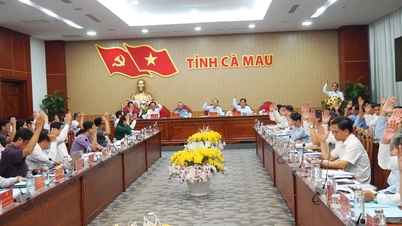
 The Hung My commune government is committed to supporting farmers in producing clean shrimp by providing access to science and technology, connecting them with capital sources, and linking them with consuming businesses. Photo: KIM CUONG
The current story of shrimp farming in Hung My is not simply about increasing production, but about achieving sustainable wealth from clean shrimp. With farmers changing their mindset, the government providing support, and businesses forming strong partnerships, the RAS-IMTA recirculating aquaculture system opens up a new direction for the local agricultural economy, contributing to enhancing the brand value of Ca Mau shrimp.
Hong Phuong
Source: https://baocamau.vn/lam-giau-tu-tom-sach-a126450.html













































Comment (0)