

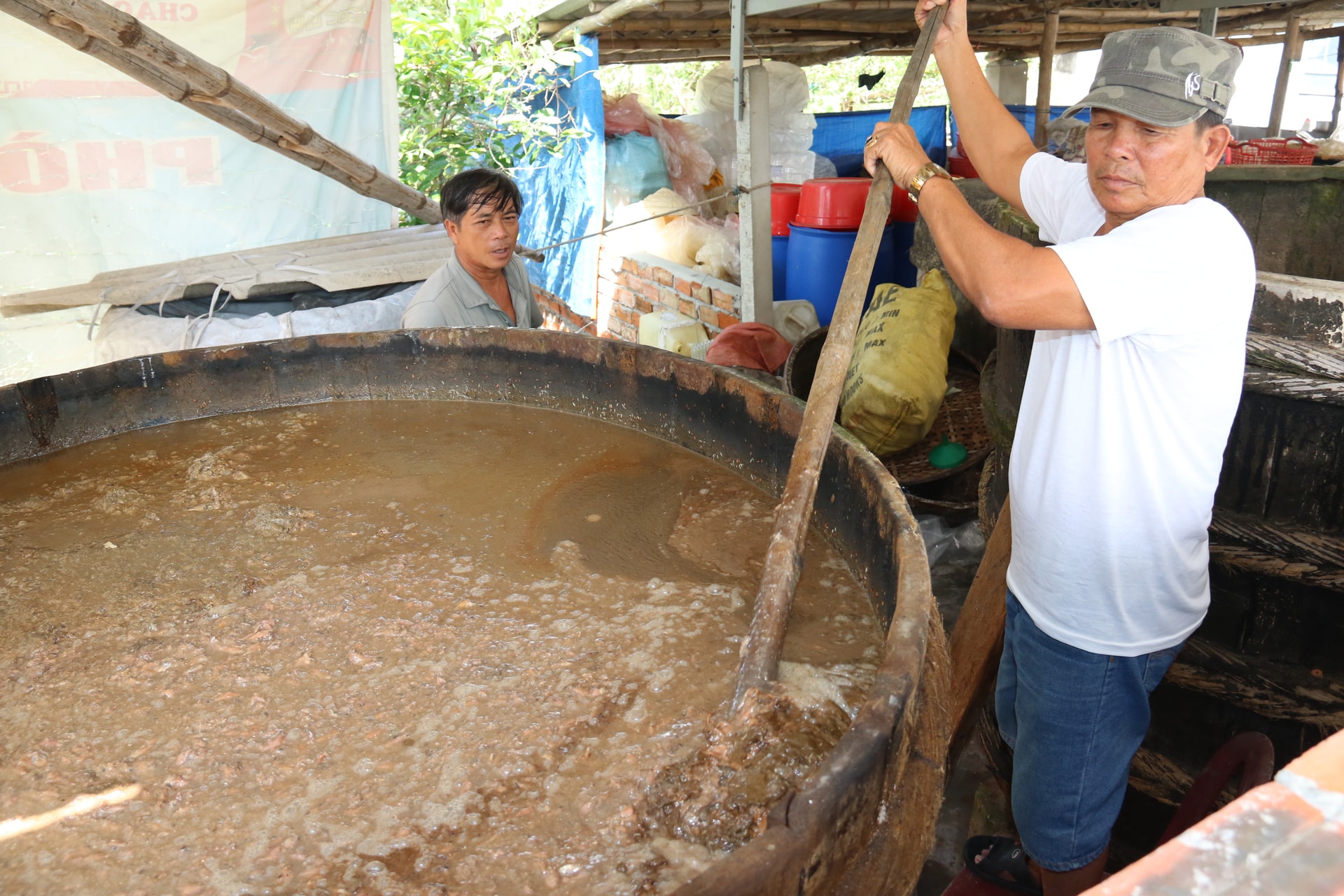
From the sea, through countless migrations, fish sauce has entered daily life, retaining the salty taste of the waves and winds, of the migrants, and gradually distilling it into a part of the identity of Quang Nam province.
Following in the footsteps of migrants
The groups of migrants, mostly from Thanh Hoa, Nghe An, and Ha Tinh provinces, who migrated down the central coast to Quang Nam from the early days of its settlement, brought with them not only their professional skills but also their established lifestyles and culinary tastes.
Researcher Ton That Huong observes that, in the early stages of land reclamation, coastal residents of Quang Nam, who migrated from the North to cultivate the land once known as "O Chau, a land of evil," began their lives alongside rivers and estuaries, gradually forming the foundation for development. As the delta became congested, the poorest and most disadvantaged among these residents ventured out to sea, exposing themselves to the hot sands and struggling with the waves to survive and thrive.
Before the arrival of the Vietnamese population, Quang Nam was the long-standing living space of the Champa people. The Champa people were skilled seafarers, adept at harvesting seafood, and adept at preserving fish in salt for the monsoon seasons.
"Many places in the coastal region of Quang Nam have adopted Champa culture to continue the traditional craft of making fish sauce, famous for Tam Ap, Tam Thanh, and Tam Hai fish sauces... which for more than half a century have been transported by locals on traditional boats along the Truong Giang and Ly Ly rivers or by sea to be sold everywhere."
According to local fishermen, in the past they salted fish in large wooden barrels, called "mam tro," because when making fish sauce, the bottom of the barrel was lined with many layers of sediment such as salt, sand, rice husks, gravel... When the fish sauce was ripe, they would pull out the drain hole, and the clear, fragrant fish sauce would slowly seep out; that was when the fish sauce ripened," researcher Ton That Huong said.
The traces of the Champa people's fish sauce making tradition are most clearly preserved in "mam cai," a type of fish sauce made with whole fish, without removing the cooked, fermented flesh. The anchovies are kept in their original shape, with soft bones, carrying the salty taste of the sea that has permeated over time.
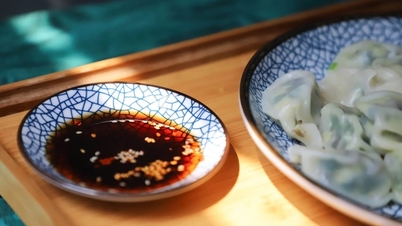
Researcher Ton That Huong also noted that in many coastal villages, fish is a regular dish in family meals. Fish sauce is an indispensable condiment, and there is always a bowl of fish sauce with chili and garlic on the dinner table.
In Nui Thanh, Duy Xuyen, Duy Nghia, or Hoi An, the structure of a meal is so familiar it's almost formulaic: a shared pot of rice, a shared bowl of fish sauce, a fish dish, and a bowl of soup or a plate of vegetables. Few dishes, but enough flavor, enough to satisfy, enough to anchor itself as a way of life passed down through generations.
Fish sauce and the essence of Quang Nam province.
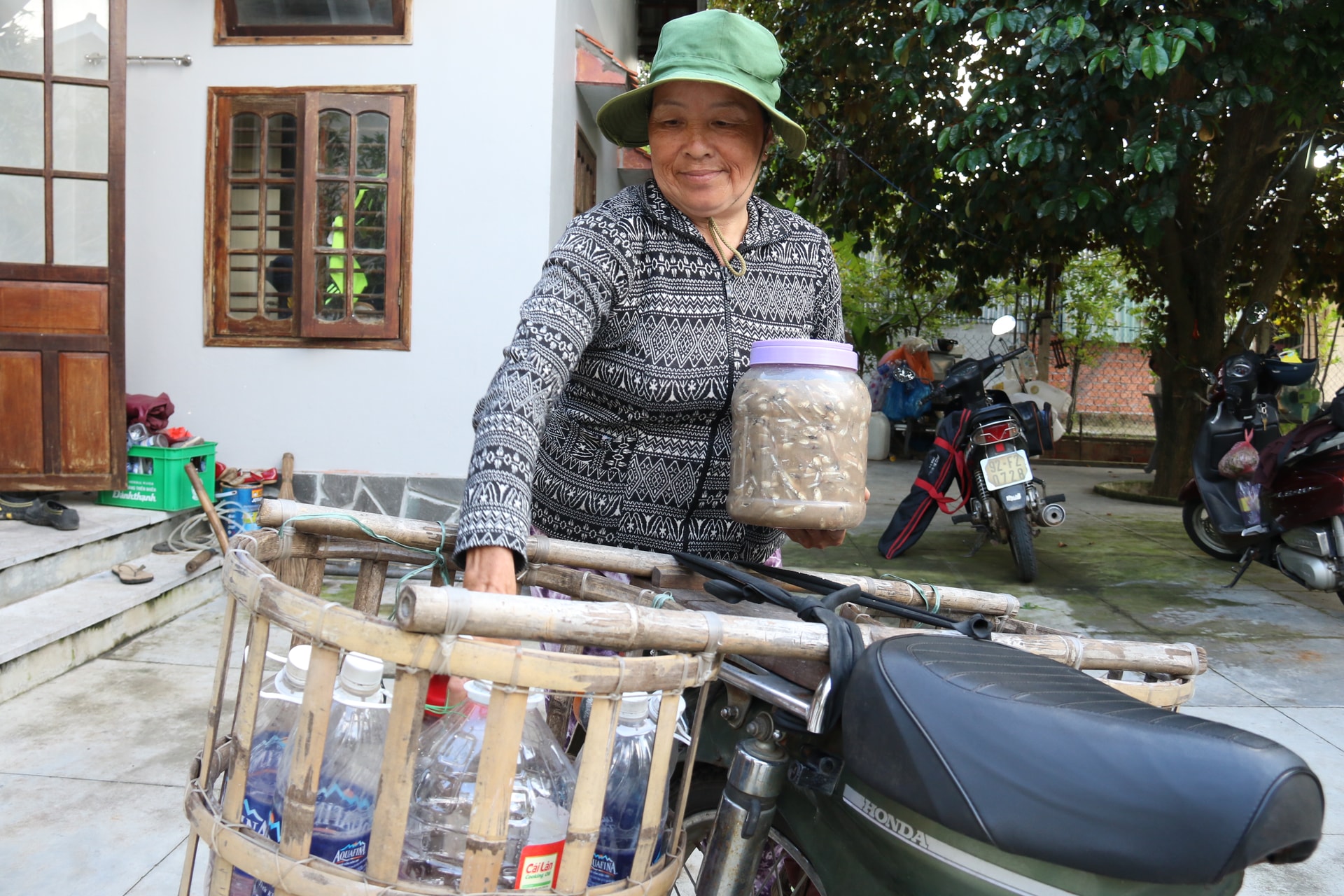
In daily life, people in Quang Nam may lack meat, but they rarely lack fish sauce. The constant presence of fish sauce on the dinner table reflects a survival experience honed through many rainy seasons and floods. When surrounded by water on all sides, people only need to keep two things: a jar of fish sauce and a bag of rice. That's enough to survive through long days of storms.
Besides fish sauce, there's fermented fish paste, a staple food during the rainy season. In the memories of many people from Quang Nam, crispy fried fermented fish paste eaten with hot rice used to be a longing during the cold winter days.
Or, on long journeys to the fields, the people of Quang Nam would carry a pot of sticky rice and a bowl of anchovy fish sauce in their carrying poles, along with a little peanut oil fried with crushed shallots. A few anchovies were enough for a meal. The anchovy fish sauce became an integral part of the meal, defining the distinctive salty taste of the people of Quang Nam. That salty taste even permeated their character: strong, straightforward, decisive, and clear.
A bowl of spicy fish sauce with chili and garlic, or fermented fish paste mixed with oil and shallots, is enough to complete a meal. Starting from there, the dishes may not be overly elaborate, but they are definitely linked to the flavor of fish sauce, as an experience accumulated over many generations.
Fish stews in various styles—salty, peppery, turmeric, starfruit, young jackfruit—all revolve around fish sauce. Ginger, chili, shallots, and turmeric aren't used to mask the flavor, but rather to enhance the rich taste of the fish sauce.
Or take bun mam (rice noodles with fermented fish sauce), a dish that has traveled far into the South, and is considered by many to be a specialty with roots in Quang Nam. It has to be fermented fish sauce. It has to contain anchovies; these are the soul of bun mam, giving it the strength to travel far and retain its distinctive flavor in the hearts of many foreigners.
The hustle and bustle of modern life has eroded the tradition of making fish sauce. Ready-made dipping sauces, with their inherent convenience, once fiercely competed with traditional fish sauce. But deep down, the people of Quang Nam still recognize the essence of fish sauce in their subconscious. The bowl of fish sauce remains present in their meals, irreplaceable by any industrial condiment. In that bowl of fish sauce lies the sea, the footprints of migrants, a silent journey of territorial expansion, and the memories of countless devastating floods and storms that swept through the land.
For over five centuries, the people of Quang Nam have carried fish sauce with them, as if it were a part of their homeland, a part of the sea and wilderness.
It is the sea of sailing boats gliding up and down the Truong Giang River, of seasons when anchovies bob up and down in the waters off Cua Dai and Ky Ha, and of days when strong winds blow across the white sand villages.
That sea has followed the migrants into their meals, their habits, and the way the people of Quang Nam approach life: salty, deeply ingrained, like a bowl of fragrant fish sauce on the family dinner table...
Source: https://baodanang.vn/lan-lung-nuoc-mam-3321525.html









































































![[INFOGRAPHICS] 25 targets and groups of targets that Can Tho City strives for by 2030](https://vphoto.vietnam.vn/thumb/402x226/vietnam/resource/IMAGE/2026/05/25/1779688983034_1779688951.webp)












Comment (0)