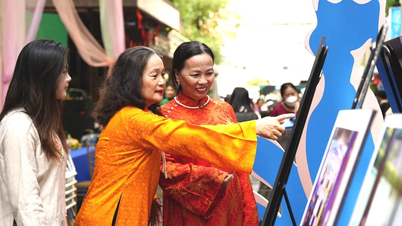
Nearly 80 artifacts, paintings, images, and documents were selected to tell the story of the rivers of Southern Vietnam from the past to the present. Instead of presenting the rivers as mere objects of study, the organizers arranged for the rivers themselves to "speak."
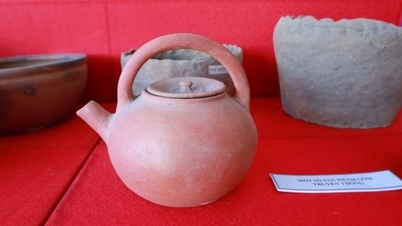
This emotionally rich storytelling style allows viewers to easily connect with the history and culture of the Southern region. From the first footprints of inhabitants in the Dong Nai River basin, archaeological artifacts such as stone axes, pottery, ancient jewelry, or the familiar clay stove... take viewers back in time to the early days of settlement. This was a period when people learned to live with water, relying on the river to form villages, develop production, and expand communication. This flow continues to lead viewers to the Oc Eo culture period with traces of a trade system that once connected the South with the outside world .

![[Video] Weather forecast for June 29, 2026: Thunderstorms help lower temperatures in Northern and Central Vietnam](https://vphoto.vietnam.vn/thumb/192x108/vietnam/resource/IMAGE/2026/06/29/1782687723691_ngay-29-png.webp)
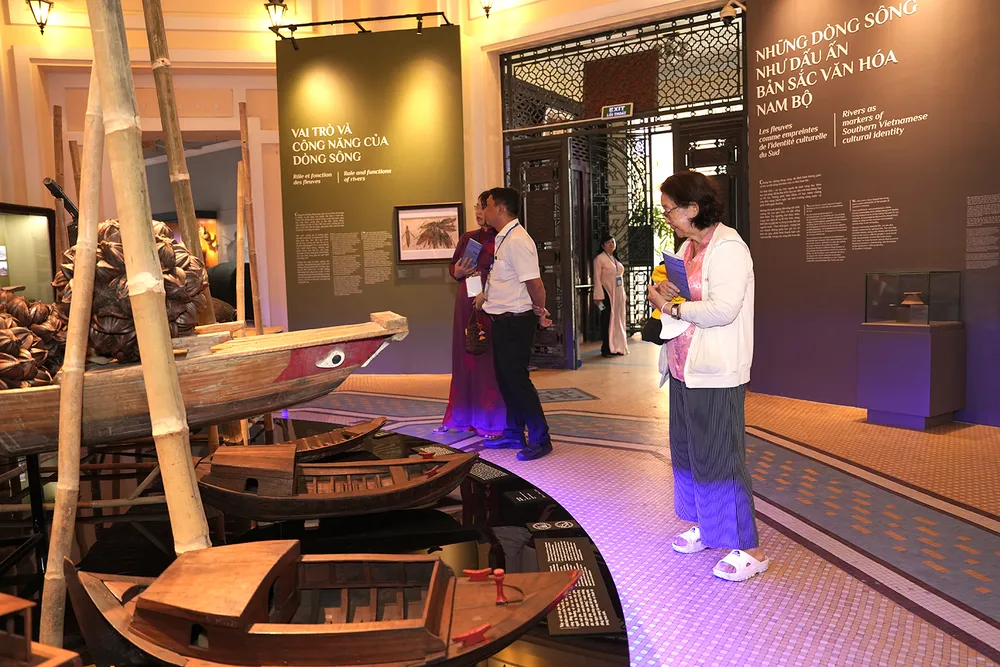
The exhibition space also vividly recreates the life of riverine inhabitants through stilt houses, boats, fishing tools, and folk beliefs associated with rivers and the sea. There are the customs of worshipping the Water Dragon Holy Mother and the Heavenly Empress Holy Mother, with altars dedicated to the Goddess and God on boats, reflecting the people's faith in the vastness of nature.
Another fascinating aspect is the story of the various types of boats and vessels that shaped the identity of Southern Vietnam's trading life. From the small, compact sampan boats navigating the canals to the Can Duoc boats and the bầu boats used for long-distance trade, each exhibit evokes a period when waterways played a vital role in the economic life of the region. This led to the formation of famous floating markets such as Cai Be, Cai Rang, and Phung Hiep, where the "bamboo pole" became a unique advertising language for the people of the riverine areas.
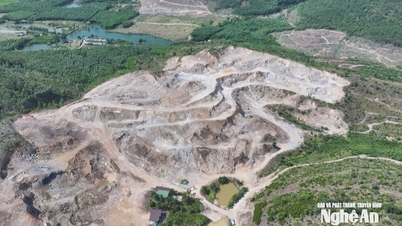
The final section of the exhibition serves as a gentle yet thought-provoking reminder of the many challenges facing rivers: water pollution, excessive sand mining, biodiversity loss, the impacts of climate change, and rapid urbanization. Ms. Nguyen Khac Xuan Thi, Director of the Ho Chi Minh City History Museum, concluded that rivers are not only geographical features but also the source of habitation, trade, beliefs, and community memory. The exhibition opens a space for dialogue between the past and the present, between scientific knowledge and cultural emotions, thereby contributing to raising awareness about environmental protection and sustainable development.
Amidst the ever-increasing hustle and bustle of urban life, the exhibition offers a moment of quiet reflection, allowing viewers to contemplate the relationship between humanity and nature. For listening to the stories of the rivers is also listening to our own stories, the stories of the land enriched by alluvial deposits over generations.



Source: https://www.sggp.org.vn/lang-nghe-dong-song-ke-chuyen-post858421.html