

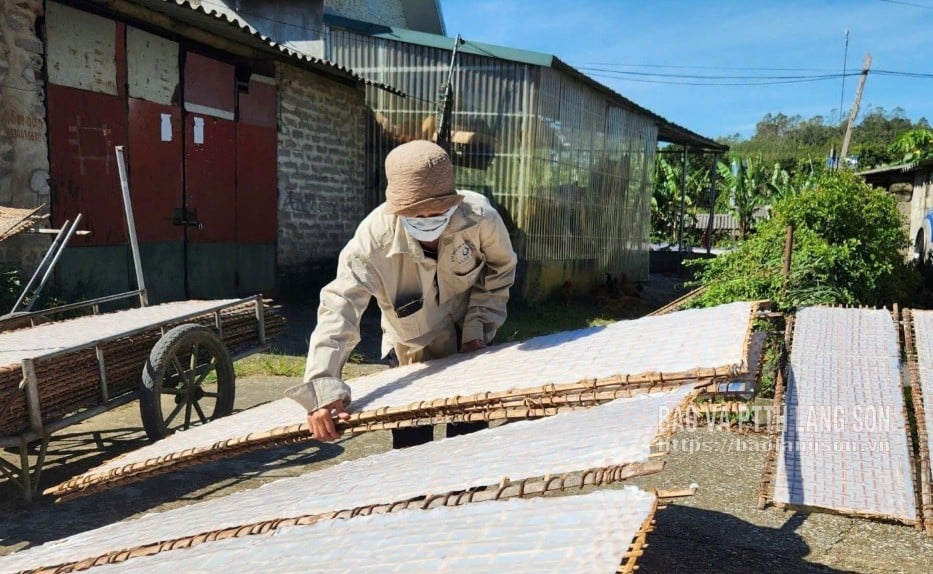
In the chilly weather of the year-end, we had the opportunity to visit Dong Bac village, Quoc Khanh commune – a place renowned for its traditional incense production in the province. Right from the village entrance, we were impressed by the sight of bundles of incense sticks spread out evenly and neatly arranged in long rows on open spaces, in yards, or along the village path.
Ms. Hoang Thi Tu, a long-time incense maker in Dong Bac village, shared: "The incense-making craft in our village has existed for a very long time, and my family has been involved in it for many generations. The unique feature of incense making here is the handcrafted method of production. The process of making each incense stick is very meticulous, using mainly natural plants, creating a distinctive fragrance. Every year, to meet the demand of people during peak season, from August and September (lunar calendar), we start preparing materials and mobilizing manpower to produce enough incense for the Tet holiday. During the period leading up to Tet, from November (lunar calendar) to the 23rd of the 12th lunar month, on average, our family produces over 2,000 bundles of finished incense sticks per day."
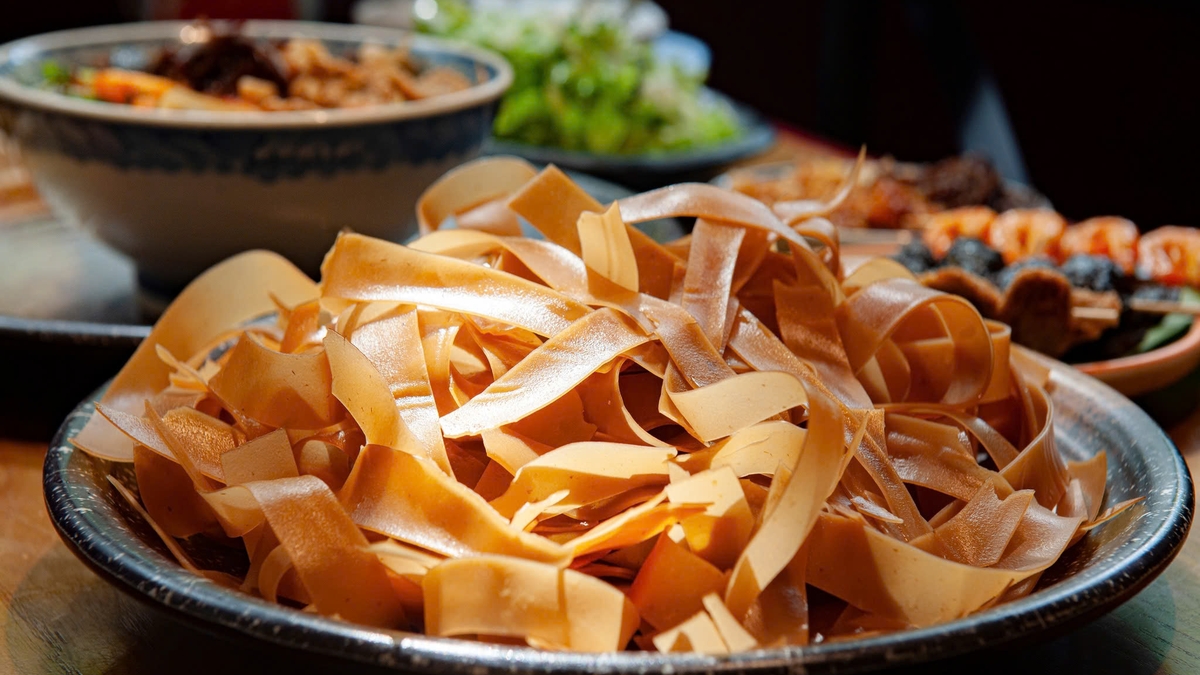
Similar to the incense-making villages in the Northeast, the atmosphere of production at the dried herbal medicine production facilities in Van Linh commune is busier than ever at this time. Mr. Ly Van Hanh, from Pho Cu village, Van Linh commune, said: "Every year, around this time, my family focuses all our efforts on producing dried herbal medicine to serve the Tet market. On average, the facility uses about 700 kg of rice per day, producing about 6,000 bundles of finished dried herbal medicine. The product is currently not only consumed within the province but also expanded to markets in other provinces and cities such as Hanoi , Bac Ninh, and Quang Ninh..."
Mr. Linh Van Bao, Head of the Economic Department of Van Linh Commune, said: "Currently, the entire commune has about 200 households producing dried herbal medicine. At this time, households are rushing to produce to meet year-end orders. While previously most households produced manually, now people have proactively invested in machinery and modern production lines, improving productivity and product quality. Accordingly, on average, the commune's finished dried herbal medicine production reaches about 1,200 tons per year, bringing in an economic value of about 50 billion VND; creating jobs for nearly 600 workers."
Not only the two villages with traditional crafts mentioned above, but according to statistics, there are currently 15 traditional crafts and 10 villages with traditional crafts in the province. Among them, some villages specialize in producing distinctive products to meet the needs of people during Tet (Lunar New Year), such as: incense making in blocks 6, 7, and 8 of Dong Kinh ward; dried herbal medicine production in Van Linh and Yen Phuc communes; and traditional rice wine brewing using leaf yeast in Cong Son and Mau Son communes...
As Tet (Lunar New Year) approaches, the atmosphere in villages with these traditional crafts becomes bustling and lively. It is known that traditional craft establishments in the province are creating jobs for approximately 2,800 rural workers with an average income that is steadily increasing; some crafts provide quite high incomes, such as: the rượu (rice wine) making craft in Ba Son commune, which earns 8 million VND/person/month; the bamboo tray making craft in Po Noi village, Khang Chien commune, which earns 6 million VND/person/month...
Mr. Hoang Van Chieu, Deputy Director of the Department of Agriculture and Environment, said: Lang Son has several very distinctive traditional crafts. Over the past time, many households in the province have maintained and developed these traditional crafts, bringing high incomes and making positive contributions to the socio-economic development of the locality. Currently, traditional craft establishments are entering the peak production season to serve the Tet market. The department is directing specialized departments to coordinate with relevant units to educate people to strictly comply with regulations on food safety and hygiene, creating safe and high-quality products for consumers.
The Lunar New Year of the Horse 2026 is fast approaching. This is also the time when traditional craft villages in the province are bustling with activity, entering their busiest season of the year. The atmosphere is so busy that it permeates every home and alleyway, creating a vibrant, joyful scene, full of hope for a new year with many promising developments.
Source: https://baolangson.vn/lang-nghe-truyen-thong-tat-bat-vao-vu-tet-5069565.html






































































Comment (0)