

In early June, the atmosphere of production in traditional craft villages throughout Vinh Phuc province is more vibrant than ever. The crisp sounds of machinery and the clang of blacksmiths' hammers echo from dawn to dusk, reflecting a new vitality from skilled hands that are constantly innovating to adapt to market trends.
From blacksmithing and carpentry to fine arts and crafts, traditional craft villages in Vinh Phuc are not only reviving but are also gradually transforming thanks to bold investments in new technologies, innovative designs, and expansion of domestic and international markets.
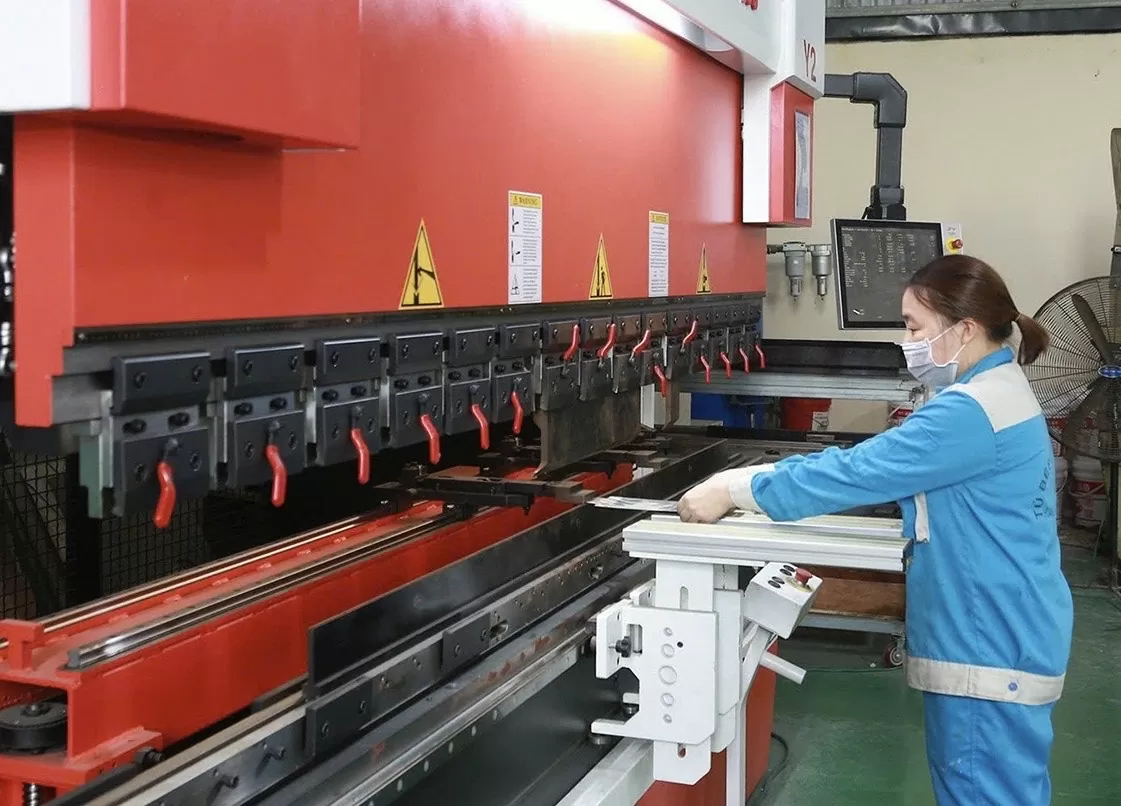 |
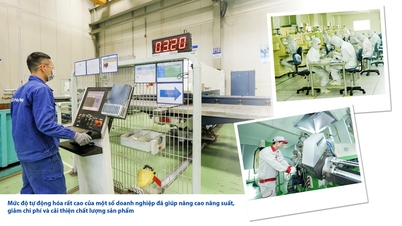
Thanks to support from the industrial promotion program, Vtech Co. (Tam Duong district, Vinh Phuc province) has received additional funding to invest in machinery and equipment for production, creating stable jobs for its workers. Photo: The Hung |
From skilled hands to cutting-edge technology
Upon arriving in An Nhan commune, Vinh Tuong district – renowned for its blacksmithing villages of Ban Mach, carpentry of Bich Chu, and Thu Do – one can clearly feel the vibrant energy emanating from each workshop. The households engaged in these crafts are racing against time to meet order deadlines and serve markets both within and outside the province.
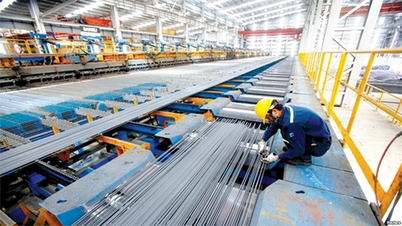
Previously, production processes were primarily manual, labor-intensive, time-consuming, and dependent on the skill of individual workers. Now, households have boldly invested in advanced machinery and equipment such as high-capacity steel cutting machines, branded laser engraving machines, and modern furnaces to increase productivity, improve designs, and enhance product quality.
One example of innovation is the Ly Nhan Youth Blacksmithing Cooperative in Ban Mach village. The knives, axes, and hammers forged there are now not only highly durable but also meticulously crafted aesthetically. Not content with just the domestic market, the cooperative's products have begun exporting to Southeast Asian countries.
Product diversification – market expansion
In addition to technological innovation, households in the craft village have also flexibly expanded their product range to suit market demands. While previously, forged and wooden products mainly served production and construction, now high-end gift and decorative products have emerged, targeting corporate clients and modern consumers.
For example, Tran Van Trong and Vu Dang Khoa – new-generation blacksmiths – have focused on producing stainless steel knives for high-end restaurants, hotels, and households. Their products are currently selling well through e-commerce platforms like Shopee, Lazada, and Facebook, expanding their online sales channels. This is a move in line with the digital consumer trend.
In Bich Chu village, artisan Pham Tien Duc has been involved in woodworking for over 20 years. He is a pioneer in shifting from traditional fine art woodworking to handcrafted gift baskets for holidays and Tet (Lunar New Year). With over 30,000 products shipped monthly during peak seasons, his workshop not only provides stable employment for 10 workers but also creates a new product line that is attractive to the market thanks to its unique designs, reasonable prices, and consistent quality.
The province currently has 25 traditional craft villages, with thousands of production facilities and approximately 55,000 workers directly employed. These are not only the core force preserving traditional crafts, but also "digital citizens" ready to innovate and integrate with the market economy trend.
Many traditional craft villages, once facing the risk of decline due to urbanization and competition from cheap industrial goods, have gradually recovered thanks to the flexibility and resourcefulness of the producers. Many households have utilized e-commerce, social media, and multi-platform sales channels to reach consumers, reduce intermediary costs, and increase competitiveness.
The problem of conservation and development
In reality, the strong resurgence of traditional craft villages in Vinh Phuc is not only due to the efforts of the people but also the result of attention from the local government. In recent years, the province has implemented many policies to promote industry, provide preferential loans, offer design consulting, build brands, and provide vocational training... to support these craft villages.
However, the challenge of sustainable development for craft villages remains significant: from managing environmental pollution and ensuring occupational hygiene to building transportation and logistics infrastructure, and orienting the spatial planning of craft villages to be compatible with urbanization.
In the coming period, to ensure that craft villages not only thrive but also expand, Vinh Phuc province needs to continue to closely coordinate between the Industry and Trade, Construction, Agriculture and Environment, and Culture sectors to both preserve the unique identity of craft villages and create conditions for rural industries to develop in a modern, green, and sustainable direction.
The journey of Vinh Phuc's traditional craft villages is revealing a new face: more dynamic, more creative, and ready for integration. From humble blacksmith and carpentry workshops in rural villages, handcrafted products have now crossed borders, affirming Vietnamese values in the international market. As long as the artisans in traditional craft villages maintain their passion for their craft, coupled with timely support from policies and modern technology, these villages will continue to thrive. Traditional craft villages are places that preserve the soul of national culture and are an important driving force for rural economic development. |
Source: https://congthuong.vn/lang-nghe-vinh-phuc-doi-moi-de-hoi-nhap-vuon-xa-390866.html
![[Photo] “Red Journey” 2026: Vietnamese Youth Continue Building the Bridge of Friendship Between Vietnam and China](https://vphoto.vietnam.vn/thumb/1200x675/vietnam/resource/IMAGE/2026/04/20/1776629730866_4055880775670638308-9618-4200-jpg.webp)




































































Comment (0)