Preliminary statistics show that the province currently has more than 110 craft villages and many villages with traditional crafts, with thousands of households engaged in small-scale handicraft production spread throughout rural areas. Annual revenue from this sector reaches trillions of VND.
Products made from rattan and bamboo, processed agricultural and forestry products, handicrafts, traditional building materials, and crafts serving daily life have contributed to creating stable jobs, increasing income, and significantly improving the material and spiritual lives of tens of thousands of people. Many once purely agricultural rural areas have now become economic "bright spots" thanks to the development of traditional crafts linked to the market.
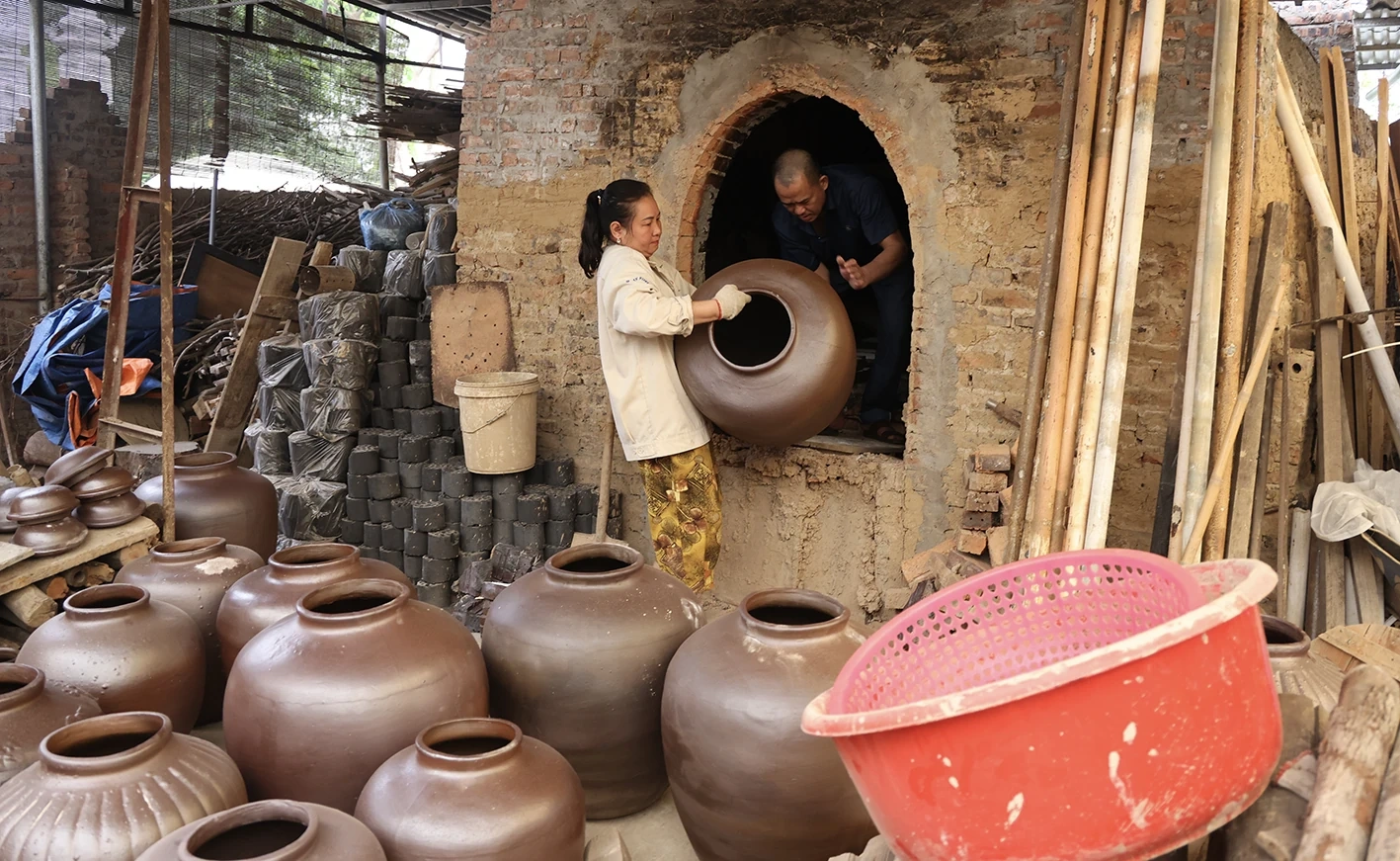
Pottery production in Huong Canh Pottery Village (Binh Nguyen commune).
Looking back over a decade ago, not everyone could have imagined that many traditional craft villages in Phu Tho were once struggling to survive. The pressure of competition from cheap goods, counterfeit products, outdated machinery, slow innovation in product designs, and uncertain markets had put many traditional crafts at risk of disappearing.
Many young workers leave their hometowns to seek other livelihoods, leaving behind workshops that are now deserted and seem unlikely to ever revive.
A prime example is the story of artisan Nguyen Hong Quang in Huong Canh pottery village (Binh Nguyen commune, Phu Tho province). With a tradition spanning over 300 years, Huong Canh pottery village has been immortalized in poetry and folk songs, bringing prosperity to countless generations of local people.
Yet, there was a period when this century-old craft village faced the risk of decline, even extinction, due to competitive pressure from industrial production models. At its lowest point, only a few pottery kilns in the entire village occasionally flickered and burned.
By chance, Quang made a courageous, even reckless, move by mortgaging his house to borrow money from the bank, determined to invest in changing production methods to restore and bring the pottery craft back to its former glory.
Specifically, in addition to traditional products for daily use, Mr. Quang also produces artistic ceramics. Besides the manual method of mixing and kneading clay, he also uses a continuous clay grinding and molding machine. In addition to the traditional charcoal kiln, he built a gas-fired kiln to ensure a stable and high temperature.
Thanks to his skillful blend of modernity and tradition, and his quick and accurate understanding of consumer tastes, Mr. Quang has gradually revived the once-renowned Huong Canh pottery brand.
In a short time, word spread, and his products were well-received in markets everywhere. He earned billions of dong in profit each year, while also providing stable employment and decent income for a large number of local workers.
More importantly, thanks to his new production model, many other households in the village have had the opportunity to learn, improve, and adapt well to new market trends. As a result, Huong Canh pottery village has remained stable and continues to develop.
In reality, timely support from policies developing rural handicrafts, along with the dynamism and creativity of the people, has helped many craft villages gradually overcome difficult times.



Some traditional craft villages have invested in technological innovation, improved designs, built brands, and gradually expanded their markets.

The rattan and bamboo weaving craft in Son Dong commune provides employment during the off-season for many local people, offering a decent income.
For example, the Trieu De rattan and bamboo weaving village (Son Dong commune) has boldly combined traditional techniques with modern design, bringing its products into large distribution systems and e-commerce platforms.
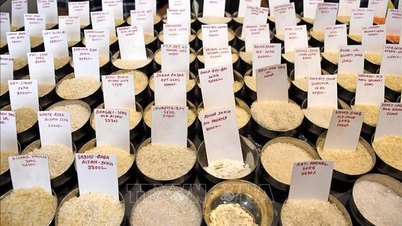
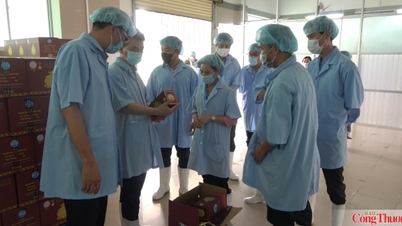
Some traditional tea, vermicelli, and cake processing facilities not only preserve local flavors but also standardize production processes, meet food safety standards, and expand their markets beyond the province.
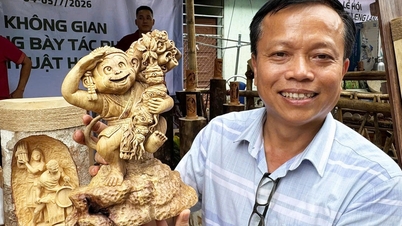
Speaking with reporters about his hometown's traditional craft village, Comrade Nguyen Van Do, Secretary of the Party Committee of Xuan Lang commune, home to the famous Thanh Lang Woodworking Village, said: Unlike some other craft villages in the province that have experienced ups and downs, the Thanh Lang Woodworking Village has almost always maintained its position and brand in the market.
The main reason is that craftspeople in the village are always quick to grasp consumer trends and supply products that suit the economic conditions of society at different times.
For example, the period leading up to Tet (Lunar New Year) will see an increase in the production of fine wood crafts, while at other times the focus will be on supplying wooden furniture for households building new homes.
Therefore, this craft village alone generates hundreds of billions of dong in economic value each year for its workers, as well as providing both regular and seasonal employment for thousands of laborers.
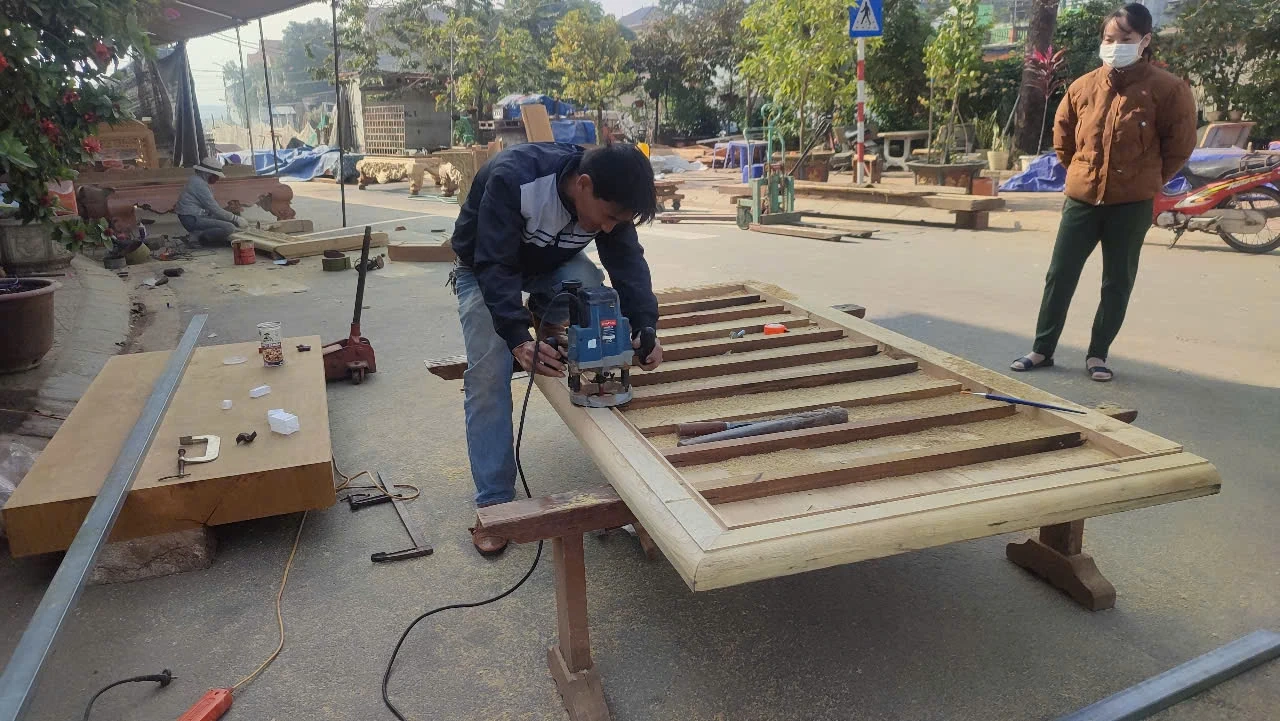
Furniture production at Thanh Lang Woodworking Village (Xuan Lang commune)
However, overall assessments indicate that as production scales up, craft villages also face significant challenges such as environmental pollution, wastewater treatment, air emissions, and noise pollution.
Furthermore, the pursuit of quantity and low prices to meet market demands has led some establishments to disregard the quality and sustainability of the craft, gradually eroding the core values that have been cultivated over generations.
Another difficulty is the dependence on raw materials from outside sources. When the market fluctuates, prices rise, or the supply is disrupted, many craft villages find themselves in a vulnerable position, or even have to temporarily suspend production.


Meanwhile, the challenge of preserving traditional crafts also raises many concerns, as a segment of young workers are not truly enthusiastic about their ancestors' trades, especially without proper guidance and a suitable development environment.
In this context, many craft villages in the province have proactively sought new directions. Applying digital technology in promotion and sales; building product stories linked to local culture; and combining craft development with experiential tourism are opening up new opportunities.
Many craft villages have formed cooperatives and production linkages along the value chain, thereby enhancing competitiveness while sharing responsibility in environmental protection and preserving the unique characteristics of their crafts.
The path for Phu Tho's traditional craft villages to thrive and develop sustainably cannot be through growth at all costs, but requires a harmonious balance between economic benefits, environmental protection, and the preservation of cultural values.
When each product not only possesses utilitarian value but also tells the story of the land, people, and traditions of the region, the craft village will have a more solid foothold in the market, including in the digital space.
Quang Nam
Source: https://baophutho.vn/lang-nghe-vuon-xa-246372.htm