

Historic decision
In December 1953, amidst the rapid changes in the Vietnamese revolution, at the request of the Government, the Standing Committee of the National Assembly decided to convene the 3rd Session of the 1st National Assembly in Lap Binh village, Binh Yen commune (now Minh Thanh commune). Taking place from December 1st to 4th, 1953, the session held profound historical significance.
At this session, the National Assembly passed the Land Reform Law, a national policy of vital importance to the victory of the resistance war and the future of the nation. This decision aimed to ensure that farmers owned land, promote production development, and bring benefits to the vast majority of society.
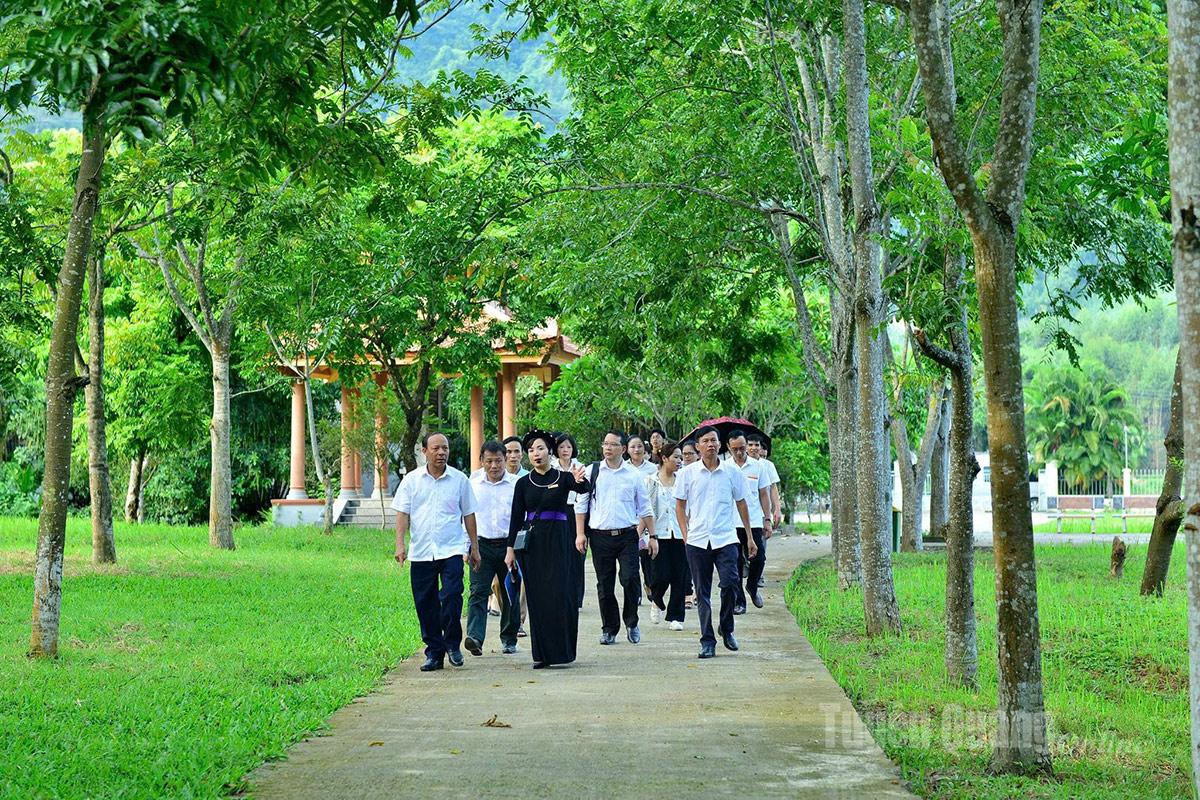 |
| Tourists visit the Government Historical Site in Lap Binh village, Minh Thanh commune - where the 3rd Session of the 1st National Assembly took place from December 1st to 4th, 1953. |
More than just a socio-economic policy, the Land Reform Law was also a powerful political lever, contributing to the liberation of productive forces, consolidating the worker-peasant alliance, creating abundant resources and unwavering fighting spirit for the army and the people. The success of the session clearly demonstrates the people's trust in the National Assembly.
Immediately after the session concluded, the Office of the Standing Committee of the National Assembly received 1,106 letters and telegrams congratulating the success of the session, expressing agreement, support, and determination to implement the resolutions of the National Assembly, especially the Resolution on the implementation of the Land Reform Law. These figures are vivid evidence of the close relationship between the National Assembly and the people, and of the vigorous vitality of the Democratic Republic of Vietnam right in the heart of the war zone.
At this historic session, President Ton Duc Thang affirmed: "This session will mark a new milestone on the path to independence and democracy, leading our revolution to complete victory." That affirmation quickly became a reality just a few months later, with the Dien Bien Phu victory, "renowned throughout the world and shaking the earth," the culmination of the political and military strength and the faith of the entire nation.
The desire to get rich
Eighty years since the first general election, the once impoverished Lap Binh has been transformed. The spirit of "land to the tiller" from that era has now become a desire to prosper on their own land.
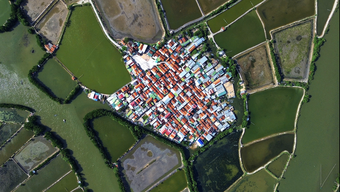
The people of Lap Binh village have boldly transformed their crop structure, converting unproductive rice paddies, hilly areas, and alluvial plains into high-yield sugarcane plantations. Currently, the village has over 70 hectares of sugarcane, with an average yield of 80 tons per hectare. The average income per hectare of sugarcane for the villagers here ranges from 100 to 120 million VND. Only 7 households remain poor in the village, representing 3.8%.
 |
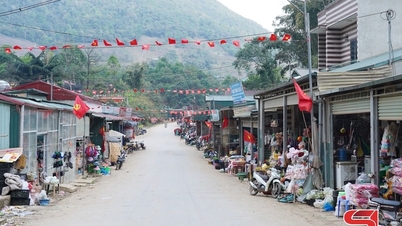
| The roads in Lap Binh have been 100% paved with concrete, creating favorable conditions for the local economy to develop. |
Excited while harvesting sugarcane, Mr. Luc Van Gioi, a resident of Lap Binh village, shared: “As a resident of a revolutionary rural area, I always strive to improve my life and become wealthy. Currently, my family cultivates 2 hectares of sugarcane, and after deducting expenses, I earn over 100 million VND per harvest. Since switching to a different crop structure, my family has enjoyed a comfortable life.”
The narrow dirt roads of yesteryear have now been 100% paved with concrete, reaching even the smallest alleys and fields. Tall, imposing houses have sprung up side by side. Comrade Hoang Van Chinh, Party Secretary and Head of Lap Binh village, shared with pride: “As a place that has witnessed many important activities of the Vietnamese National Assembly, every citizen of Lap Binh always reminds themselves to live and work in a manner worthy of the traditions of their ancestors. Unity is the key to building the prosperous and civilized life we have today.”
Celebrating the 80th anniversary of the Vietnamese National Assembly's general election (January 6th), looking back on the journey so far, we see even more clearly the significance of policies that are for and close to the people. Since its founding, the spirit of the Vietnamese National Assembly, a National Assembly of the people, by the people, and for the people, has always shone brightly, serving as a driving force for our revolutionary homeland to steadfastly advance on the path of reform.
Bao Ngan
Source: https://baotuyenquang.com.vn/xa-hoi/202601/lap-binh-hom-nay-d4852f3/



![[Photo] A vibrant celebration of generations of Nhan Dan Newspaper staff](https://vphoto.vietnam.vn/thumb/1200x675/vietnam/resource/IMAGE/2026/03/11/1773228432744_cb-75-nam-7-7034-jpg.webp)




































































Comment (0)