

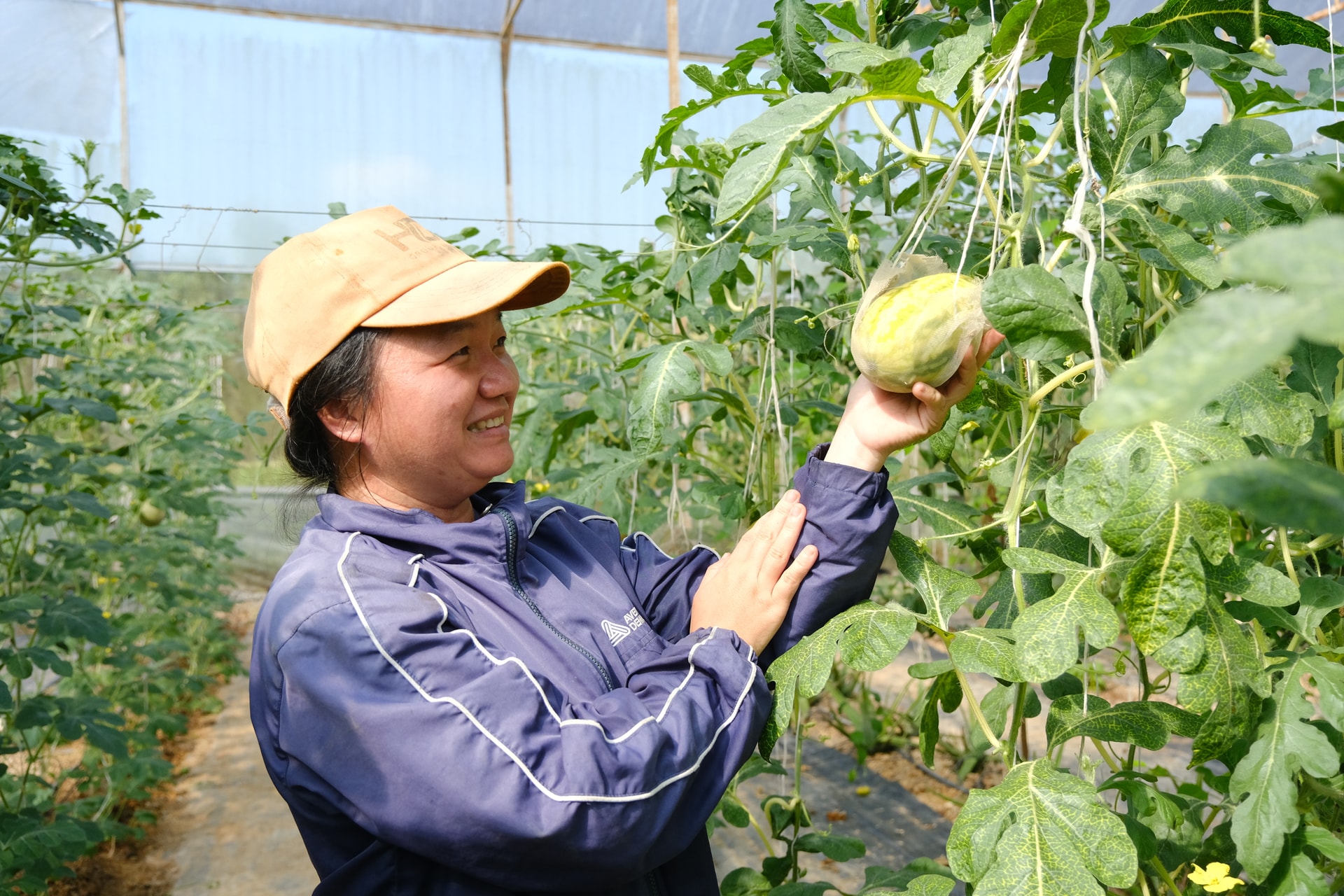
After graduating with a degree in Environmental Science from Da Lat University, Ms. Dung worked at various high-tech agricultural zones in different localities. This experience allowed her to access advanced farming models and gain a deeper understanding of the relationship between production, quality standards, and consumer demand. Upon returning to her hometown, instead of continuing with traditional farming practices, she chose to start by researching the market and identifying product groups that align with local consumer trends and farming conditions. Ms. Dung shared: “If you only rely on old farming methods, it’s very difficult to compete. I chose to research the market first, see what consumers need, what level of product they are willing to accept, before deciding to invest. Agriculture now requires a clear understanding of market demand to be sustainable.”
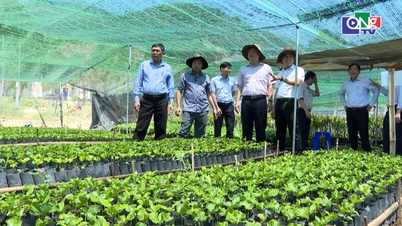
On an area of approximately 1.4 acres of land, Ms. Dung boldly invested nearly 800 million VND to build a greenhouse, an irrigation system, select breeding stock, and apply a production process that adheres to safe agricultural practices and approaches GlobalGAP standards. She recognized this significant initial investment as a necessary step to control product quality, stabilize yields, and ensure proactive production.
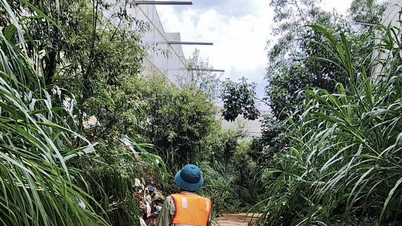
From June 2025, she began planting seedlings to be ready for the Lunar New Year market in 2026. Inside the greenhouse, the crops are arranged in a diverse but carefully planned way, maximizing space utilization while mitigating risks.
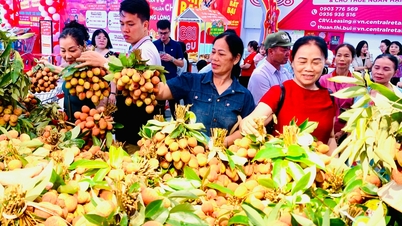
One of the main crops is Okinawa passion fruit, an imported variety from Japan, suitable for greenhouse cultivation. According to Ms. Dung, the advantages of this variety are its uniform fruit quality, a flavor easily favored by the market, and stable growth when temperature, humidity, and nutrients are well controlled. Currently, the garden has about 20 passion fruit plants, and the first harvest is expected in about 20 days. On average, about 6 fruits make up 1 kg, with a selling price at the garden of about 100,000 VND/kg. With an expected yield of about 3,000 fruits, equivalent to nearly 500 kg, passion fruit is considered a crop that brings clear economic value on a relatively small area.
In parallel, Ms. Dung planted 70 Thai apple trees, a variety with relatively simple cultivation techniques, low investment costs, and minimal care requirements, yet yielding abundant and consistently high-quality fruit. The apple orchard has now begun to bear fruit, with sweet, attractive apples that traders are buying directly from the orchard at prices ranging from 60,000 to 70,000 VND per kilogram. Combining perennial and short-term crops ensures a continuous income stream, providing financial independence.
Not content with just fruit trees, Ms. Dung also dedicates a portion of her land to growing flowers for the Tet (Lunar New Year) market. This year's Tet season, her garden has approximately 400 pots of gerbera daisies, 100 pots of sunflowers, 100 pots of chrysanthemums, and over 2,000 ground chrysanthemum plants.
A noticeable feature of this model is its proactive and well-planned production approach, from input to output. Instead of chasing quantity, Ms. Dung focuses on product quality, adhering to technical procedures and safety standards. As a result, the farm has established a stable market, with products mainly sold in Ho Chi Minh City and a portion locally.
According to Mr. Pham Van Dong, Chairman of the Farmers' Association of Da Teh 2 commune, Ms. Ngo Thi Thuy Dung's model is a shining example in the local agricultural economic development movement. What is noteworthy is her innovative production mindset, bold investment, ability to select suitable crops, and connection between production and market demand. This is a direction worth emulating in areas with limited land but high economic value requirements.
Source: https://baolamdong.vn/lap-nghiep-tu-cach-lam-nong-moi-421720.html







































































Comment (0)