

On the morning of December 15th, the K'ho S'Rê ethnic group's New Rice Harvest Festival took place at the K'Ho Traditional Village, Klong Trao 1 hamlet (Gung Ré commune, Di Linh district, Lam Dong province).
This is one of the biggest festivals of the K'Ho people in Lam Dong, revived to restore, preserve, and promote the cultural identity of the local indigenous ethnic group.
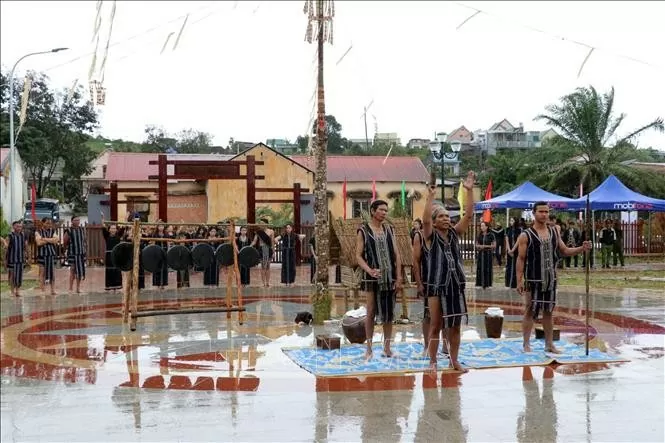 |
| The village elder prayed to Yang to come and attend the ceremony with the villagers. |
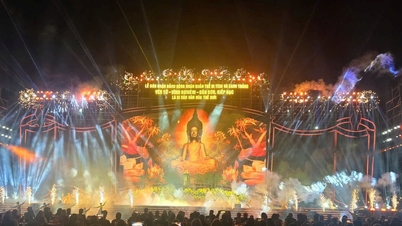
This event is part of a series of events in response to the 10th Da Lat Flower Festival in 2024, which will take place from December 5th to 31st in Lam Dong province.
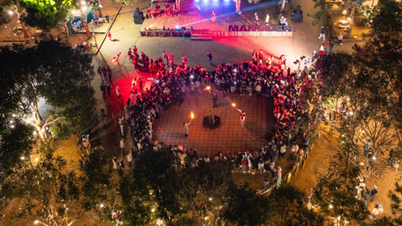
From early morning, despite the heavy rain, hundreds of locals and tourists gathered at the Klong Trao 1 Community Tourism Model (which also opened on the same day).
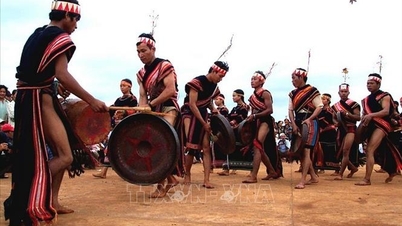
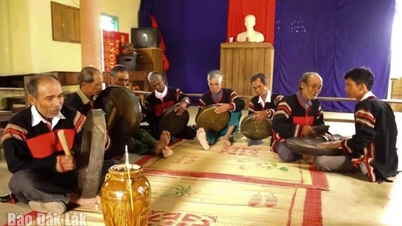
The K'Ho ethnic people, dressed in their traditional costumes, participated in an important traditional festival of their ethnic group amidst the resounding sounds of gongs and drums.
At the site where the New Rice Festival takes place, a ceremonial pole is erected in the center, and at its base is a tray of offerings including jars of rice wine.
Nearby, a buffalo was tied up for the Buffalo Sacrifice Ceremony, along with a tray of offerings. Beginning the ceremony, the village elder stood at the base of the central ceremonial pole, respectfully blowing the horn three times and praying to Yang, asking the spirits for permission for the village to hold the festival.
The prayer included the lines: “Oh, Yang!... O villagers, after a year of hard work in the fields and gardens, today the granaries are full of rice, and the jars of rice wine are ready to be opened. We gather here to thank Yang and the spirits for granting the village a year of favorable weather and bountiful harvests in our fields and gardens…”
Following the prayers, from both sides, the gong and Xoang dance troupe, consisting of dozens of men and women, young and old, dressed in K'Ho ethnic costumes, walked and danced in a circle around the ceremonial pole.
Meanwhile, the village elder and his assistants sacrifice a rooster; they use the rooster's blood to smear on the ceremonial pole, on the gong, and on the foreheads of the villagers, praying for good fortune and health for everyone in the village.
The festival also includes a buffalo sacrifice ritual (mimicking dance) showcasing the traditional buffalo-eating practices of the ethnic group from ancient times. The village elder performs the ritual of opening the jar, pouring wine as an offering to Yang and the deities, then offering wine, and bestowing beaded bracelets and bronze bangles upon guests and members.
The festival began with dance and song performances by the K'Ho ethnic group, such as " Down the Mountain ," "Hoi Yang Koi , " "Oi Mi - Brotherly Love ," and "Central Highlands Symphony ," performed by the cultural troupes of the K'Ho villages in Gung Re commune.
| Following the rice cultivation cycle, after the harvest, the people of the Central Highlands often hold a ceremony to celebrate the new rice crop. This is both to thank Giang and the deities for granting a bountiful harvest and a prosperous life, and also an occasion for villagers to share in the fruits of their labor. This ritual is deeply rooted in animistic beliefs and reflects the unique cultural identity of the people in this region. |
Source: https://baoquocte.vn/le-hoi-mung-lua-moi-phong-tuc-lau-doi-cua-dong-bao-cac-dan-toc-tay-nguyen-297533.html









































Comment (0)