Modern interior design is now tailored to very specific spaces and functional rooms, down to the placement of furniture and equipment, and precise to the centimeter. However, this does not mean that interior design is rigid and unchanging. Interiors can still be multifunctional and adaptable to modern life.
Flexibility in spatial organization
In architecture in general and housing in particular, interior spaces can and should be organized flexibly, and should not be confined or limited to functional rooms by walls and doors.
The living room or family room can be next to the dining room; the dining room can be connected to the kitchen; the study can be located within the bedroom…


This demarcation can be achieved through various solutions, such as interior design, ceiling and floor solutions, and color and lighting solutions. Spaces can also be merged or separated using flexible partition systems that can be easily operated as needed.
Combining and integrating spaces with different functions naturally always has two sides: advantages and disadvantages. Therefore, understanding the nature of the space, the characteristics of the building, and the needs of the users is crucial to providing a solution that is both functional and aesthetically pleasing.

Flexibility in space utilization
Each interior space has its own specific function, but these can be interchangeable and flexible depending on the specific situation. Alternatively, a single space can be multi-functional, meeting many requirements without inconvenience.
The dining table in the dining area can also serve as a place to entertain guests; the karaoke/music room can also be used for entertaining. Or, more simply: the porch or garden can also be a place to entertain guests.
A multi-purpose room can serve as both a library and an entertainment room. The living room and dining room spaces can be connected and merged as needed. Of course, the flexible use of these spaces must depend on the circumstances, time, and target audience.
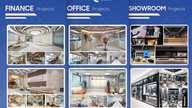



Flexibility in furniture arrangement and design.
Interior layout and design can also be very flexible to create convenience and versatility. Flexible interior layout is crucial so that the furniture can further enhance this versatility. The furniture should be movable and multi-functional.
Beyond their primary function, furniture can also serve as a spatial divider, shaping the layout and color scheme of an interior.

Currently, flexible design trends are becoming increasingly popular to avoid monotony and to provide convenience in daily life.
Many furniture manufacturers produce highly versatile products with compact, easy-to-operate structures, such as extendable dining tables, sofas that convert into beds, and multi-functional wardrobes.


Flexibility in interior design
A room that remains unchanged year after year is incredibly boring. Some things can't be changed, some things aren't easy to change; and some things are easy to change but are expensive.







Interior design can be initiated by professionals; however, decorating the interior in one's own home is ultimately the homeowner's responsibility.
A room will always look beautiful, attractive, and fresh if it's decorated flexibly (in the spirit of design). The easiest way is to change other items – replace them with new ones, rearrange them, such as tablecloths, rugs, vases, pictures, etc.
At a higher level, you can change the curtains or the wall color. This decorating can change with the seasons, related to plants, temperature, and weather; but it can also be a spontaneous, creative endeavor.
Source: https://danviet.vn/linh-hoat-trong-khong-gian-noi-that-d1433905.html