

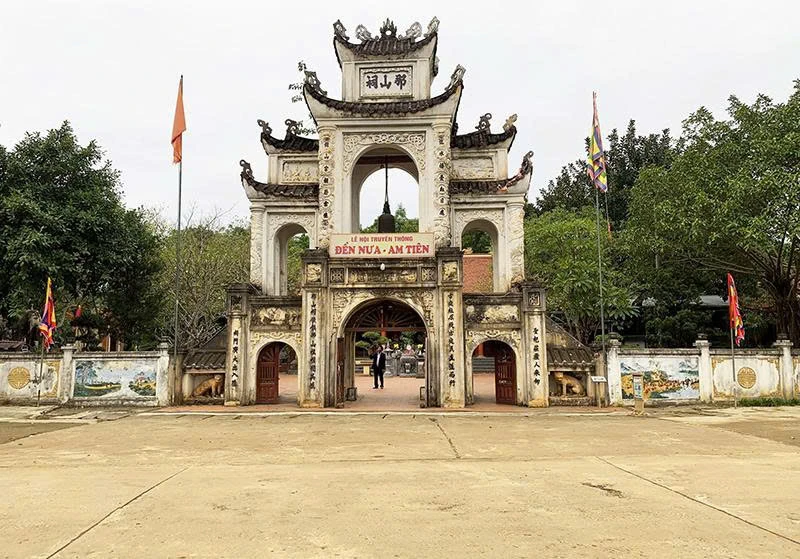
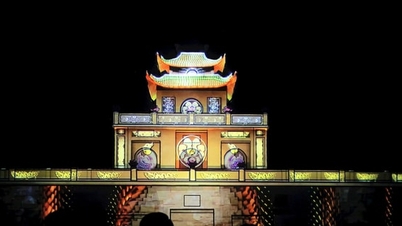
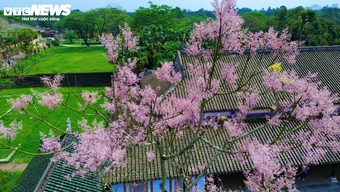
The Nưa Temple - Am Tiên National Historical Monument. Photo: Khắc Công
Going back in history, in 248, the cruel officials of the Ngo dynasty caused suffering to the people. Trieu Thi Trinh, along with her brother Trieu Quoc Dat, raised an army to revolt. After a period of preparing their forces, the rebels crossed the Chu River to the Nua mountain region (belonging to Ke Nua - Co Dinh, now Tan Ninh commune) to establish a base and prepare for the uprising...
Strategically located, the Nua mountain range was chosen by Lady Trieu as a base and springboard for her rebellion against the Eastern Wu army. From Nua Mountain, Lady Trieu's rebel army launched a surprise attack on Tu Pho citadel (now in Giang village, Ham Rong ward) and quickly annihilated the main forces of the occupying government in Cuu Chan. From Cuu Chan, the rebellion spread to Giao Chi, reaching as far as Cuu Duc and Nhat Nam. Surprised by the strength of Lady Trieu's rebel army, the Wu dynasty sent Luc Gian with a large army and many supporting ships to suppress the rebellion. Ultimately, due to the disparity in forces, Lady Trieu's rebellion was suppressed. Lady Trieu committed suicide at Tung Mountain (in present-day Trieu Loc). After Lady Trieu's death, the people of the region erected a temple in her honor at the Nua Mountain - Nua Temple - Am Tien complex in Tan Ninh commune today.
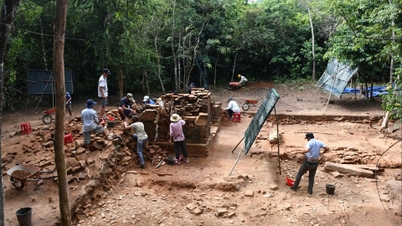
According to folklore, the Nưa Temple has existed since ancient times in the Cổ Na countryside. With the vicissitudes of history, by the beginning of the Nguyễn dynasty, the site was almost entirely ruins. The people of Cổ Định gathered bricks and stones, rearranging them to create a makeshift altar on the old foundation, with a simple incense burner made of bamboo to worship Lady Triệu. In the fifth year of Emperor Tự Đức's reign, a district magistrate named Cao Bá Đạt of Nông Cống, acting on orders from the court, instructed his troops to hunt rare animals in the mountainous region to offer to the Huế court. One day, while hunting, the troops arrived at this place. Upon inquiring with the local people, they learned that Lady Triệu was worshipped here. He immediately ordered his soldiers to prepare offerings and pray. That night, he dreamt of a girl in white clothing, wearing a sword at her side, who guided him to hunt a rare deer to present to the Emperor. The next day, he and his troops hunted a rare black deer to offer to the Emperor. The district magistrate then reported the dream to the imperial court, and the court allowed the district to allocate 1,200 quan (a unit of currency) from public funds, exempting the local people from taxes for three years, to rebuild the Nưa Temple and bestow divine status upon Lady Triệu as "First Heavenly Immortal Holy Mother, Mountain Villa, White Robed Princess, Queen of the Sea, Jade Majesty." After the Nưa Temple was completed, District Magistrate Cao Bá Đạt also wrote a poem inscribed on the "Stone Tablet" about his prayer for a rare black deer and the construction of the Nưa Temple.
During the years of the bombing campaign by the American imperialists against North Vietnam, the "Stone Monument" and other Nguyen Dynasty-era structures of the temple were almost completely destroyed, with only the ceremonial gate remaining relatively intact. While the buildings were damaged, the legends and sacredness endure, including the story of the golden turtle erasing traces of enemy pursuit, the white fox saving King Le Loi from the Ming invaders, and the sacred well of Co Chin, a witness to prayers and a blessing that helped many overcome misfortunes, ensuring success, peace, and happiness.
Nearly 18 centuries have passed since the Ba Trieu Uprising, yet the people of Vietnam and Thanh Hoa province remain deeply proud of and cherish the famous words of Ba Trieu: "I want to ride the strong winds, trample the fierce waves, slay the whales in the East Sea, drive out the Wu army, reclaim the land, and break the yoke of slavery, rather than bow down and kneel as a concubine to anyone." This embodies the indomitable spirit of the Vietnamese people, determined to rise up and drive out the invaders, liberating their homeland. For a long time, this place has become a sacred land for pilgrims from near and far to visit and commemorate this national heroine of the 3rd century.
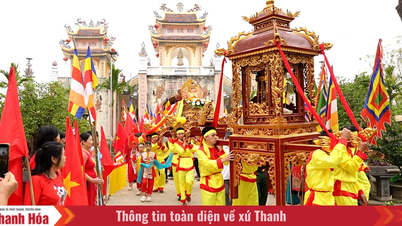
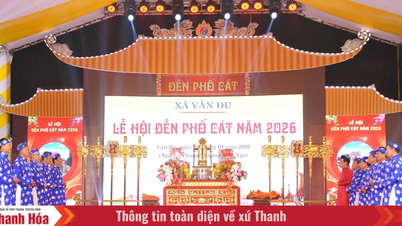
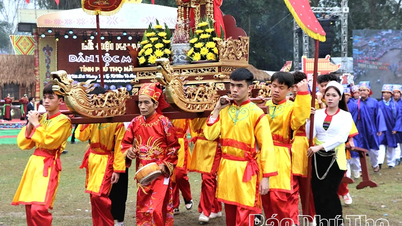
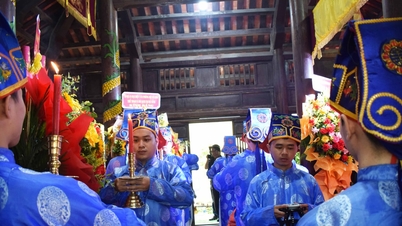
Mr. Trinh Ngoc Trung, a cultural official of Tan Ninh commune, said: In 2009, the Nua Temple Relic Area was recognized by the Ministry of Culture, Sports and Tourism as a historical and cultural relic and scenic spot within the complex of the National Historical and Scenic Relic Area of Nua Mountain - Nua Temple - Am Tien. Cultural and tourism activities here are increasingly receiving attention and investment. Every year, the Nua Temple - Am Tien festival officially takes place from the 9th to the 20th day of the first lunar month, often called the "opening of the gates of heaven" by the locals, attracting a large number of tourists from inside and outside the province to visit, admire the scenery, offer prayers, and express their hopes and aspirations.
Khac Cong
Source: https://baothanhhoa.vn/linh-thieng-den-nua-275409.htm


![[Photo] Prime Minister Pham Minh Chinh receives the Chinese Ambassador to Vietnam](https://vphoto.vietnam.vn/thumb/1200x675/vietnam/resource/IMAGE/2026/04/05/1775397481797_ndo_br_dsc-5512-jpg.webp)



































































Comment (0)