SGGP
On August 2nd, several more countries announced they were preparing to evacuate their citizens from Niger due to the coup in the West African nation.
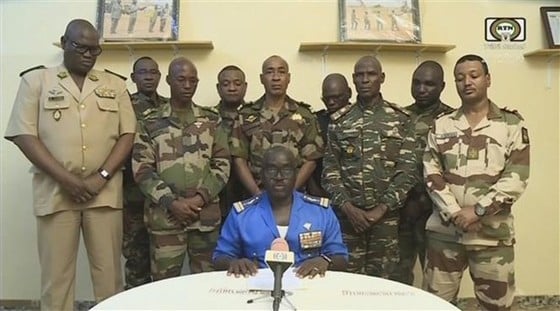 |
| Colonel Amadou Abdramane (seated), Spokesperson for the National Council for the Defense of the Fatherland (CNSP) in Niger, announces the coup on national television on July 26. |


However, the US stated that it has no official evacuation plans as it does not perceive any direct threats to US citizens or facilities in the country. The European Union (EU) also announced that it has no similar official evacuation plans.
Also related to the instability in Niger, Euratom, the EU's nuclear agency, said it sees no immediate risk to nuclear power production in Europe if Niger restricts uranium exports. Euratom asserted that facilities in the 27-nation bloc have sufficient uranium reserves to fuel nuclear reactors for three years.
Niger is the EU's second-largest supplier of natural uranium, accounting for 25.4% of the EU's total uranium supply, behind Kazakhstan and ahead of Canada. Last week's military coup in Niger has raised questions about the role of the nuclear energy industry in the future of many European countries, particularly France .
The Niger military government's announcement of an immediate halt to uranium exports to France – Niger's long-time colonial ruler – once again reminds European leaders that, in the long run, nuclear energy does not create energy independence. So far, diversifying supply sources and maintaining good European stockpiles can only mitigate any short-term disruptions.


Despite EU officials' attempts to downplay the risks, Mohammed Soliman, Director of the Middle East Institute in Washington, said the coup in Niger illustrates the growing instability in the Sahel region, against the backdrop of a series of coups in Burkina Faso, Guinea, Mali, Chad, and Sudan over the past three years. The turmoil in Niger, a country with significant uranium deposits and other valuable resources such as gold, has raised concerns about far-reaching ripple effects on the global economy and sounded the alarm about the foundations of European energy security strategies in the face of major market shocks.
Source