The Da Lat nuclear reactor has been operating at a capacity of 500 kWt since 1984, used for scientific research, sample analysis, production of radiopharmaceuticals for medical and industrial purposes, and personnel training.
This information was shared by Minister of Science and Technology Huynh Thanh Dat in his speech at the ceremony commemorating the 40th anniversary of the inauguration of the restored and expanded Da Lat nuclear reactor, on the morning of March 23.
According to the Minister, over the past 40 years, the Da Lat Nuclear Reactor has operated safely. Along with the main equipment, the nuclear reactor, a system of modern specialized laboratories has been established and put into operation, serving basic and applied research, bringing nuclear technology and radioisotopes to serve economic development.
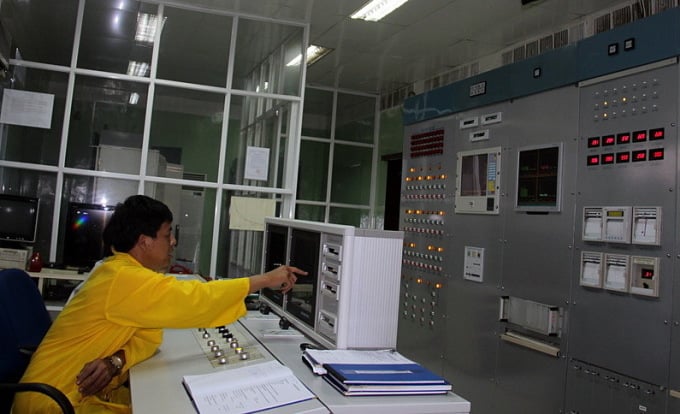
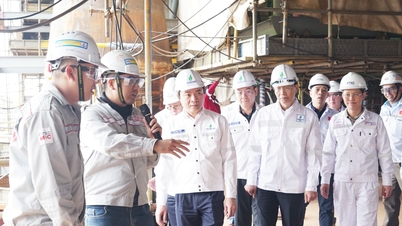
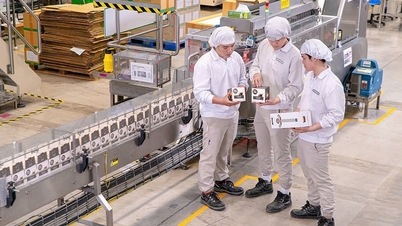
Technical staff monitor the operation of the reactor. Photo: Hoang Truong
The institute has researched the technology and preparation of radioactive isotopes, successfully developing technologies for producing radiopharmaceuticals for diagnosis and treatment of diseases, such as radiopharmaceuticals containing I-131, Tc-99m, P-32, and several other isotopes.
Many types of radiolabeled diagnostic kits used in the diagnosis of brain diseases, bone cancer, hepatobiliary diseases, early-stage Parkinson's disease, neuroendocrine tumors, etc., have been successfully researched and produced. Currently, 9 products are included in Vietnam's drug catalog; certified by the Ministry of Health as meeting WHO-GMP "Good Manufacturing Practice for Radiopharmaceuticals".
According to the Da Lat Nuclear Research Institute, approximately 17,500 Ci of radiopharmaceuticals have been produced and supplied to hospitals nationwide, serving the diagnosis and treatment of about 500,000 patients per year.
Scientists at the Institute have successfully researched, developed, and applied several nuclear and isotopic techniques to determine the causes and mechanisms of siltation in estuary channels. These techniques are also used to determine the siltation rate of hydroelectric and irrigation reservoirs for assessing the lifespan and safety of structures; to determine the sedimentation patterns in coastal mangrove areas; to determine the rate of erosion and degradation of agricultural land; and to determine the diffusion coefficients and retention times of liquid waste in coastal waters.
Scientists are researching techniques using stable isotopes to determine the water requirements of crops; trace and verify the origin of agricultural products; and study climate change...



The TRIGA Mark-2 nuclear reactor, with a capacity of 250 kWt, was built by the United States in Da Lat starting in 1963. Before April 30, 1975, all the fuel rods were dismantled and shipped back to the United States, rendering the reactor inoperable. From 1982, the former Soviet Union assisted in restoring and expanding the Da Lat nuclear reactor. On March 20, 1984, the reactor, now named the Da Lat Nuclear Reactor, was put into operation with a nominal capacity of 500 kWt, double the capacity of the previous TRIGA reactor.
Bao Chi
Source link