Around 9 PM, at a cafe near the dormitory area of the National Economics University (Hanoi), quite a few tables still had their lights on.
Some students are finalizing their presentations for the next morning's class. In another corner, a few young people are wearing headphones, speaking English softly enough not to disturb those next to them – perhaps meeting with clients in a different time zone. Some are rushing to complete an online course before the deadline. Others have just finished their part-time job and are immediately back on their computers to study. Some are simultaneously working on a group assignment, a job application, and a skills course they haven't finished yet.

Such images are no longer rare. And sometimes, looking at them, one gets the feeling that today's youth are entering adulthood much earlier than before. Not because they are forced to mature faster, but because the world is moving faster.
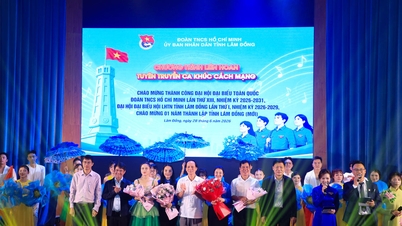
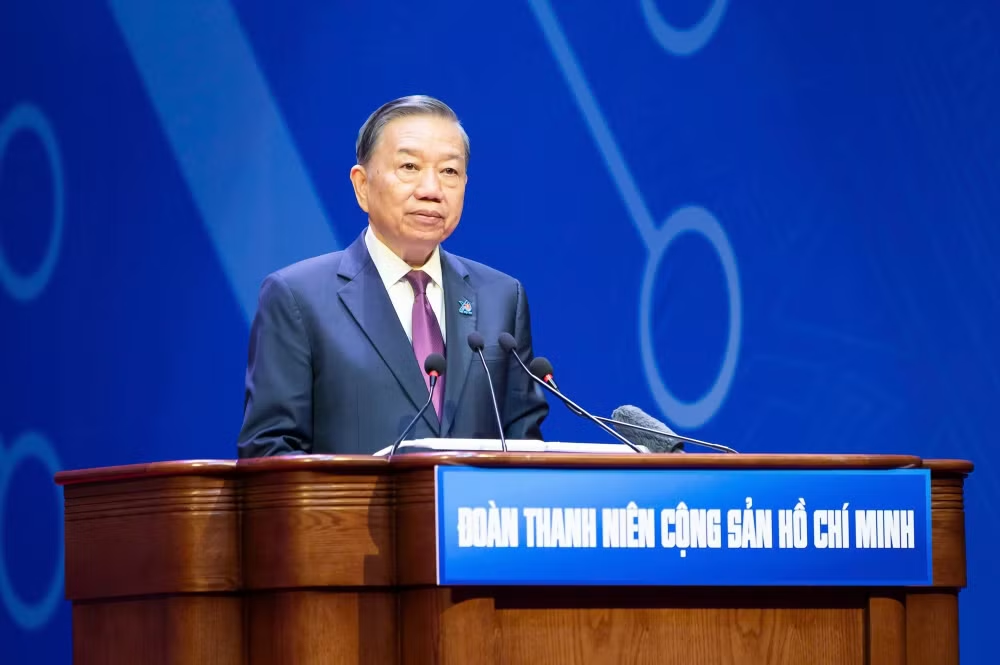
Perhaps that is why, in his speech at the 13th National Congress of the Vietnam Youth Union, General Secretary and President To Lam did not devote much time to making promises for the future. Instead, he emphasized very specific requirements: knowledge, courage, innovative capacity, ability to integrate, dedication, and responsibility to the community.
There's a passage worth reading slowly: "The bright future of the nation is contributed by each and every young person today: possessing pure ideals, solid knowledge, strict discipline, and profound compassion; daring to think, daring to act, daring to innovate, daring to take responsibility, and daring to dedicate themselves to the Fatherland and the People…".
A closer look reveals that this is no longer just an expectation. In this stage of development, young people are no longer waiting for their turn. The country is beginning to demand more from young people in terms of competence, responsibility, and adaptability – not for the future, but starting today.
Unlike previous generations, today's young people have less of a buffer between their studies and entering the workforce. While still in university, many have already begun to encounter the work environment, competition, and the increasingly demanding requirements of a more interconnected world.
At many universities, it's no longer unusual for third-year students to get jobs with foreign companies. Many young people are simultaneously completing coursework, participating in practical projects, and learning new skills to prepare for a rapidly changing job market.
These images may be small, but they reflect a larger reality: young people are entering adulthood earlier, and the world doesn't wait for anyone to be ready before starting the competition.
In the past, when talking about the future of young people, people often thought about studying, accumulating experience, and gradually maturing. Today, however, many young people are juggling work and study, keeping up with technology, and preparing for changes that they may not even fully anticipate.
Therefore, when a speech emphasizes lifelong learning, mastering science and technology, innovation, or building digital capabilities, these are no longer just slogans for action.



For many young people, it has become a survival skill. But a more open world also means greater pressure and a greater likelihood of misunderstandings.
Never before has access to knowledge been so convenient. With just a smartphone, young people can learn from top universities, follow the best experts, and access the latest global trends.
But the gap between "knowing" and "being able to do" has never been so thin.
There are days when young people study a lot, but at the end of the day, they struggle to answer what they've actually accomplished. Some are always busy, but their abilities haven't changed much. Sometimes, amidst the overwhelming number of views, likes, and presence on social media, people easily forget that true value doesn't come from being seen more, but from doing something for others.
Many young people set goals for success very early on but lack the patience for the years of quiet accumulation. Some invest heavily in building their image but don't dedicate enough time to developing their skills. Others are so afraid of being left behind that they chase every opportunity without knowing what they truly want to become.
That is the deepest challenge of integration. Because integration, in the end, is not about how quickly you go out into the world, but about knowing what you have to stand firm when you've gone far enough.
Looking at the prominent young talents of recent times reveals an interesting commonality: they are proving their worth in very different spaces, but all share a spirit of commitment and the ability to produce tangible results.
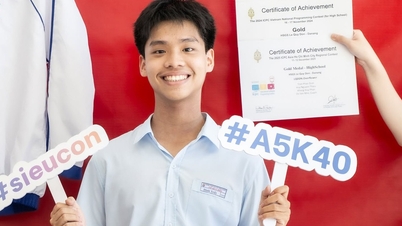
Not only in lecture halls or laboratories, but increasingly more young Vietnamese people are making their mark in places once considered very difficult to compete in. There are student teams achieving high results in international science competitions. There are young researchers persistently pursuing topics that take years to yield results. On the sports field, very young athletes are consistently stepping onto the podium at regional and international competitions after months of rigorous training, with most of the public only seeing the final outcome.
There are also young people who choose to return to their hometowns to engage in high-tech agriculture, start businesses, create jobs, or tell the story of their birthplace in the language of the digital age. Specific examples are not uncommon, such as Sung A Tua, a young Hmong man from Lao Cai, Ha Van Sang from Son La, or the young entrepreneur Le Thi Hong…
Their paths were very different, but perhaps their common ground lies in the fact that they didn't wait until they were perfect to begin, nor did they wait to be given an opportunity to prove their abilities. They grew and matured in the process of taking on jobs, working, and taking responsibility for their work.
Perhaps that's why, amidst so many keywords about technology, innovation, and global competition, this speech still mentions seemingly familiar things: character, responsibility, and compassion. These values may not help people move faster, but they help them go further.



At the end of his speech, the General Secretary and President posed a simple but difficult question: "What have I done to be worthy of our beloved Fatherland?"
Perhaps young people don't necessarily need to answer that question with grand gestures. Sometimes, the answer begins with studying a little more seriously, working a little more diligently, being more patient with the accumulation of experience, and not being complacent just because they are working hard.
The nation doesn't wait for anyone to mature before beginning its journey. Perhaps the most valuable thing about youth is knowing how to grow with the times they live in; having the courage not to be swept away by change; having the ability to contribute when opportunities arise; and having the depth to step forward with the true values they have quietly cultivated when the country needs them.
There will come a day when each person looks back on their youth and realizes that what is truly đáng proud of is not just how far they have come, but that during those years of rapid national transformation, they did not stand aside from the general pace of the times.
Source: https://congluan.vn/lon-cung-nhip-buoc-cua-dat-nuoc-post351515.html

















































































![[INFOGRAPHICS] Can Tho implements the Strategy for Ethnic Affairs until 2030, with a vision to 2045](https://vphoto.vietnam.vn/thumb/402x226/vietnam/resource/IMAGE/2026/06/28/1782658308447_1782658217.webp)