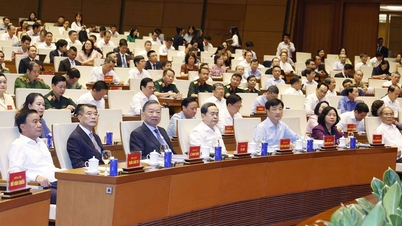
On June 30th, the online newspaper An ninh Thủ đô (Hanoi Security) organized an online seminar on the topic "Hanoi Capital Law 2026: A special legal space for Hanoi to achieve breakthrough development," with the participation of representatives from various departments, agencies, the Hanoi City Police, the Hanoi Bar Association, and many experts.
The seminar took place in the context of the Capital City Law of 2026, which will officially come into effect on July 1, 2026. This law, comprising 9 chapters and 36 articles, was passed by the National Assembly on April 23, 2026, granting Hanoi many specific mechanisms and policies and promoting decentralization and delegation of power, creating a legal basis for the capital city to be more proactive in governance, socio-economic development, and addressing practical issues.
A special legal framework for Hanoi's rapid and sustainable development.
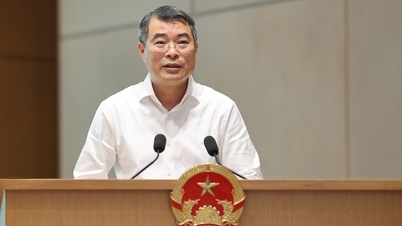
Speaking at the seminar, Deputy Director of the Hanoi Department of Finance Le Trung Hieu affirmed that the 2026 Law on the Capital City is a particularly important milestone, opening up a new legal space for the development of Hanoi. Along with the Capital City Planning and major policies of the Central Government, the 2026 Law on the Capital City is one of the important pillars helping the city enter a new phase of development with sufficiently strong legal tools to mobilize resources, promote infrastructure investment, innovation, and build a foundation for modern urban governance.

One of the outstanding new features of the 2026 Capital City Law is that it not only focuses on developing technical and social infrastructure but also adds a direction for developing digital infrastructure – an important foundation for the development of the digital economy in the coming period.
Along with improving infrastructure, the city is also focusing on removing five major "bottlenecks": traffic congestion, environmental pollution, urban renovation and beautification, and the synchronized development of technical and social infrastructure. These are all areas where the 2026 Capital City Law creates mechanisms for Hanoi to proactively implement new solutions.
"The Capital City Law not only grants more authority to the city but also places higher demands on the responsibility and capacity of implementing agencies. The concretization and effective implementation of specific mechanisms and policies will create new impetus for the socio-economic development of the Capital City in the 2026-2030 period," Mr. Le Trung Hieu emphasized.
According to the Deputy Director of the Hanoi Department of Finance, in the coming period, the city will focus on attracting investment in large-scale infrastructure projects such as urban railway systems, ring roads, routes connecting to Gia Binh airport, seven bridges over the Red River, and many other key projects being implemented under special mechanisms.
One of the issues of particular public concern is the enormous resource requirement for implementing key projects after the Capital City Law granted Hanoi more authority.
According to Deputy Director of the Hanoi Department of Finance Le Trung Hieu, the Law on the Capital City has granted the city significant authority in deciding on investment policies for many projects previously under the jurisdiction of the National Assembly . Specifically for the period 2026-2030, the total projected social investment capital needs are very large. To meet this requirement, the city has determined that it must mobilize maximum social resources in addition to public investment capital. In particular, Hanoi is focusing on finalizing resolutions guiding the implementation of the Law on the Capital City to create a favorable environment for attracting non-budgetary capital. Public investment will prioritize projects with social welfare significance, creating momentum for development, thereby attracting social capital to participate in investment.
The city has also developed a mechanism to attract strategic investors by classifying priority sectors, determining appropriate capital scales, and applying flexible incentive policies.
For strategic investors, in addition to general incentives under the Capital City Law such as land, tax, and labor incentives, the city can also negotiate specific incentive mechanisms for each project to enhance the attractiveness of the investment environment.



In addition, Hanoi will implement a comprehensive set of solutions to mobilize resources, such as effectively utilizing the special mechanisms of the Capital City Law and Resolution 258/2025/QH15 of the National Assembly; promoting public-private partnerships (PPP); efficiently exploiting land resources; developing capital market instruments such as project bonds, green credits, green finance; and selectively attracting foreign investment.
"The city's overarching principle is to mobilize resources effectively while ensuring planning discipline, investment efficiency, and sustainable development. All projects must comply with the Capital City Master Plan; we will not attract investment at all costs, nor will we sacrifice the environment, culture, and quality of life for the sake of growth; at the same time, we must ensure transparency, prevent waste and inefficiency in resource utilization," Mr. Le Trung Hieu emphasized.
Bringing the Capital City Law into effect quickly.
Clarifying the groundbreaking new points of the 2026 Law on the Capital City, Deputy Director of the Hanoi Department of Justice Pham Thi Thanh Huong said that the Law grants Hanoi 199 powers along with many specific mechanisms and policies, most notably allowing the city to issue legal documents that differ from the regulations of central agencies in some cases; to adjust the procedures, authority for resolving administrative procedures and to prescribe specific measures to organize the implementation of laws and resolutions of the National Assembly.

This is an unprecedented regulation in the Vietnamese legal system, demonstrating the central government's strong trust in and delegation of authority to Hanoi. The capital city is not only tasked with implementing policies but also with proactively designing policies to promptly address issues arising from development realities.
However, the Deputy Director of the Hanoi Department of Justice also emphasized that the special mechanism does not mean the city can issue regulations according to its subjective will. All policies must comply with the Constitution, adhere to the spirit of decentralization of power by the National Assembly, ensure a solid political, legal, and practical basis, and be closely linked to mechanisms for controlling power and accountability. With great authority comes great responsibility.
Immediately after the Law on the Capital City was passed by the National Assembly, the Department of Justice advised the City People's Committee to submit to the City People's Council for promulgation Resolution No. 05/2026/NQ-HĐND stipulating a number of contents on the drafting and promulgation of legal documents to organize the implementation of the Law on the Capital City.
According to Ms. Pham Thi Thanh Huong, this is considered the first "code of conduct" that provides unified guidance on the process of drafting documents to implement the Law on the Capital City, creating a legal basis for departments and agencies to carry out the work.
The resolution sets forth many stringent requirements for the drafting agency. Each policy must clearly demonstrate the necessity of issuing other regulations or regulations in cases where the central government has not yet issued regulations; clearly define the objectives and results to be achieved; and fully assess the mechanisms for inspection, supervision, and accountability.
In addition, draft documents must undergo a comprehensive impact assessment, carefully reviewing their constitutionality, legality, and conformity with the Party's policies and international treaties to which Vietnam is a signatory; ensuring that they do not affect national defense, security, human rights, civil rights, and the investment and business environment.
Notably, the policy-making process must involve broad consultation. In addition to consulting with city departments and agencies, it is necessary to consult with ministries, ministerial-level agencies, and agencies of the National Assembly when needed, as well as experts, scientists, the business community, those directly affected, and the general public. The entire process of receiving and responding to feedback must be open and transparent.
According to Ms. Pham Thi Thanh Huong, the Department of Justice has identified this as a key task in the implementation of the Capital City Law. From the policy proposal stage, the Department has guided drafting agencies in completing dossiers, strictly checking procedures, and paying particular attention to assessing the necessity, reasonableness, and feasibility of each policy before submitting it to competent authorities for consideration.
Despite the urgent pace of drafting implementing documents to ensure their simultaneous effect with the Law, the city has fully complied with all regulations. To date, Hanoi has issued approximately 92% of the legal documents serving the implementation of the Capital City Law.



In addition to focusing on improving institutions, Hanoi also pays special attention to public awareness campaigns to ensure that new mechanisms are quickly implemented.
According to Ms. Pham Thi Thanh Huong, immediately after the Law was promulgated, the Standing Committee of the City Party Committee, the City People's Council, and the City People's Committee issued many plans and directives to implement the 2026 Capital City Law; in which, the task of disseminating information was identified as a responsibility of the entire political system.
At the seminar, lawyer Hoang Minh Hien, Deputy Head of the Hanoi Bar Association, also argued that the 2026 Law on the Capital City granting 199 special powers to Hanoi requires simultaneous strengthening of power control. The supervisory mechanism needs to be implemented at multiple levels, from the National Assembly, the Government, the People's Council, the People's Committee, to supervision by the Fatherland Front, the press, the business community, and the people. The city also needs to standardize implementation processes, digitize the entire management process, build a unified set of application criteria, and establish channels for receiving feedback to promptly detect and address shortcomings in the implementation process.
Meanwhile, a representative from the Hanoi City Police Department stated that, along with the Law on the Capital City coming into effect on July 1, 2026, Resolution No. 56/2026/NQ-HĐND of the Hanoi City People's Council will also be implemented, stipulating increased penalties for 28 administrative violations in the fields of security, order, residence, identity cards, and road traffic related to urban order.
The police force will intensify propaganda and guidance before handling cases, strongly apply digital transformation and the national population database in management work; at the same time, affirming that the goal of increasing penalties is not to increase budget revenue but to enhance deterrence, prevent violations and build a civilized and disciplined living environment.
Source: https://hanoimoi.vn/luat-thu-do-nam-2026-mo-khong-gian-phat-trien-moi-1209883.html




![[Photo] Strengthening character and expertise: Intense training for artillery soldiers.](https://vphoto.vietnam.vn/thumb/1200x675/vietnam/resource/IMAGE/2026/06/30/1782815602541_lu-368-1875-4571-jpg.webp)