

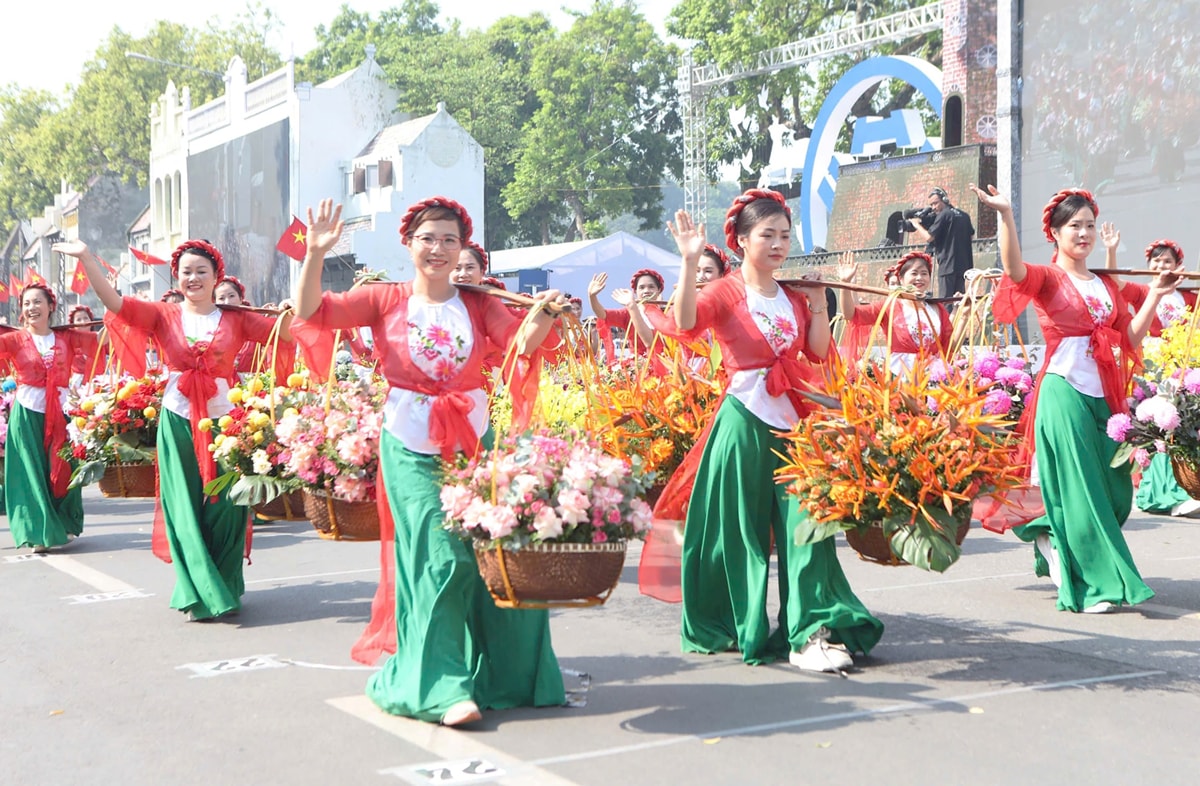
1. When the Capital City Law (amended) is passed, there will be several very new provisions that will remove institutional bottlenecks to help the leadership and management of culture in the Capital City to develop smoothly, in the right direction, sustainably, and with high quality and efficiency, contributing to improving the spiritual life of the people of the Capital City, the whole country and friends around the world .
Firstly, the expansion of PPP (Public-Private Partnership) investment scope is the biggest breakthrough. Instead of being limited to transportation infrastructure, the Law allows PPP to be applied in the fields of culture and sports . This enables businesses to participate in the management and operation of public cultural institutions (such as theaters, museums, and creative spaces).
Secondly, the "Franchise Operation" mechanism for public assets allows Hanoi to experiment with a new governance model for state-owned heritage sites and cultural works. Businesses can lease the right to operate these assets for a specified period to develop creative services without losing state ownership.
Thirdly, special investment incentives: The city has the right to regulate tax and land lease support policies for cultural industry centers and commercial-cultural development zones. This includes, in particular, policies to support artisans and practitioners of intangible cultural heritage.
Fourth, decentralization of heritage management: Hanoi has the autonomy to inventory, preserve, and especially to regulate standards for restoration and renovation that are appropriate to the unique characteristics of the capital's heritage, without necessarily waiting for "unlocking" from general laws.

The aforementioned new provisions truly create a legal framework that encourages and provides a safe environment for the political and social systems to work together to cultivate the culture of Thang Long - Hanoi.
2. Hanoi, the capital city, is home to a vast treasure trove of cultural heritage. Over the years, the Hanoi Party Committee and government have been very proactive and innovative in leading, directing, managing, and operating cultural activities in the city, creating a highlight in Hanoi's cultural development during the integration period. However, if the Law on the Capital City is not amended in a timely manner, it will face numerous legal obstacles, hindering the capital's breakthroughs in many areas. For example, the restoration and preservation of tangible heritage sites such as the Long Bien Bridge, the old French-era villas, and especially the reconstruction of some units within the Thang Long Imperial Citadel... will have to go through many layers. If the inadequacies and obstacles from related mechanisms are not addressed in the amended Law on the Capital City, the institutional delay will certainly continue, leaving no creative inspiration and no precious time to realize the aspiration of beautifying the cultural landscape of the capital city, a highlight of the nation's heritage in the new era.
The capital city is a symbol and the heart of the nation, therefore it cannot be left entirely to the Party Committee, government, and people of Hanoi. There needs to be close coordination, placing the development goals of each locality within the overall goals of the capital and the Northern Delta. The role and responsibility of central ministries and agencies are extremely important, as they are the key links connecting the political system from the country's central organs to the capital. Every idea and every decision of Hanoi must be the culmination of the intellect and enthusiasm of scientific research forces, leaders, and experts in central agencies, and should also include consultation and advice from international experts. The planning, training, and development of cadres at all levels within the political system of the Capital must be carried out systematically and thoroughly, ensuring the building of a core force worthy of the new tasks, possessing both virtue and talent, daring to think, daring to act, daring to take responsibility, and being proactive and creative in organizing and operating the administrative and professional apparatus from the grassroots to the city level. Accordingly, the training and development of cultural cadres in Hanoi must be prioritized, with specific content and methods. This must first be addressed through the Capital Law, reflected in Hanoi's specific policies.
3. With 192 powers delegated to Hanoi for self-determination (including 57 newly delegated powers, the rest inherited from the 2024 Capital City Law, and those complying with relevant laws), the amended Capital City Law has given Hanoi strong wings, enabling it to confidently soar high and far like a dragon flying into the blue sky in the new era.
The amended Capital City Law aims to grant Hanoi greater autonomy, but this does not mean isolation or fragmentation; rather, it emphasizes a harmonious balance between the common good and individual interests. The preferential and superior mechanisms for Hanoi serve as leverage for leaders of Party committees and governments to proactively and creatively make decisions regarding the implementation of cultural development tasks in the capital city and in each of its 126 communes/wards. Immediately after the amended Capital City Law is approved by the National Assembly, it is necessary to promptly concretize these into specific regulations concerning culture. Each locality possesses both traditional and contemporary cultural values in the context of reform; therefore, each needs to determine its own appropriate content and methods for leading and managing cultural activities, ensuring they do not disrupt the overall cultural "plan." Ultimately, strategic decisions and micro-level policies regarding culture in the capital city must revolve around the awareness and cultural attitudes of the people and the government in "awakening cultural potential," while maximizing resources to transform this potential into intrinsic strength. Hanoi is planning a restructuring of its urban landscape with a vision for 100 years and beyond, ensuring that traditional cultural spaces are not lost, diminished, or suppressed. The idea of "streets within villages, villages within streets" is a dialectical approach between architecture and culture, between infrastructure and cultural superstructure, and is highly commendable.
The "six dares" motto, which the Hanoi Party Committee and government have set forth and are promoting, would be very effective if applied to the leadership and direction of cultural activities, especially the development of the "cultural industry." Thus, cadres remain the root of success or failure in the cultural field, or any field for that matter. However, in the cultural field, it is also necessary to require cadres with the heart and intellect to fully appreciate the unique value of Thang Long - Hanoi culture, a remnant of thousands of years of cultural sediment that opened up and nurtured the nation's civilization. Aware of this, they will inevitably adopt an approach of "not sacrificing culture for economic growth."

It is hoped that the amendments, additions, developments, or new provisions in this Law on the Capital City will reflect a strategic vision commensurate with the 100-year goal, with solid legal foundations. The culture of Thang Long - Hanoi is an invaluable heritage of the Vietnamese nation, preserving and transmitting the cultural and civilizational heritage of Dai Viet for thousands of years of nation-building and defense; it is a symbol of national self-reliance, self-strength, and enduring strength; it is a source of historical and revolutionary inspiration in the Ho Chi Minh era, and the spiritual foundation for our nation to enter a new era. Preserving and promoting the cultural values of Hanoi is the responsibility of the entire political system and the whole population, in which the Party Committee, government, and people of Hanoi are the direct subjects in honoring these unique and beautiful values, associated with building the socialist capital city and the elegant people of Thang An.
Source: https://hanoimoi.vn/luat-thu-do-sua-doi-go-nut-that-the-che-de-nang-tam-van-hoa-ha-noi-745655.html







![[Podcast] Capital City Law 2026: Increased penalties for violations in the fields of culture and advertising](https://vphoto.vietnam.vn/thumb/402x226/vietnam/resource/IMAGE/2026/06/03/1780487283783_4522222.png)








































![[Video] Sunset at Lap An Lagoon – Where the sun sets over the fishing nets](https://vphoto.vietnam.vn/thumb/1200x675/vietnam/resource/IMAGE/2026/05/31/1780192137701_beach-landscape-sea-water-nature-grass-745871-pxhere-com.jpeg)






























Comment (0)