 |
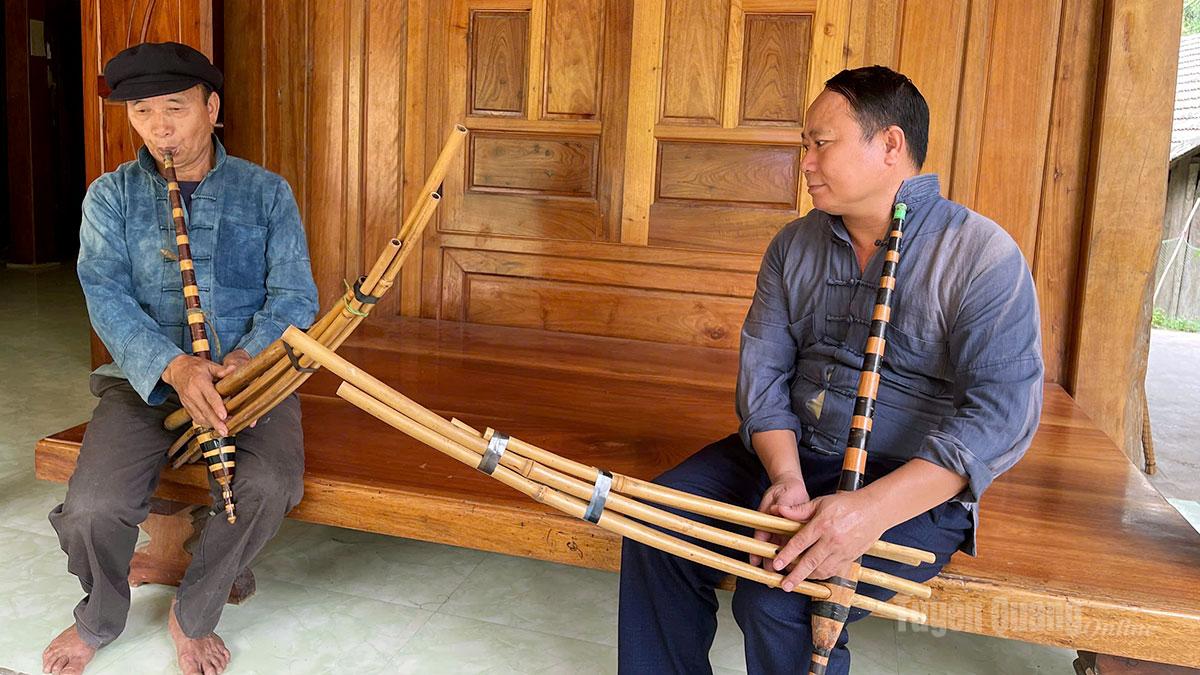
| Mr. Giàng Văn Lai is teaching his son to play the khene (a type of bamboo flute). |
Mr. Giàng Văn Lai shared that his father was a very skilled Hmong reed pipe player. Therefore, whenever he had free time, he would teach his five sons how to play the reed pipe (Mr. Lai is the third son in the family). Before teaching them, he guided them to understand the structure of the Hmong reed pipe, which consists of three main parts: the resonator body, the pipes, and the reeds. The resonator body is a sound-producing box, usually hollowed out from a piece of pine or cypress wood. The body serves both as a handle for performance and as a reservoir for air to be blown through the pipes. The pipes consist of six bamboo pipes (or made of rattan) of varying lengths, arranged horizontally through the wooden body. The bamboo pipes are horizontal and securely fixed, with finger holes carved into them to adjust the pitch. The reeds are the sound-producing parts, made from thin sheets of copper or silver, and attached inside each pipe.
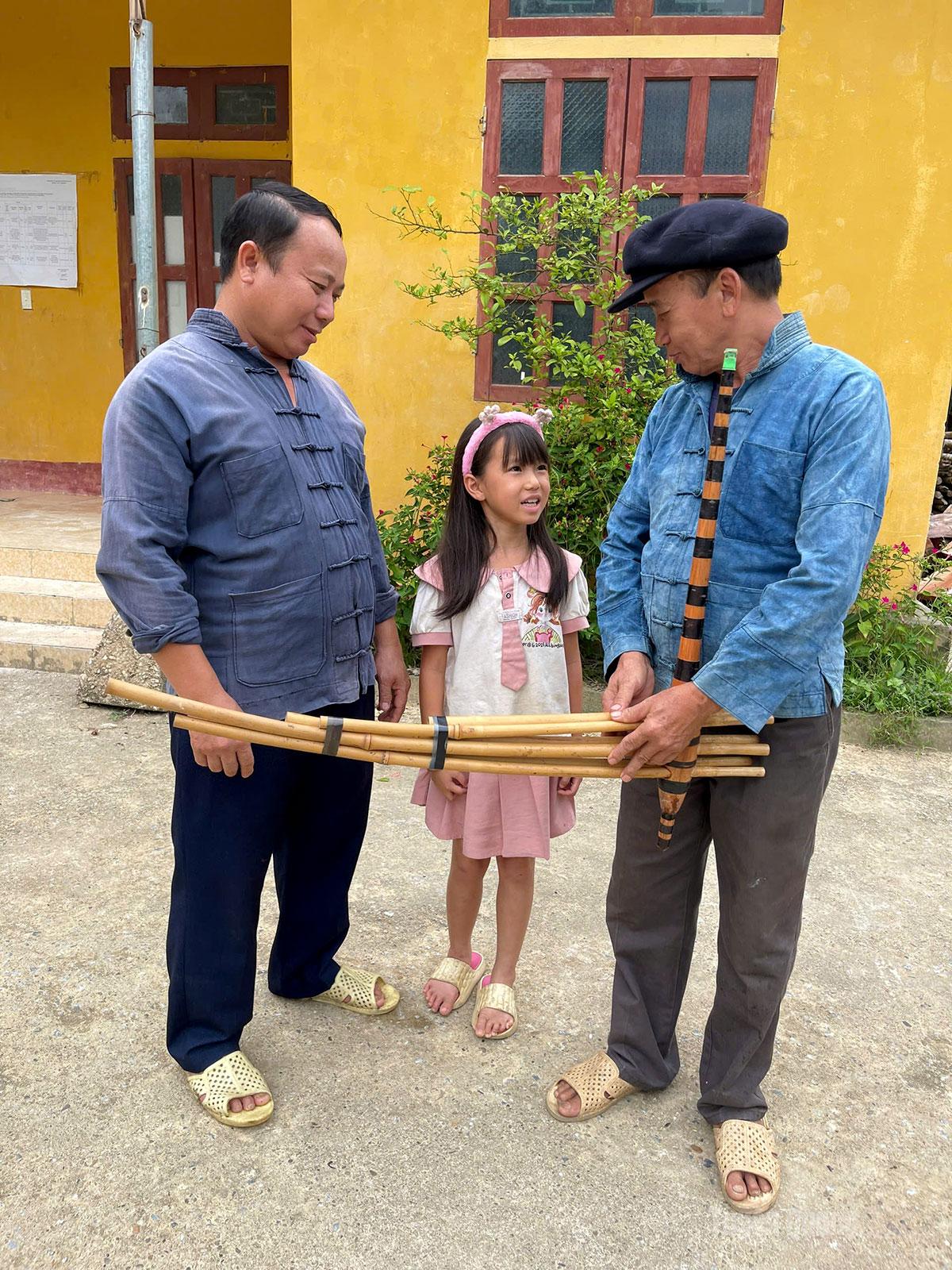 |
| Mr. Giàng Văn Lai, from Khuổi Khít village, Kiến Thiết commune, guides the younger generation in learning about the Hmong flute. |
Learning to play the Hmong mouth organ (khen) takes a year, and mastering it can take several years. Mr. Lai started learning at the age of 8, and by the age of 12, he could skillfully play and dance to Hmong songs. For Hmong boys at that time, it was a source of pride, and the khen dance helped them find their lovers and life partners. To express their feelings to a girl, each boy would play and dance many different songs, such as calling out to her, praising his beloved, and so on, day and night without end. This also reflects the rich spiritual life of the Hmong people.
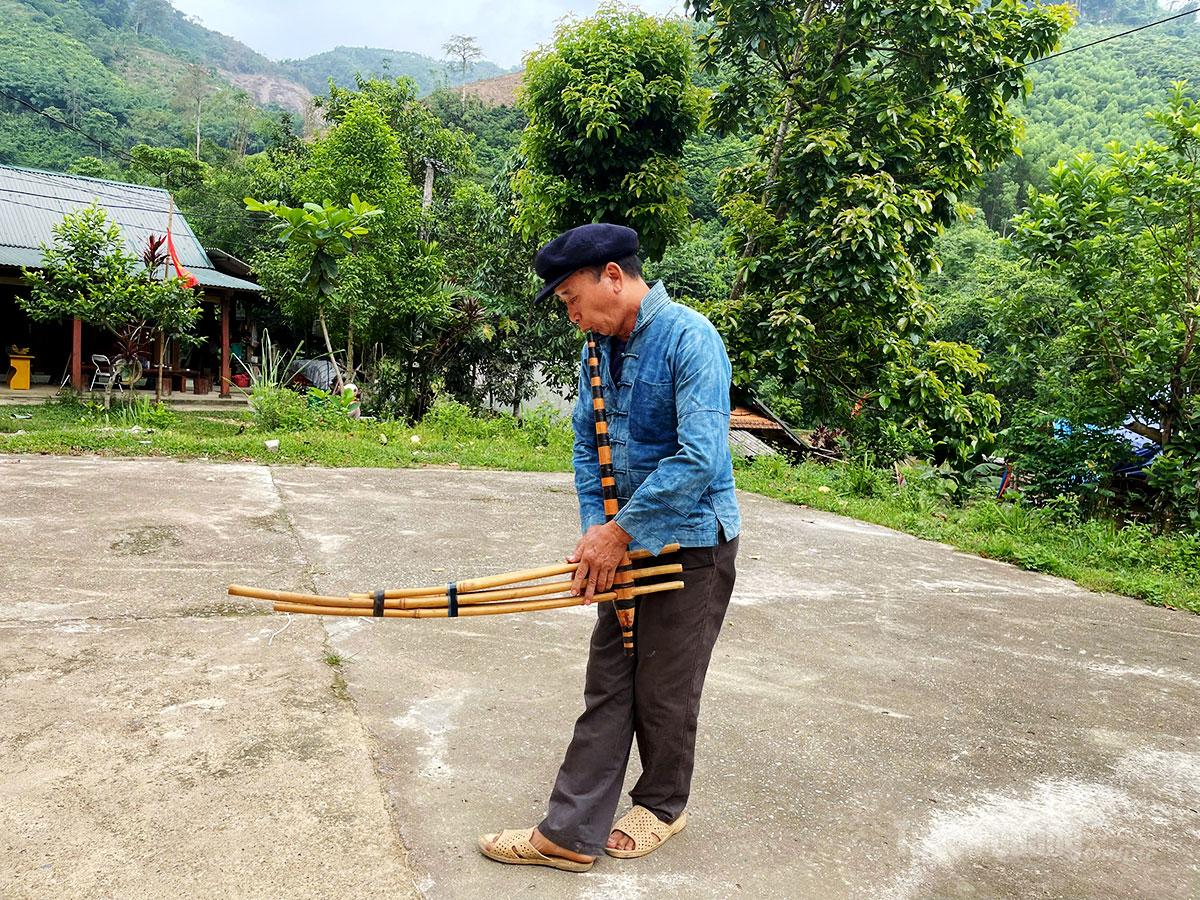 |
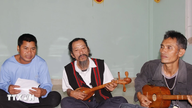
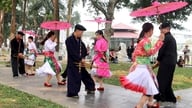
| Mr. Giàng Văn Lai played the flute while dancing gracefully and rhythmically. |
In the spiritual life of the Hmong people, the sound of the Hmong flute plays a very important role. The flute is the spiritual link connecting the living and the deceased, expressing the feelings, sorrow, and regret of children and grandchildren for their departed loved ones. It is also a means of communication with the spirit world and ancestors. Mr. Giang Van Phong, from Khuoi Khit village, said that when a family member dies, the sound of the flute is indispensable at the funeral. Now, very few people in the village know how to play the flute, and their assistance to the bereaved is entirely voluntary, without any payment.
For many years, Mr. Lai has enthusiastically participated in cultural and artistic movements in his village and commune. His flute playing and graceful, rhythmic dances have been highlights in many local cultural exchange and performance programs. Mr. Lai is concerned that nowadays, very few young people persevere in learning to play the flute, as most of them leave for work or other jobs after finishing high school. He hopes that there will be young people who truly love and are passionate about playing the flute who will learn, and he is ready to guide and teach them with all his heart and knowledge, so that the sound of the flute in the Hmong village will be preserved and passed on through many generations.
Huyen Linh


Source: https://baotuyenquang.com.vn/van-hoa/du-lich/202606/luu-giu-dieu-khen-mong-83025ae/
![[Photo] Opening Ceremony of the 13th National Congress of the Ho Chi Minh Communist Youth Union](https://vphoto.vietnam.vn/thumb/1200x675/vietnam/resource/IMAGE/2026/06/24/1782286753905_ndo_br_1-8510-jpg.webp)
![[Photo] The 13th National Congress of the Youth Union conducts personnel work.](https://vphoto.vietnam.vn/thumb/1200x675/vietnam/resource/IMAGE/2026/06/24/1782299943080_ndo_br_1-6868-jpg.webp)
![[Photo] Overview of the renovation and upgrading of the Ho Chi Minh Museum - Ho Chi Minh City Branch](https://vphoto.vietnam.vn/thumb/1200x675/vietnam/resource/IMAGE/2026/06/24/1782287051250_ndo_br_01-jpg.webp)